
13 min read
The Korean game companies you need to know start with 4 names: Nexon, NCSoft, Krafton and Netmarble. Between them they make MapleStory, Lineage, PUBG and some of the most-played mobile games in Asia. A second tier (Smilegate, Pearl Abyss, Shift Up, Com2uS, Neowiz, Devsisters) gives you Lost Ark, Black Desert, Stellar Blade, Summoners War, Lies of P and Cookie Run.
This matters outside Korea because these firms shaped how online games make money everywhere. Free-to-play with item shops, gacha pulls and hourly billing in internet cafes were all tested at scale in Korea first. Below: who makes what, how the industry grew out of PC bangs, how the business works, and how to follow it from abroad.
Key takeaways
- Nexon (넥슨) is a Korean-founded company listed in Tokyo. It makes MapleStory, KartRider and Dungeon & Fighter.
- NCSoft (엔씨소프트) built its business on Lineage, a 1998 PC MMORPG whose mobile versions still drive the company.
- Krafton (크래프톤) is the PUBG company. It was called Bluehole until PUBG got so big that the company was reorganized around it.
- Since March 2024, Korean law requires games to publish the odds on paid random items, so you can look up gacha rates before you spend.
Korean game companies at a glance: who makes what
Start with this table if you only want to know which company is behind the game you play. Release years are the original launch in Korea or worldwide. Live versions, regions and platforms change, so check each game’s official site for what’s current.
| Company | Signature games | Main business | Where it is listed |
|---|---|---|---|
| Nexon (넥슨) | MapleStory (2003), KartRider, Dungeon & Fighter, Mabinogi, The Finals, Blue Archive | Free-to-play PC and mobile, live-service games | Tokyo Stock Exchange |
| NCSoft (엔씨소프트) | Lineage (1998), Lineage II, Aion, Blade & Soul, Guild Wars (via ArenaNet), Throne and Liberty | MMORPGs on PC and mobile | KOSPI (Seoul) |
| Krafton (크래프톤) | PUBG: Battlegrounds (2017), PUBG Mobile (with Tencent), Battlegrounds Mobile India, TERA, Subnautica (via Unknown Worlds), inZOI | Battle royale franchise, a growing portfolio of studios | KOSPI |
| Netmarble (넷마블) | Seven Knights, Lineage 2: Revolution, Marvel Future Fight, Solo Leveling: Arise | Mobile games, often built on licensed IP | KOSPI |
| Smilegate (스마일게이트) | Crossfire, Lost Ark, Epic Seven | PC shooters and MMOs, mobile RPGs | Private |
| Pearl Abyss (펄어비스) | Black Desert, Crimson Desert | Open-world action MMO, its own engine | KOSDAQ |
| Shift Up (시프트업) | Goddess of Victory: Nikke, Stellar Blade | Character-driven mobile and console action | KOSPI |
KOSPI is Korea’s main stock market and KOSDAQ is its tech-heavy secondary board, roughly like the Nasdaq. Many of these companies have headquarters in Pangyo (판교), a tech district in Seongnam just south of Seoul that people call Korea’s Silicon Valley.
How PC bangs built Korea’s game industry
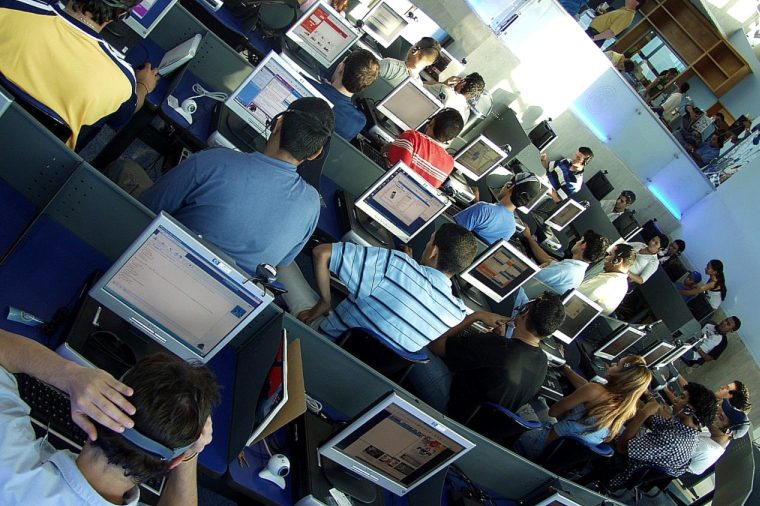
A PC bang (PC방) is an internet cafe where you pay by the hour to use a powerful gaming PC. Korea’s game industry grew out of these rooms, and the timing explains a lot.
The 1997 Asian financial crisis left many people out of work, and opening a PC bang was a cheap small business to start. At the same moment the government was pushing nationwide broadband. Then two games arrived in 1998: Blizzard’s StarCraft, which turned PC bangs into neighborhood arenas, and NCSoft’s Lineage, which gave players a reason to come back every night. Our piece on how StarCraft became Korea’s national sport tells that side of the story.
Why PC bangs still matter to game companies
PC bangs aren’t only a place to play. They’re a sales channel. Korean publishers commonly charge PC bang operators by usage for their games, and in return players get perks for logging in there: bonus experience, unlocked characters or extra rewards. So a hit PC game in Korea earns from players and from cafes. That’s why online PC games like League of Legends, PUBG and Lost Ark are judged in Korea partly by their share of PC bang hours, which tracking services publish.
What PC bangs taught the world
Because players were already paying for time at the cafe, they resisted paying for the game itself. Korean companies answered by giving the game away and selling items inside it. That model spread worldwide. Fortnite skins and mobile gacha both trace back to the same idea.
Nexon (넥슨): MapleStory and the free-to-play idea
Kim Jung-ju founded Nexon in Seoul in 1994. Its 1996 game The Kingdom of the Winds is one of the earliest graphical online role-playing games still running, which makes Nexon one of the oldest companies in the genre.
What Nexon really gave the industry was a business model. It is widely credited as one of the first companies to make a game free and charge for optional items. Its 1999 game QuizQuiz is often cited as the first example, and MapleStory (2003, built by the studio Wizet, which Nexon acquired) made the model famous worldwide with its cute 2D side-scrolling world and huge cosmetic shop.
Is Nexon Korean or Japanese?
Both, in a way. The parent company, Nexon Co., is headquartered and listed in Tokyo (ticker 3659 on the Tokyo Stock Exchange). Most development happens at Nexon Korea and its Korean studios. Think of it as a Korean-founded game maker that chose a Japanese stock listing.
Nexon’s portfolio beyond MapleStory
- Dungeon & Fighter (also called DNF), made by Neople, which Nexon acquired. It’s a side-scrolling brawler that became huge in China through Tencent.
- KartRider, a cartoon racing game, and Mabinogi, a cozy fantasy MMO.
- The Finals, a destructible-arena shooter made by Nexon’s studio in Sweden.
- Blue Archive, an anime-style mobile RPG.
If you want a long-running live-service game that gets regular updates, Nexon is the safest bet among Korean publishers. Its catch is that some long-running titles have faced player backlash over paid random items.
NCSoft (엔씨소프트): Lineage and the MMORPG money machine
Kim Taek-jin founded NCSoft in 1997. A year later it launched Lineage, a medieval fantasy MMORPG (massively multiplayer online role-playing game) built around castle sieges, clan wars and player-versus-player fighting. Lineage became one of the defining games of the PC bang era. Lineage II followed in 2003, then Aion (2008) and Blade & Soul (2012).
NCSoft also expanded abroad. It acquired ArenaNet, the American studio behind Guild Wars, in 2004. Later, its MMO Throne and Liberty went worldwide with Amazon Games as publisher.
What is a “Lineage-like” game?
Lineage M (2017) and Lineage W (2021) moved the formula to phones, and they were enormous earners in Korea. Their success gave a name to a genre Koreans call 리니지라이크 (Lineage-like): mobile MMORPGs with auto-battle, large guild wars, gear upgrades that can fail, and spending that’s dominated by a small number of very high spenders (“whales”).
Many Korean players criticize the format as pay-to-win, and other publishers copied it heavily. For a foreign player, here’s the practical point. If you dislike games where spending decides PvP, NCSoft’s mobile Lineage titles probably aren’t for you. Its PC games like Guild Wars 2 work differently, so judge by title, not by company.
NCSoft also owns the NC Dinos, a KBO professional baseball team based in Changwon, one example of how big Korean companies tie themselves to sport.
Krafton (크래프톤): how PUBG turned Bluehole global
Krafton began as Bluehole, founded in 2007 by Chang Byung-gyu and others. Its first big title was the MMO TERA (2011), known for action combat rather than tab-targeting.
Then came the game that changed everything. Bluehole worked with Brendan Greene, the designer known as “PlayerUnknown”, who had made battle royale mods. The result, PlayerUnknown’s Battlegrounds, launched in early access on Steam in 2017 and became a global phenomenon. It helped make battle royale (100 players dropped onto a shrinking map, last one standing wins) the dominant multiplayer format of the late 2010s.
Who owns PUBG?
Krafton owns the PUBG IP, through its PUBG Studios. PUBG Mobile was developed with China’s Tencent, which is also a major Krafton shareholder. That’s why people sometimes think PUBG is Chinese. After India banned PUBG Mobile in 2020, Krafton launched Battlegrounds Mobile India (BGMI) in 2021 and runs it itself.
Krafton after PUBG
Krafton went public on KOSPI in 2021 (ticker 259960). Since then it has been buying and funding studios so it isn’t a one-game company. It acquired Unknown Worlds, maker of the underwater survival series Subnautica, and launched inZOI, a life-simulation game that invites comparison with The Sims. Whether Krafton can find a second PUBG-sized hit is the biggest question about the company.
Netmarble (넷마블): mobile first, licensed worlds
Bang Jun-hyuk founded Netmarble in 2000. It started with casual web games and then bet early and hard on smartphones. Seven Knights became a hit mobile RPG in Korea, and Netmarble then specialized in turning famous names into mobile games.
- Lineage 2: Revolution (2016), a mobile MMORPG licensed from NCSoft’s Lineage II.
- Marvel Future Fight, a Marvel superhero action RPG.
- Solo Leveling: Arise, based on the Korean webtoon Solo Leveling.
Netmarble also bought Kabam, the North American mobile studio behind Marvel Contest of Champions, in 2017. It listed on KOSPI the same year (ticker 251270).
Netmarble also crosses into K-pop. It’s a major shareholder in HYBE, the agency behind BTS, from an early investment in Big Hit Entertainment. Games and K-pop overlap more than most foreign fans realize, and our guide to how Korea’s chaebol groups work explains why cross-shareholdings like this are common.
If you like anime-style action RPGs built on a story you already know, Netmarble’s catalog is the easiest entry point. Expect gacha systems in most of it.
Other Korean game studios to know: Smilegate, Pearl Abyss, Shift Up and more
The big four get the headlines, but several mid-sized studios make the Korean games most likely to be on your Steam or PlayStation library. Our list of the best Korean video games goes title by title. Here’s who’s behind them.
Smilegate (스마일게이트): Crossfire and Lost Ark
Smilegate’s shooter Crossfire (2007) did modestly in Korea but became one of the biggest PC games in China through Tencent. That’s a classic example of Korean companies earning abroad through licensing. Its MMO Lost Ark launched in Korea in 2018 and in the West in 2022 with Amazon Games publishing. It also makes the mobile RPG Epic Seven. Smilegate is privately held, so you can’t buy its shares.
Pearl Abyss (펄어비스): Black Desert
Pearl Abyss built Black Desert (Korea 2014) on its own engine, known for detailed graphics, a deep character creator and a heavy life-skill economy. Its next big open-world action game is Crimson Desert. Check the official site for its current status and platforms.
Shift Up (시프트업): Nikke and Stellar Blade
Shift Up made the mobile shooter Goddess of Victory: Nikke, published globally by Tencent’s Level Infinite, and Stellar Blade (2024), a PlayStation 5 action game published by Sony. Stellar Blade showed that a Korean studio could ship a big-budget console action game, something the industry had rarely tried.
Com2uS, Neowiz, Devsisters, Wemade and Gravity
- Com2uS (컴투스): Summoners War (2014), one of the most successful Korean mobile games worldwide.
- Neowiz (네오위즈): published Lies of P (2023), a Pinocchio-inspired soulslike that won many Western players over to Korean single-player games.
- Devsisters (데브시스터즈): the Cookie Run series, including Cookie Run: Kingdom (2021).
- Wemade (위메이드): The Legend of Mir 2, a huge hit in China, and the mobile MMO MIR4.
- Gravity (그라비티): Ragnarok Online (2002). Gravity is listed on the US Nasdaq and majority-owned by Japan’s GungHo Online Entertainment.
Kakao Games, part of the Kakao internet group (the company behind the KakaoTalk messenger), mainly publishes games made by other studios.
How Korean game companies make money
Almost every Korean hit runs on some version of the same idea: the game is free and the extras cost money. The details are what separate a fair game from one that drains your wallet.
| Model | How it works | Typical examples | What to watch as a player |
|---|---|---|---|
| Item shop (cosmetics) | Free game, paid outfits, mounts, convenience items | MapleStory, KartRider, PUBG | Usually fair if items don’t affect power |
| Probability items / gacha | Pay for random draws of characters or gear | Nikke, Blue Archive, Epic Seven, Summoners War | Check published odds and “pity” rules before spending |
| Lineage-like progression | Paid upgrades with failure chance, power sold directly | Lineage M, Lineage W and many imitators | Spending often decides PvP results |
| PC bang billing | Cafes pay publishers by usage, players get in-cafe perks | PUBG, Lost Ark, Dungeon & Fighter in Korea | Only relevant if you play in Korea |
| Licensing abroad | A foreign publisher runs the game and shares revenue | Crossfire, Dungeon & Fighter, Mir 2 in China | Regional versions can differ from Korea’s |
| Premium (pay once) | Buy the game, optional DLC | Lies of P, Stellar Blade | The newest direction for Korean studios |
Why are Korean games called pay-to-win?
The label comes mostly from the Lineage-like mobile genre and from upgrade systems where gear can be destroyed or downgraded on a failed attempt. When a small number of players spend very large amounts, the game’s design tends to drift toward rewarding them. Not every Korean game works like this. Lost Ark, PUBG and Stellar Blade are built differently, so look at how each game’s shop works before writing off a whole country’s output.
Why China matters so much
For years China was the biggest export market for Korean PC games, almost always through a Chinese publisher like Tencent. After the 2017 diplomatic dispute over the THAAD missile-defense system, Korean games struggled for years to win new Chinese publishing licenses. That pushed Korean companies toward Western markets, Steam and consoles. It’s part of why you now see more Korean games launching worldwide on day one.
The rules that shaped the industry at home
Korea introduced a “shutdown law” in 2011 that blocked under-16s from online PC games late at night. It was scrapped in 2021. Game age ratings in Korea come from the Game Rating and Administration Committee (GRAC). These rules help explain why Korean publishers leaned so heavily on adult spenders and mobile.
How to follow Korean game companies from abroad
The best sources depend on whether you care about the games, the esports or the stocks.
For the games
- Official sites and Steam pages for patch notes, regional servers and launch details. Korean publishers often run separate global and Korean sites, so make sure you’re on the right one.
- Official Discord servers and X/YouTube accounts. Global teams usually post there first in English.
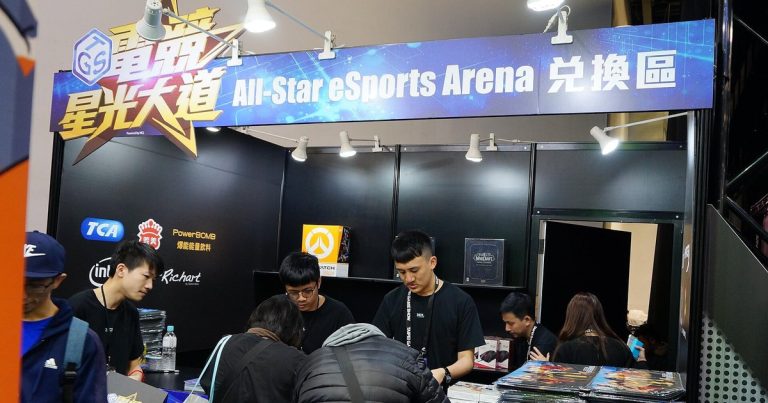
- G-Star (지스타), Korea’s biggest game show, held in Busan each year. Check the official G-Star site for dates and the exhibitor list.
- Korean game portals like Inven and This Is Game. They’re in Korean, but browser translation works well enough for patch and launch news.
For esports
Most top Korean esports teams aren’t owned by game companies but by telecom and finance groups such as SK Telecom (T1) and Hanwha. Our guide to Korean esports teams and who owns them covers that side. The main PC esport in Korea, League of Legends, is made by Riot Games, an American company owned by Tencent, not by a Korean publisher.
For investors
NCSoft (036570), Krafton (259960), Netmarble (251270) and Shift Up trade on KOSPI. Pearl Abyss trades on KOSDAQ. Nexon trades in Tokyo, and Gravity trades on the Nasdaq.
Korean company filings appear on DART, the Financial Supervisory Service’s disclosure system, which has some English content. Each company’s investor relations page posts quarterly results.
Whether you can buy Korean-listed shares from abroad depends on your broker. Game stocks tend to move on new launches, how a game’s revenue holds up in its first weeks, regulatory news and China licensing. This is general information, not investment advice.
FAQ
What is the biggest Korean game company?
It depends on the measure. Revenue, profit and stock market value give different answers, and they shift with each big launch. Nexon, Krafton, NCSoft and Netmarble are the four usually compared. Check their latest earnings on their investor relations pages for current figures.
Is League of Legends a Korean game?
No. League of Legends is made by Riot Games, a US company owned by China’s Tencent. It’s simply hugely popular in Korea, and Korean teams like T1 have dominated its pro scene. Our explainer on why Korea is good at League of Legends covers the reasons.
Is PUBG Korean or Chinese?
PUBG is Korean. Krafton, based in Korea, owns it. PUBG Mobile was co-developed with Tencent, which is also a major Krafton shareholder, so China plays a big role in the mobile version. Battlegrounds Mobile India is published by Krafton directly.
Who made MapleStory and Lineage?
MapleStory was developed by Wizet and published by Nexon, which absorbed the studio. Lineage was made by NCSoft and launched in 1998. Both companies still run these games and their mobile spin-offs.
Can I play Korean server versions of games from abroad?
Sometimes, but it’s often hard. Many Korean servers require a Korean phone number or identity verification to sign up, and some block foreign IP addresses. Most big titles have a global or regional version instead, so check the official site for the servers in your region.
Are Korean games all pay-to-win?
No. The reputation comes mainly from Lineage-like mobile MMORPGs. Games like PUBG, Lies of P and Stellar Blade are either cosmetic-only or one-time purchases. Read the shop and upgrade systems for each game, and check its published item odds before you spend.
What to watch next in Korean games
The most interesting shift is from mobile gacha toward PC and console games sold worldwide. Lies of P and Stellar Blade proved the idea, so watch whether Pearl Abyss’s Crimson Desert and other big Korean console projects follow through. Track Krafton’s search for a second hit beyond PUBG, and whether NCSoft can grow beyond the Lineage formula.
When a big title launches, its official site and Steam page give you the real date and platforms. G-Star in Busan each year is where Korean studios show what’s coming. If you’re new to all of this, pick one game from each tier: MapleStory for history, Lost Ark for the MMO experience, Lies of P for the new single-player wave.
Related reading
Sources k-korea.blog
Prices, opening hours and availability change. Check the official page before you buy or travel.