13 min read
Parasite movie explained: Bong Joon-ho’s 2019 film (기생충, Gisaengchung) is about a poor family that cons its way into a rich family’s house, and the ending argues that hard work alone won’t close that gap. Spoiler warning: this guide covers every twist, including the bunker, the birthday party and Ki-woo’s final letter, so watch the film first if you haven’t.
Parasite matters outside Korea because it became the first film not in English to win the Academy Award for Best Picture, in February 2020. Its symbols work in any country with a housing crisis, which is most of them.
Key takeaways
- Parasite won 4 Oscars in 2020: Best Picture, Best Director, Best Original Screenplay and Best International Feature Film.
- The Kims live in a banjiha (반지하), a semi-basement flat half below street level, a real and common type of Seoul housing.
- Every trip between the two homes goes down: the film’s staircases are a vertical map of class.
- The final shot returns to the banjiha, which tells you Ki-woo’s plan to buy the house is a fantasy.
- Korean title
- 기생충 (Gisaengchung, literally “parasitic worm”)
- Year
- 2019
- Genre
- Dark comedy, thriller, social satire
- Director
- Bong Joon-ho (co-written with Han Jin-won)
- Where to watch
- Availability differs by country; check your streaming services or JustWatch
Parasite movie explained: the short version
Two families, one house. The Kims (father Ki-taek, mother Chung-sook, son Ki-woo, daughter Ki-jung) fold pizza boxes for cash in a damp semi-basement. The Parks (tech executive Dong-ik, his wife Yeon-kyo, teenage Da-hye and young Da-song) live in an architect-designed home up the hill.
One by one, the Kims replace the Parks’ staff by pretending to be strangers with no connection to each other. Then a rainstorm reveals that another poor family was already hiding inside the house, in a bunker the Parks don’t know exists. The two underclass families fight each other, not the rich, and the violence ends at a garden birthday party.
Bong’s point is structural. Nobody in the film is a cartoon villain. The Parks are polite, even kind. The tragedy comes from a system where the poor compete for the same narrow space while the rich barely notice them, except for their smell.
Who plays who in Parasite
- Song Kang-ho as Kim Ki-taek, the father
- Choi Woo-shik as Kim Ki-woo, the son who starts the scheme
- Park So-dam as Kim Ki-jung, the daughter who poses as “Jessica”
- Jang Hye-jin as Chung-sook, the mother
- Lee Sun-kyun and Cho Yeo-jeong as Mr. and Mrs. Park
- Lee Jung-eun as Moon-gwang, the original housekeeper, and Park Myung-hoon as her husband Geun-sae
How the Kims take over the Park house, step by step
The con is the film’s first hour, and it plays like a heist comedy. Each step is a small lie that pushes out a working person who did nothing wrong. Watch how quickly the Kims stop feeling guilty.
| Step | Kim family member | Fake identity | Who gets pushed out, and how |
|---|---|---|---|
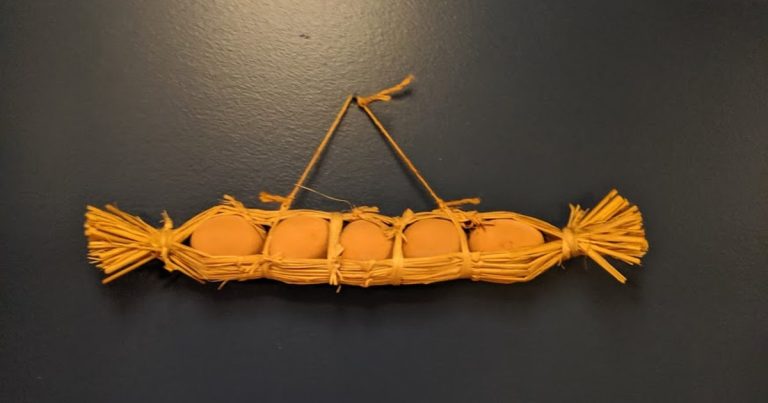
| 1 | Ki-woo | “Kevin”, English tutor for Da-hye | Nobody yet: his university friend Min-hyuk hands him the job, plus a scholar’s rock as a gift |
| 2 | Ki-jung | “Jessica”, an art therapist trained in Illinois | Nobody: she invents a job for Da-song using pop psychology from the internet |
| 3 | Ki-taek | An experienced private driver | The Parks’ driver, framed with underwear Ki-jung leaves in the car |
| 4 | Chung-sook | A housekeeper from an upmarket agency | Moon-gwang, triggered with peach fuzz (she’s allergic) and then accused of having tuberculosis |
The Kims are good at this, which is the joke and the sting. Ki-jung forges documents. Ki-woo reads people well. Ki-taek drives smoothly.
They have real skills that the job market never paid for. Bong lets you root for them, then makes you sit with what that rooting cost two other workers.
The “Jessica jingle” (Ki-jung rehearsing her fake background to the tune of the Korean folk song “Dokdo Is Our Land”) became one of the most quoted bits in Korea. It’s funny because it’s homework. Faking class takes study.
What is a banjiha, and why do the Kims live in one?
A banjiha (반지하, “half underground”) is a semi-basement flat whose window sits at sidewalk level. From inside, the Kims see feet, drunks urinating, and the fumigation truck spraying the street. Their phone signal only works if they crouch next to the toilet, which sits on a raised platform near the ceiling.
These flats are real. Many were built under low-rise apartment buildings in the decades of North-South military tension, when basements were expected to double as shelters, and landlords later rented them out as cheap housing. (For why the Korean peninsula has stayed on a war footing, see our explainer on why the 1953 truce never became peace.) Bong has said in interviews that he lived near this kind of housing as a young man, and the set’s details read that way: mold, mismatched tiles, Wi-Fi borrowed from neighbors.
Is the banjiha still a problem in Seoul?
Yes. In the August 2022 floods, residents of semi-basement homes in Seoul drowned when water poured in, and the city announced plans to phase out banjiha as housing. Parasite’s flood scene, filmed years earlier, suddenly looked like reporting. If you want the current state of that policy, check the Seoul Metropolitan Government’s official site.
Why the Park house is the real main character
The Park home was built as a set for the film. Inside the story it was designed by a famous fictional architect, Namgoong Hyeonja, who lived there before selling it to the Parks. Moon-gwang came with the house, and so did its secrets.
Look at how it’s arranged. The living room is a wall of glass facing a lawn, a frame for the Parks’ life that turns the garden into a screen. Everything above ground is open, calm and lit. Everything below is hidden.
The Parks use the house without knowing it. They don’t know about the bunker the architect built against North Korean attack or creditors, and they don’t know a man named Geun-sae has lived down there for more than four years, eating their leftovers.
What does the bunker mean in Parasite?
The bunker is the floor below the floor. The Kims think they are at the bottom, then discover someone lower. That’s why the fight between the Kims and Moon-gwang’s family is so vicious: two families are trapped in a hierarchy that forces them to fight each other for one job, one basement, one hiding place.
Geun-sae is also the film’s warning about acceptance. He thanks Mr. Park through Morse code, tapping the lights, and repeats “Respect!” to a man who doesn’t know he exists. He has stopped wanting out. Ki-taek will end up in the same place.
What do the stairs in Parasite mean?
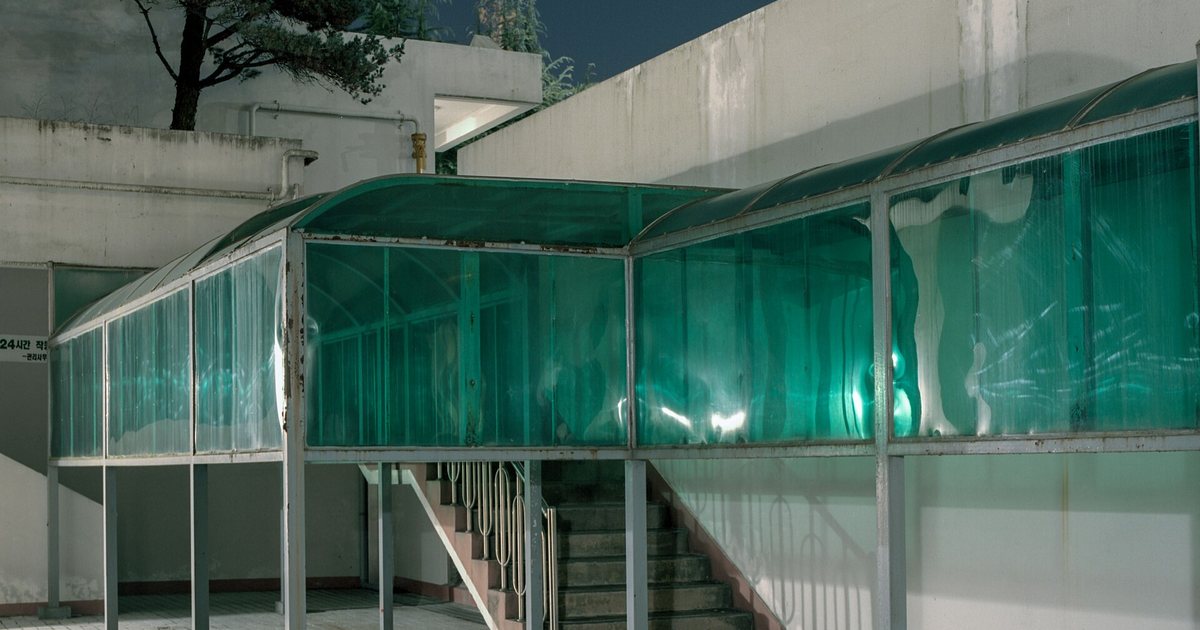
Count the stairs and you have the thesis. To get to the Park house, the Kims walk up a steep street, then up into the garden. To get home, they go down, and down, and down.
The key sequence comes after the Kims escape the Park living room during the storm. They run in the rain down long flights of steps, through underpasses, along streets turning into rivers.
Rain that looked romantic from the Parks’ glass wall becomes sewage in the banjiha. Ki-jung sits on the overflowing toilet and smokes, because there’s nothing else to do. The water flows down because poverty sits downhill, literally.
Bong uses vertical space everywhere:
- The basement stairs in the Park house lead to the pantry, then further down to the bunker.
- Chung-sook kicks Moon-gwang down those basement stairs, a fall that later proves fatal.
- Ki-woo carries the scholar’s rock downstairs to the bunker, intending to kill Geun-sae, and is hit with it instead.
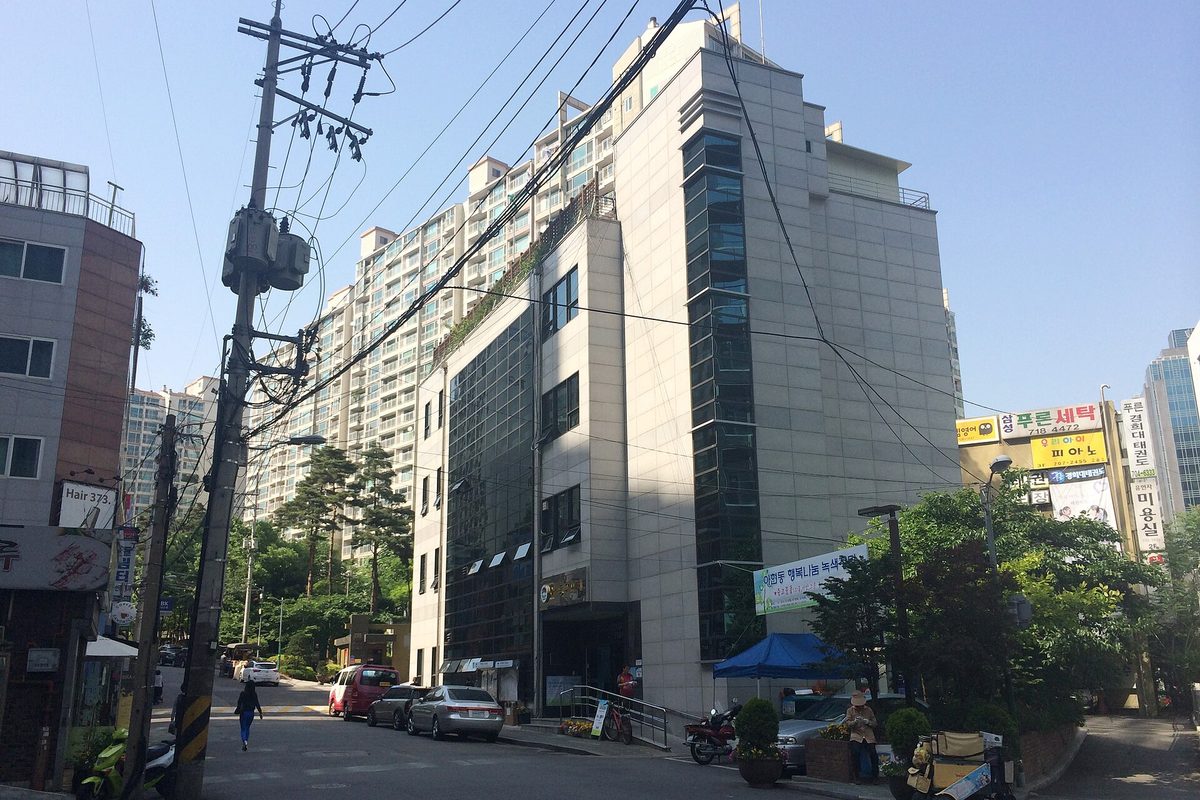
Many of the street stairs were filmed in real Seoul neighborhoods. A stairway near the Jahamun Tunnel in Buam-dong and a small corner shop in Ahyeon-dong became fan stops after the Oscars. If you plan to see them, our guide to filming locations in Seoul has a route for the neighborhoods, and the official Visit Seoul site lists any current themed walking tours. These are residential streets, so keep noise down.
What does the smell mean in Parasite?
Smell is the one thing the Kims can’t fake. They can change names, clothes and résumés. Da-song notices first: all the new staff smell the same. Later, hiding under the living-room table, Ki-taek hears Mr. Park describe the smell of people who ride the subway, like an old radish or a boiled rag.
The smell is class you carry in your body. It comes from the damp, the basement, the lack of a dryer, the commute.
Mr. Park isn’t cruel when he says it. He’s just honest in a way that tells Ki-taek the line he “never crosses” is the line between them. Mr. Park actually praises employees who “don’t cross the line” earlier in the film.
That’s why the climax turns on a nose. When Mr. Park pulls the car keys from under Geun-sae’s body and visibly flinches at the smell, Ki-taek sees the same disgust aimed at himself. It’s the last straw in a night full of them.
Parasite ending explained: the party, the knife and the letter
The day after the flood, Yeon-kyo throws a garden party for Da-song’s birthday. She asks Ki-taek and Mr. Park to stage a playful “attack” in Native American costume, a game built around Da-song’s obsession.
Ki-taek has slept in a gym shelter with other flood victims. The Parks are cheerful about the clear sky the rain left behind.
Geun-sae climbs out of the bunker, having learned his wife is dead. He attacks Ki-woo with the rock, then stabs Ki-jung with a kitchen knife in front of the guests. Chung-sook kills him with a barbecue skewer (she was once a hammer-throw medalist, set up early in the film). Da-song, who saw Geun-sae as a “ghost” on a previous birthday, collapses.
Why does Ki-taek stab Mr. Park?
Mr. Park needs the car keys to take his son to the hospital. They’re under Geun-sae’s body.
He reaches for them while holding his nose. Ki-taek, still wearing the headdress, with his daughter dying on the grass, stabs him.
It isn’t planned and it isn’t a revolution. Bong shows it as a sudden collapse of a man who has been told, over and over, that he smells. Earlier in the gym, Ki-taek tells his son the only plan that never fails is no plan at all. The stabbing is what having no plan looks like.
Where does Ki-taek go at the end?
He disappears into the bunker. The police search for him but no one knows it’s there. A new family, foreigners, buys the house.
Ki-woo, recovering from brain surgery, watches from a nearby hill and sees the outdoor light blinking. It’s Morse code, which he learned in the Boy Scouts. His father is alive underground, sending letters he can’t deliver.
Is the ending of Parasite real or a dream?
Ki-woo writes back, in a letter he can’t send, that he will earn enough money to buy the house so his father can simply walk up the stairs. The film then shows that happening: Ki-woo owns the house, and Ki-taek climbs into the sunlit garden.
Then Bong cuts to Ki-woo in the banjiha, writing, and the camera tilts down from the window into the basement. The purchase was imagined. Bong has noted in interviews that at a normal wage, buying that house would take Ki-woo an impossibly long time. The ending is deliberately cruel: the dream is sincere, and it’s still a dream.
Parasite symbols explained: the rock, the peaches, the rain
Bong plants small objects early and pays them off late. Here’s what the main ones are doing.
| Symbol | Where it appears | What it means |
|---|---|---|
| Scholar’s rock (suseok, 수석) | Gift from Min-hyuk; floats in the flood; used as a weapon on Ki-woo | A promise of luck and wealth that Ki-woo clings to; it becomes a burden, then a weapon. He finally returns it to a stream. |
| Peaches | The con against Moon-gwang | A soft fruit used to wound; the Kims exploit a body weakness, just as the Parks will notice theirs. |
| Rain | The camping trip is canceled; the flood | One storm, two weathers: a pleasant view for the rich, a disaster for the poor. |
| Native American costume | Da-song’s toys, the tent, the party headdresses | The Parks play at a culture and history they don’t understand, the same way they consume the people who serve them. |
| Morse code | Geun-sae’s light taps; Ki-taek’s messages | Underground communication that the people upstairs never read. |
| The window | Banjiha street-level window vs. the Parks’ glass wall | The Kims look up at the world; the Parks look out over it. |
Ki-woo keeps saying the rock is “so metaphorical.” That’s Bong teasing viewers who hunt for symbols, and also telling you he planted them on purpose.
Why Parasite won Best Picture
Parasite first won the Palme d’Or at Cannes in May 2019, the first Korean film to take the festival’s top prize. At the 92nd Academy Awards in February 2020 it received 6 nominations and won 4, including Best Picture, the first time a film not in English won that award.
Several reasons explain the jump from art house to the main prize:
- Genre control. It moves from family comedy to heist to horror to tragedy without breaking. Audiences who never watch subtitled films got a thriller with a ticking clock.
- A universal subject. Rent, gig work, inequality and domestic staff exist in Los Angeles, London and Lagos. The film is very Korean in its details and recognizable everywhere in its anger.
- Craft voters could see. The production design (the house and the flooded street set) and the editing were both nominated. Actors’ branch voters could read Song Kang-ho’s performance through the subtitles.
- Momentum. A long awards campaign, a Screen Actors Guild ensemble win and Bong’s widely shared remarks about the “one-inch-tall barrier of subtitles” built a story voters wanted to finish.
It also changed perception of Korean film abroad. Streaming services leaned into Korean titles in the years after. If you’re trying to find more, our comparison of streaming services for Korean shows covers which platforms carry the most.
What to notice when you rewatch Parasite
Parasite rewards a second viewing more than most thrillers, because the clues are in plain sight the first time.
- The opening shot. Socks hanging inside the banjiha window. The camera tilts down from the street into the room. The last shot reverses nothing; it repeats the move.
- Moon-gwang’s first scenes. She’s eating fast in the kitchen and very protective of the pantry. She is feeding someone.
- The light switch on the stairs. It flickers whenever Mr. Park comes home. That’s Geun-sae, not bad wiring.
- Da-song’s drawing. Ki-jung calls it a self-portrait. It’s the “ghost” he saw.
- Ki-taek’s face during the smell conversations. Song Kang-ho barely moves. Watch the stillness grow.
FAQ
What is the main message of Parasite?
Parasite argues that class divides are built into how cities, homes and jobs are arranged, and that individual effort can’t climb out of that structure. The poor end up fighting each other while the rich stay unaware. Bong leaves open who the “parasite” really is.
Who is the real parasite in Parasite?
The title points at the Kims at first, since they feed off the Parks. By the end it also fits the Parks, who live off the labor of drivers, housekeepers and tutors they barely see. Bong has called the film a story with no clear villain, and the title is meant to cut both ways.
Is Parasite based on a true story?
No, the plot is fiction. The setting is real: banjiha flats, tutoring jobs that pass by word of mouth, and the gap between hillside mansions and flood-prone basements all exist in Seoul. Bong drew on his own memories of tutoring for a wealthy family as a young man.
Did Ki-woo buy the house at the end of Parasite?
No. The scene where he owns the house and his father walks up the stairs is Ki-woo’s fantasy as he writes a letter. The final shot shows him still in the semi-basement, which is the film’s honest answer.
Is Parasite scary or a horror movie?
It’s mainly a dark comedy and thriller, with horror tension in the second half and sudden violence at the end. If you liked its tone, our list of Korean horror movies for beginners goes further into the scary side. Parasite is rated R in the US, so check your local rating before watching with kids.
Do I need to know Korean culture to understand Parasite?
No. The story works anywhere, which is part of why it won. Knowing what a banjiha is, and that private tutoring is a big business in Korea, adds detail but isn’t required.
What to watch next if you loved Parasite
Start with Bong Joon-ho’s own films, in this order, to see the ideas in Parasite develop:
- Memories of Murder (2003): a police procedural set in the 1980s, with the same mix of comedy and dread and Song Kang-ho in the lead.
- Mother (2009): a mother’s investigation into her son’s arrest, and Bong’s most intimate film.
- Snowpiercer (2013): class as a train, rich at the front, poor at the back. Watch it right after Parasite; horizontal versus vertical.
- The Host (2006) and Okja (2017): monster and creature films about families taking on systems much bigger than them.
For current streaming availability of any of these, check JustWatch or the platform in your country. And if a Seoul trip is on your list, give the hillside neighborhoods of Buam-dong and Ahyeon-dong an afternoon: walk the stairs down, not up, and you’ll feel the film in your knees.
Related reading



Sources k-korea.blog
Prices, opening hours and availability change. Check the official page before you buy or travel.