12 min read
Does North Korea have internet? Not for most of its 25 million people, only for a small elite. The whole country runs on one small block of public IP addresses, less than many single companies abroad hold. Ordinary North Koreans use Kwangmyong (광명), a closed national intranet with no link to the outside web, while real internet access is kept for a small, vetted elite, state hackers and some foreigners.
The gap between those two networks shapes what 25 million people are allowed to know. It also explains why the most important channel for outside information isn’t online at all. It’s a USB stick passed hand to hand.
Key takeaways
- North Korea’s entire public internet presence fits in one small block of IPv4 addresses, fewer than a single mid-sized company abroad often holds.
- Kwangmyong is a nationwide intranet: email, state news and approved databases, all with no route to Google, YouTube or foreign news.
- Mobile phones are common in cities, but domestic SIM cards can’t call or message abroad, and phones are built to block unapproved files.
- Most outside news, films and K-dramas still enter on USB drives, SD cards and DVDs smuggled across the Chinese border.
Does North Korea have internet, or just an intranet?
It has both, and they’re kept apart on purpose. Think of two separate pipes. One is a thin line to the global internet, routed through China and, since 2017, also through Russia. The other is a domestic network that looks like the internet from the inside (websites, browsers, email) but connects only to servers inside North Korea.
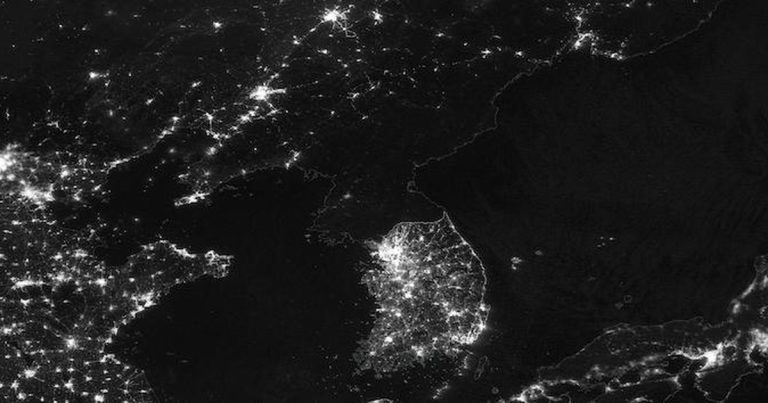
The thin global pipe is what outside researchers can measure. It runs on a single small block of IPv4 addresses, small enough that outside network monitors can track the whole country’s public presence at a glance. For comparison, South Korea, whose broadband we explain in why Korean internet is so fast, is one of the most connected countries on earth. Two countries sharing one peninsula sit at opposite ends of the connectivity scale.
The domestic network is what citizens see. Their computers aren’t routed to the outside world at all, so there’s no VPN trick or hidden setting that opens it up. The separation is physical and administrative, not just a software filter.
Why does North Korea restrict the internet?
The state controls information as a core part of how it governs. The official ideology presents the leadership of the Kim family, which we trace in how 3 rulers passed down power, as the source of the nation’s success. Uncontrolled access to South Korean media, foreign news and open messaging would let people compare that story with outside accounts. A closed intranet lets the government offer modern tools without that exposure.
What is Kwangmyong (광명), the North Korean intranet?
Kwangmyong means “bright light”. It’s a nationwide network that went into service around the turn of the 2000s, run under state institutions, and it’s the closest thing most North Koreans have to the web.
What’s on Kwangmyong?
Accounts from defectors and researchers who have studied it describe a fairly narrow menu:
- State media, including KCNA (the Korean Central News Agency, the official news service) and the ruling party newspaper Rodong Sinmun.
- Government and institutional sites, from ministries to universities and factories.
- Library and research material, including scientific and technical documents, some of it translated or summarised from foreign sources after screening.
- Internal email and messaging that stays inside the network.
Foreign material does appear, but filtered. Engineers and scientists can request technical papers that have been downloaded from the global internet and placed on Kwangmyong after review. What’s missing is anything that lets users reach outside sources directly or talk to people abroad.
Who uses Kwangmyong, and where?
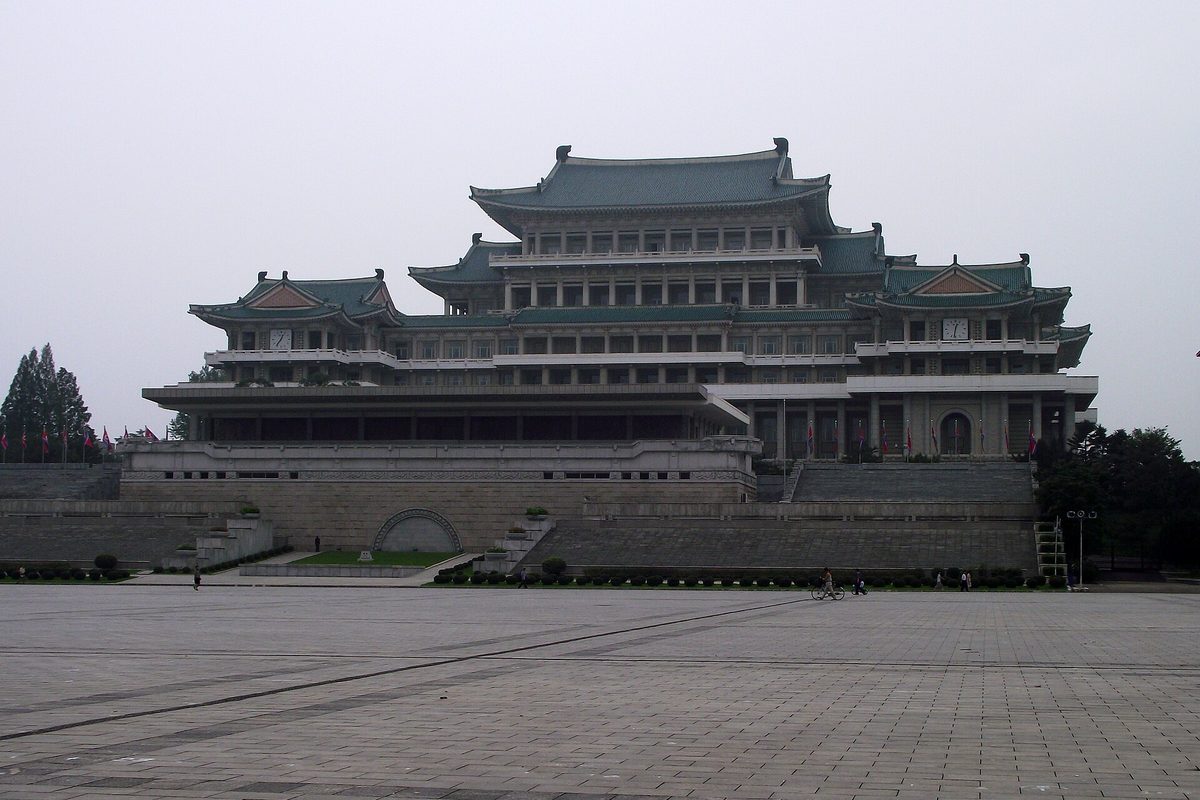
Access usually happens through institutions: universities, research centres, workplaces, libraries such as Pyongyang’s Grand People’s Study House, and computer rooms. Home connections exist, but they’re tied to registration and are far more common in Pyongyang than in the provinces. Electricity shortages outside the capital limit use further, so a provincial user’s experience of Kwangmyong can be very different from a Pyongyang student’s.
Who can access the real internet in North Korea?
A small number of people, each for a defined job. Estimates of the exact figure vary and none can be independently checked, but researchers agree it’s a tiny fraction of the population. These are the groups usually described:
| Group | Network they use | What they can reach | How it’s controlled |
|---|---|---|---|
| Ordinary citizens | Kwangmyong intranet, domestic mobile network | State media, approved sites, internal email | No route to the global internet; registered devices |
| Senior officials and trusted elite | Global internet, limited | Foreign sites relevant to their work | Vetting, monitoring, access tied to position |
| Selected researchers and students | Supervised global access | Technical and scientific sources | Supervised rooms, logging, assigned purpose |
| State cyber units | Global internet, often from abroad | Targets worldwide | Run by the state for revenue and intelligence |
| Foreign diplomats, aid staff, some visitors | Separate foreigner networks | Global internet, rules change over time | Kept apart from local users |
Do North Korean hackers use the internet?
Yes, and they’re among the most active users the country has. State-backed hacking groups are widely documented by governments and security firms, and much of their work is about money. According to Reuters, the FBI says North Korean hackers stole more than $400 million using video images, posing as trusted contacts on video calls. DW reported the same FBI case as the US disrupting a $400 million crypto scam. North Korea has consistently denied involvement in cyberattacks attributed to it.
Think of it as a paradox. A country that keeps its own people offline runs some of the world’s most capable hacking operations, many of them reportedly working through infrastructure outside North Korea rather than through that thin domestic pipe.
What is the .kp domain?
.kp is North Korea’s country code domain, like .uk or .kr. In 2016 a server misconfiguration briefly let outsiders see the full list of .kp domains, and it held only about 28 sites, mostly state media, tourism and government portals. That one glimpse showed how small the outward-facing internet really is.
Do North Koreans have cell phones?
Yes, many do, especially in cities. Mobile service took off after Koryolink (고려링크), a joint venture with Egypt’s Orascom, launched a 3G network in 2008. A second domestic carrier came later. Smartphones sold under local brand names such as Arirang and Pyongyang are common among people who can afford them.
What these phones can’t do matters more than what they can. Domestic SIM cards can’t make international calls or send messages abroad. There’s no access to the global internet, no foreign app stores and no foreign messaging apps. Users get domestic calls, texts, and on some plans access to approved intranet services, games, dictionaries and state-approved apps.
How are North Korean phones monitored?
Researchers who have examined smuggled devices report that the software is built for control. Phones reportedly check files for a state digital signature and refuse to open media that wasn’t approved, and some log activity such as screenshots or browsing history that inspectors can review. The same thinking runs through Red Star OS (붉은별), the country’s Linux-based computer operating system, which security researchers who took it apart found tags files in ways that can trace them back to the machine they came from.
In practice, this means a phone isn’t a private device. It’s a registered tool that can be inspected at any time, and North Koreans generally use it with that in mind.
How does outside information get into North Korea?
Mostly offline. Because the networks are sealed, foreign content travels physically, usually across the long land border with China, where trade, both legal and informal, has gone on for decades.
- USB drives and microSD cards. Small, cheap and easy to hide. A single card can hold a full season of a South Korean drama, a film and music. MicroSD cards can be swallowed or snapped in half if an inspection looms, which is why they’re so popular.
- DVDs and earlier VCDs. The older format, still around but riskier, because a disc can get stuck in a player during a sudden power cut and be found when inspectors check.
- Notel (노트텔) players. Small Chinese-made portable media players with USB and SD slots and a TV output. They became a household staple because they can play smuggled files without leaving traces on a registered computer.
- Radio. Legal radios are sold pre-tuned to state stations, but modified sets and smuggled radios can pick up broadcasts aimed at the North from South Korea and international broadcasters.
- Chinese mobile phones near the border. In border towns, smuggled Chinese phones can sometimes catch Chinese networks, letting people call relatives abroad, often defectors sending money home. This is one of the most dangerous activities and is actively tracked.
Much of this trade runs through jangmadang (장마당), the informal markets that grew after the famine of the 1990s. Media moves like any other contraband: through traders, relatives and trusted friends. Defectors, whose routes out we cover in how 30,000+ North Korean defectors got out and start over, often name South Korean dramas as their first real picture of life outside.
What happens if North Koreans are caught with foreign media?
The penalties can be severe, and they’ve grown harsher. Inspection squads, often referred to as Group 109 (109상무), have long carried out spot checks on homes, phones and media players. Defector testimony and human rights groups describe searches timed to power cuts, so a disc stays trapped in the player.
In 2020 the country passed a law usually translated as the Reactionary Ideology and Culture Rejection Act, which human rights organisations say sets heavy prison terms for watching or distributing South Korean media and even harsher punishment for distributing it. Outside groups have also documented cases of people punished for imitating South Korean speech or slang. Because independent verification inside North Korea is close to impossible, specific sentences in individual cases are hard to confirm, and you should treat any single anecdote with care.
Why do people still take the risk?
Curiosity and entertainment, mostly. Defectors describe South Korean dramas as more exciting than state television, and the details of ordinary life in them (food, clothes, apartments) quietly contradict what they were taught. Bribery also plays a role: inspectors can sometimes be paid off, so the real risk depends on money and connections as much as on the law.
What we know and what we don’t know about North Korea’s internet
What we know
- North Korea’s public internet presence is limited to a small address block and a handful of .kp sites, as outside network measurements and the 2016 domain list showed.
- Ordinary citizens are restricted to Kwangmyong and a domestic mobile network with no international calling or browsing.
- State hacking operations use the global internet extensively; the FBI case reported by Reuters and DW is one recent example.
- Smuggled storage devices remain the main channel for outside media, according to defectors and researchers.
What we don’t know
- How many people have real internet access. Figures that circulate are estimates and can’t be checked.
- How closely individual phones and computers are monitored day to day, beyond what researchers find on smuggled devices.
- How much the 2020 law and stepped-up inspections have reduced the flow of foreign media, rather than pushing it further underground.
Timeline: key moments in North Korea’s internet
| When | Event |
|---|---|
| Around 2000 | Kwangmyong intranet enters service as a closed national network |
| 2008 | Koryolink, a joint venture with Egypt’s Orascom, launches 3G mobile service |
| 2013 | Foreign visitors briefly gain 3G mobile data on a separate foreigner network |
| 2014 | North Korea’s internet link goes dark for hours, an outage widely reported by monitoring firms |
| 2016 | A misconfigured server exposes the full list of about 28 .kp domains |
| 2017 | A second international link via Russia comes online alongside the China route |
| 2020 | A law sharply raising penalties for consuming South Korean media is adopted |
Can foreigners use the internet in North Korea?
Sometimes, on separate networks kept apart from locals. Diplomats, aid workers and resident foreigners have had access through embassies, offices and dedicated services. Tourists are a different story: rules for visitors have changed several times, and some periods have allowed paid connections at hotels or on foreigner SIM cards while others haven’t.
If you’re curious about going, our guide can you visit North Korea covers tours, rules and risks. For anything current on connectivity, ask your licensed tour operator directly and check your own government’s travel advice page, because many countries warn against or restrict travel there. Don’t assume your phone will work, and don’t bring media or files you wouldn’t want inspected.
Can people outside North Korea visit North Korean websites?
Some, yes. A few state sites on .kp domains, such as official news and tourism portals, are reachable from abroad, though they’re often slow or offline. Be aware that some governments restrict access to North Korean state websites or social media, and South Korea in particular blocks many of them under its own security laws. Check your country’s rules before you go looking.
FAQ
Does North Korea have Wi-Fi?
Wi-Fi exists, but it connects to domestic networks rather than the global internet for ordinary users. Hotels and offices for foreigners have offered connections at various times. A Wi-Fi symbol on a North Korean phone doesn’t mean access to Google or YouTube.
Can North Koreans use Google, YouTube or Facebook?
No, not ordinary citizens. These services sit on the global internet, which is cut off from Kwangmyong and from domestic phones. Only the small number of people with authorised global access could reach them, and that access is monitored.
Is Kwangmyong free to use?
Access is generally provided through institutions such as schools, libraries and workplaces rather than sold like a home broadband plan. Home and mobile access involve registration and fees that vary, and outside researchers can’t verify current costs. What’s clear is that the content is state-approved either way.
Can North Koreans call people outside the country?
Not on domestic phones, which block international calls. Some people near the Chinese border use smuggled Chinese phones on Chinese networks to reach relatives abroad, which is illegal and closely tracked. Official international calling exists only through approved channels.
How do K-dramas get into North Korea?
Mostly on USB drives, microSD cards and DVDs smuggled across the Chinese border and sold or swapped through informal markets. People watch them on notel players or computers. Getting caught can bring heavy punishment under laws targeting South Korean media.
Has North Korea’s internet ever gone down completely?
Yes. Its limited international links have gone offline several times, including a widely reported outage in 2014. Because the country relies on so few routes, a single fault or attack can cut its global connection, though Kwangmyong keeps running inside the country.
What to watch next on North Korea’s internet
Three signals tell you the most. First, watch outside network monitors for changes to North Korea’s address block or international routes, since any new link to China or Russia shows up there before it appears in official news. Second, follow defector testimony and human rights reporting on smuggled media, which is the best window into whether the crackdown is working. Third, keep an eye on FBI, UN and security firm reports on North Korean cyber operations, the clearest evidence of how the state itself uses the internet it denies its people.
For the human side, defectors’ own accounts are the best starting point, and North Korean state media are worth reading too, as long as you treat them as official claims rather than verified fact.
Related reading
Sources k-korea.blog · news.google.com
Prices, opening hours and availability change. Check the official page before you buy or travel.