14 min read
Korean drinking etiquette comes down to 7 rules, and the first one surprises most visitors: you pour for other people, never for yourself. The other six are about who pours, how you hold the glass, where you turn your face and how you say no. Learn them before your first soju night or company dinner and you will come across as someone who did the homework.
None of this is a test you can fail with one slip. Koreans are generous with foreigners who try. Getting the two-hand pour right still buys you a lot of goodwill, and it costs nothing.
Key takeaways
- Hold your glass with two hands when someone older or more senior pours, and pour back the same way.
- When you drink with an elder or a boss, turn your head slightly to the side and cover the glass with your hand.
- Leaving your glass full is the polite way to stop: an empty glass is an invitation to refill it.
- The legal drinking age is 19, counted from January 1 of the year you turn 19, so bring your passport as ID.
Korean drinking etiquette: the 7 rules that matter
Most Korean drinking etiquette grows out of one idea: age and rank shape how people treat each other at the table. If you have read our guide to Korean honorifics and titles, you already know the logic. The drinking rules are that same respect, worked out with a bottle and a shot glass.
- Pour for others, not yourself. Someone else fills your glass, and you watch theirs. Among close friends in their twenties this has relaxed a lot, but with elders, clients or colleagues it still holds.
- Use two hands with seniors. When you pour for, or receive from, someone older or higher up, use both hands, or one hand on the bottle and the other touching your wrist or forearm.
- Turn away to drink. With an elder at the table, turn your head slightly to the side and shield the glass with your free hand as you sip.
- Wait for the first toast. The most senior person usually opens with a toast, and the table drinks the first glass together.
- Refill empty glasses only. Korean custom is to wait until a glass is empty before pouring. Topping up a half-full glass is a different country’s habit.
- Keep a senior’s glass from sitting empty. If your boss or host has an empty glass, offering to pour is the respectful move.
- Say no by leaving it full. You are allowed to stop. A full glass signals that, and a short polite phrase covers the rest.
Who counts as “senior” at a Korean table?
Anyone older than you, anyone above you at work, and any client or host. Among friends, even a gap of a year or two can matter, which is why Koreans often ask your age early in a conversation. Peers of the same age can skip the two-hand pour and the head turn entirely. If you are unsure, use the polite version. Nobody has ever been offended by too much courtesy with a soju bottle.
How to pour and receive soju with two hands
Soju (소주) is Korea’s clear, mass-market spirit, sold in the familiar green bottle and drunk from small shot glasses. The pour is the moment people notice your manners most, so it is worth practicing once at home.
How to pour soju for an elder
Hold the bottle in your right hand, label facing up or toward you. Rest your left hand lightly on your right wrist, forearm or the bottom of the bottle. Pour steadily until the glass is close to full, then lift the bottle and step back. With a much older person, many Koreans bow their head slightly as they pour.
How to receive a drink properly
When a senior lifts the bottle toward you, pick up your glass and hold it out with two hands: right hand holding the glass, left hand supporting its base. Keep it there until they finish, and say a quick thank you (“gamsahamnida”). Leaving your glass on the table while an elder pours for you reads as careless.
Why Koreans turn away when they drink
Turning your face from an elder while you drink is a sign of deference, a way of not drinking “at” them. You do not need a dramatic swivel. A slight turn of the head to the side, with your free hand near the glass, is enough. Drink, turn back, set the glass down.
What about the soju bottle tricks?
You may see someone swirl a fresh bottle into a little tornado, or smack its base with an elbow before opening it. These are table rituals rather than rules, done for fun and a bit of show. Nobody expects a visitor to know them, though trying one usually gets a laugh.

What is somaek, and what do Koreans drink besides soju?
Somaek (소맥) is soju mixed into beer, from “so” for soju and “maek” for maekju (맥주), the Korean word for beer. It is the house drink of many company dinners and barbecue nights. One person, often whoever is known for a good pour, makes a round for the whole table.
How to make somaek the way Koreans do
- Pour soju into a beer glass, a shot glass or less. Many people start around three parts soju to seven parts beer, and adjust to taste.
- Top up with cold lager.
- Mix it. Some tap the bottom of the glass with a chopstick or a spoon so the drink fizzes up, others just stir with a chopstick.
- Hand it out with two hands to anyone senior.
Somaek tastes lighter than straight soju and goes down fast, which is exactly why it catches people out. Two glasses of somaek carry more alcohol than they feel like. The bigger family of mixed bombs is called poktanju (폭탄주), “bomb drink”, and one sweet variant adds cola, sometimes nicknamed “cojinganmaek”.
Korean drinks compared
| Drink | What it is | How it is served | Where you will meet it |
|---|---|---|---|
| Soju (소주), green bottle | Clear, diluted spirit, the everyday choice | Small shot glasses, shared bottle | Barbecue restaurants, tent bars, almost any meal out |
| Fruit soju | Soju flavored with fruit such as grapefruit or peach, sweeter | Shot glasses, often chilled | Casual nights, first-timers’ favorite |
| Somaek (소맥) | Soju mixed into beer | Beer glass, made for the whole table | Company dinners, Korean barbecue |
| Makgeolli (막걸리) | Milky, lightly fizzy rice wine | Shallow bowls, poured from a kettle or bottle | With savory pancakes (jeon), especially on rainy days |
| Chimaek (치맥) | Fried chicken with beer (chikin + maekju) | Pints or pitchers | Chicken restaurants, Han River picnics, sports nights |
| Traditional distilled soju | Grain spirit made the older way, stronger than green-bottle soju | Small glasses, sipped | Gifts, traditional restaurants, special dinners |
Alcohol strength varies by brand and changes over time, so check the label rather than assuming. Koreans also almost never drink without anju (안주), food made to go with alcohol, from fried chicken to stew. Ordering some is part of the etiquette and part of pacing yourself.
What is hoesik? Korean company dinner rules for foreigners
Hoesik (회식) means a company or team dinner, usually after work and usually with alcohol. For many foreign employees it is the first place where Korean drinking etiquette stops being theory. Hoesik builds team bonds, gives junior staff time with managers outside the office, and marks occasions such as a finished project, a new hire or a farewell.
How a typical hoesik runs
- 1-cha (1차), the first round: dinner, often Korean barbecue such as samgyeopsal (grilled pork belly), with soju, beer and somaek.
- 2-cha (2차), the second round: a bar or a “hof” (a Korean beer pub) for more drinks and snacks.
- 3-cha (3차) and beyond: often a noraebang (노래방), a private karaoke room, for the people still standing.
Each round tends to get smaller. Leaving after the first round is widely accepted, especially if you tell your manager politely before you go.
Where to sit and who toasts
The most senior person usually takes the seat farthest from the door, and juniors sit nearer the door, where they can order, grill meat and pass dishes. The boss opens with a toast, and others may be asked to give one. Keep yours short: thank the team, name the occasion, raise your glass. Common toasts are “geonbae” (건배, cheers) and “wihayeo” (위하여, “for…”), where one person shouts the first part and the table answers.
Who pays, and what happens next morning
The company or the most senior person normally pays, and you are not expected to offer to split. The next morning, a short thank-you to your manager for the dinner is a small gesture that people remember. If you were at a company abroad with Korean colleagues, the same habit travels well.
Has hoesik culture changed?
Yes. Many younger Koreans push back on long, compulsory drinking nights, and plenty of teams now hold lunch gatherings, earlier finishes or activities with less alcohol. How strict your hoesik is depends heavily on the company and the manager. Watch what your Korean colleagues do and match them.
Popular Korean drinking games and how they work
Drinking games are a big part of casual Korean nights, especially among students and friends in their twenties. They are rarer at formal hoesik with senior managers. Most use simple rules and a chant, and the loser drinks a small shot. You can always play with water or a soft drink.
Baskin Robbins 31 (베스킨라빈스31)
Named after the ice cream chain’s 31 flavors. Players count upward from 1 in turn, and each person may say one, two or three numbers. Whoever is forced to say 31 drinks. It is basically a strategy puzzle, and the one player who works out the math tends to win every round.
369 game (삼육구)
Players count in turn, but instead of saying any number containing 3, 6 or 9, you clap, once per digit, so 36 gets two claps. Say the number when you should clap, or clap when you should speak, and you drink. It speeds up quickly.
Titanic (타이타닉)
A shot glass floats in a beer glass. Each player pours a little soju into the floating glass. Whoever sinks it drinks the whole mix. Pour carefully.
Bottle cap flick (병뚜껑 게임)
After opening a soju bottle, someone twists the thin metal tail on the cap into a stiff strip. Players take turns flicking it. Whoever snaps it off wins, and the people sitting next to them usually drink. Rules vary by table.
Image game (이미지 게임) and nunchi game (눈치 게임)
In the image game, one player asks “Who here is most likely to…?” and everyone points on a count. Whoever collects the most fingers drinks. The nunchi game uses nunchi (눈치), the Korean word for reading the room: players stand one by one, calling out numbers in order with no fixed turns. If two people call the same number at once, they drink, and so does the last person left sitting.
Apartment game (아파트 게임)
Players stack their hands one on top of another while someone calls a floor number. Hands move from the bottom to the top of the stack while everyone counts, and the hand that lands on the called floor loses. Rosé and Bruno Mars’s 2024 song “APT.” took the chant far beyond Korea, so this is the one your non-Korean friends are most likely to know already.
How to decline a drink in Korea without offending anyone
Plenty of Koreans don’t drink, for health, religion, medication or plain preference, and saying no is far more accepted than it was a generation ago. The trick is to say it warmly and early, and to keep taking part in the toast.
The most useful move is physical: keep your glass full. Raise it for every toast, touch glasses, take the tiniest sip or none at all, and set it back down. Nobody can refill a full glass. If you are drinking soft drinks, let someone pour your cola with two hands just as they would pour soju. The ritual matters more than the liquid.
| English | Korean | Romanization | When to use it |
|---|---|---|---|
| Cheers! | 건배! | geonbae! | Any toast, works with everyone |
| Cheers! (casual) | 짠! | jjan! | Clinking glasses with friends |
| Bottoms up | 원샷 | wonsyat | When someone asks you to finish the glass; you can still sip |
| Just a little, please (polite) | 조금만 주세요 | jogeumman juseyo | When a senior insists on pouring |
| I can’t drink alcohol (polite) | 저는 술을 못 마셔요 | jeoneun sureul mot masyeoyo | The clearest, kindest way to say no |
| I’m taking medicine (polite) | 약을 먹고 있어요 | yageul meokgo isseoyo | A reason nobody argues with |
| I have to drive today (polite) | 오늘 운전해야 해요 | oneul unjeonhaeya haeyo | Instantly accepted, given strict drink-driving laws |
| I’ve had plenty, thank you (polite) | 많이 마셨어요, 감사합니다 | mani masyeosseoyo, gamsahamnida | Ending your night without refusing a single glass |
For more everyday lines to use at the restaurant itself, our list of basic Korean phrases for travelers covers ordering, paying and asking for the bill.
Korean drinking age, drink driving and staying safe
Korea’s legal drinking age is 19, but it is counted in a Korean way. Under the Juvenile Protection Act, you can buy and drink alcohol from January 1 of the year you turn 19, whatever your actual birthday. This is one of the few places where the older year-based age system still matters, as we explain in our guide to Korean age vs international age. Bars, clubs and convenience stores can ask for ID, and for a visitor that means a passport. Photos of documents are often refused.
Drink-driving rules in Korea
Korea’s drink-driving limit is a blood alcohol concentration of 0.03%, stricter than many Western countries, and penalties rise with the reading. In practice, even one or two glasses can put you over. Koreans who drive to dinner use daeri unjeon (대리운전), a designated-driver service where a driver comes to take you and your own car home. If you are renting a car, plan to leave it and take a taxi or the subway instead.
Practical safety habits
- Eat as you drink. Anju exists for a reason, and Korean tables almost always order food.
- Alternate with water. Restaurants usually bring free water. Use it between rounds.
- Watch the somaek. Mixed drinks hide their strength. Count glasses, not how you feel.
- Plan the ride home. Subway service ends around midnight, so check last-train times on the operator’s site or a map app before you go out. Taxis get scarce late on weekend nights.
- Drinking outdoors. Drinking in public places such as Han River parks is common, but some areas are designated no-drinking zones. Follow the posted signs.
If you have a medical condition or take medication, ask your doctor about alcohol before your trip. Being on medication is also one of the most accepted reasons to skip drinking entirely.
Hangover culture: what Koreans eat the morning after
Korea has a whole food category for the morning after: haejangguk (해장국), loosely “soup to chase the hangover”. Many restaurants serving it open early, and some run around the clock in busy nightlife areas, so check the listing on a map app before you go.
- Kongnamul gukbap (콩나물국밥): soybean sprout soup with rice, light and clean-tasting.
- Bugeoguk (북엇국): dried pollack soup, mild and often served with egg.
- Seonji haejangguk (선지해장국): a beefy broth with coagulated ox blood, the classic hardcore option.
- Ramyeon: plenty of people simply reach for instant noodles. See our pick of the best Korean instant ramen.
Convenience stores also stock small bottles of “hangover drinks”, popular among office workers before and after a hoesik. Treat them as a cultural curiosity, not a cure. Water, food and fewer glasses are what actually help.
Common mistakes foreigners make with soju
Most slips are harmless, but these are the ones Koreans notice.
- Pouring your own glass in front of seniors. Among young friends it passes. At a work dinner it looks like you are ignoring everyone else.
- Receiving with one hand. The two-hand hold takes a second and it is the most visible sign of respect.
- Topping up half-full glasses. In Korea, wait until the glass is empty.
- Draining every glass to be polite. An empty glass only means another pour. Pace yourself instead.
- Skipping the toast. Even if you don’t drink, raise your glass and join in.
- Overdoing the head turn with peers. It is for elders and seniors. Doing it with friends your age can look oddly formal.
Table manners that aren’t about alcohol, such as chopsticks, when to start eating and paying, are covered in our separate guide to Korean dining etiquette for foreigners.
FAQ
Is it rude to pour your own drink in Korea?
Traditionally, yes: the custom is that others pour for you and you pour for them. Among close friends of the same age it is now common and nobody minds. With elders, bosses or clients, wait for someone to pour, or pour for them first and they will usually return the favor.
Why do Koreans turn their head when drinking?
It is a gesture of respect toward someone older or more senior, a way of not drinking face to face with them. You only do it when an elder or a superior is at the table. A slight turn with your free hand near the glass is enough.
Do I have to drink at a Korean company dinner?
No. Refusing is more accepted than it used to be, especially for health, religion, medication or driving. Keep your glass full, join every toast and give a polite reason once. Pouring for others keeps you part of the evening.
What is the drinking age in Korea for foreigners?
The same as for Koreans: you can drink from January 1 of the year you turn 19. Foreign visitors should carry their passport, since venues and stores may ask for ID. The rule applies to buying and being served.
What does “geonbae” mean?
Geonbae (건배) is the standard Korean toast, roughly “cheers” or “empty the glass”. Friends often say “jjan” (짠) instead, which mimics the sound of glasses clinking. At company dinners you may also hear “wihayeo” (위하여), shouted back after someone names what the table is toasting.
What is the soju-to-beer ratio for somaek?
There is no official ratio. Many people start around three parts soju to seven parts beer and adjust from there. Because somaek goes down easily, it is wise to count your glasses.
What to try next on your first soju night
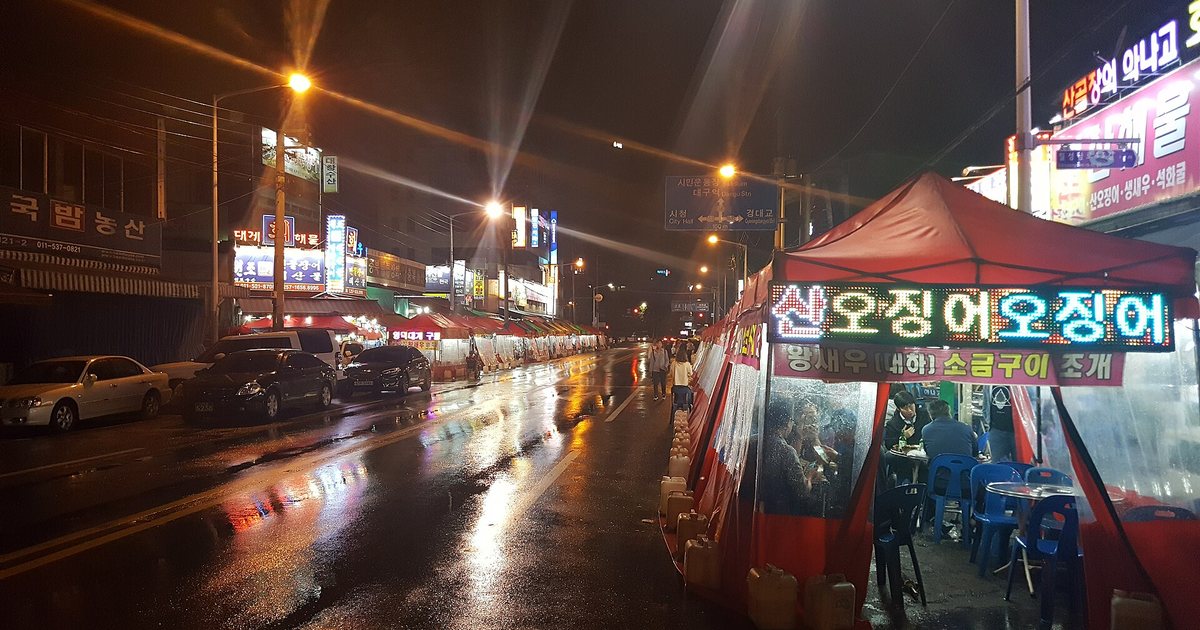
Start with a Korean barbecue dinner, where soju and somaek are the default and the grill gives the table a natural rhythm. Practice the two-hand pour once, learn “geonbae” and “jeoneun sureul mot masyeoyo”, and decide your limit before the first glass. If the night moves to a second round, a pojangmacha (포장마차), the tented street bar, or a noraebang is where you’ll see the drinking games come out.
Visiting in the colder months? Our guide to things to do in Seoul in winter pairs well with a warm stew and a bottle of soju, and the haejangguk shop will be waiting the next morning.
Related reading
Sources k-korea.blog
Prices, opening hours and availability change. Check the official page before you buy or travel.