12 min read
The short answer to what is soju: a clear Korean spirit of roughly 16 to 21% alcohol in a green bottle. It tastes like a softer, slightly sweet vodka, it’s built for sharing in small shot glasses with food, and in Korea it shows up at nearly every barbecue table, office dinner and late-night street tent.
If you’re about to order your first bottle at a Korean BBQ place abroad or on a trip to Seoul, the useful part isn’t the chemistry. It’s knowing how strong it really is, which bottle to pick, and the pouring rules that tell Koreans you know what you’re doing.
Key takeaways
- Green-bottle soju (소주) usually sits around 16 to 21% alcohol: weaker than vodka, about twice as strong as wine.
- Most mass-market soju is diluted ethanol from crops like tapioca and sweet potato, a habit that dates to Korea’s 1960s rice restrictions.
- Never pour your own glass. Pour for others with two hands, and turn slightly away from elders when you drink.
- Somaek (소맥) is soju mixed into beer, and Korea’s go-to hangover fix is a hot bowl of haejang-guk (해장국), literally “soup to cure a hangover.”
What is soju made from? Rice first, then sweet potato and tapioca
Soju started as a distilled rice spirit. Distilling reached Korea in the 13th century, during the Goryeo dynasty, through contact with the Mongol empire, and towns such as Andong became known for strong, fragrant rice soju. That older style still exists and is usually called traditional or distilled soju (증류식 소주, jeungnyusik soju).
The soju most people drink today is a different product. In 1965 the South Korean government restricted the use of rice for making alcohol because rice was needed as food. Producers switched to a cheaper method: they made a high-proof neutral ethanol from starches such as tapioca, sweet potato and other grains, then diluted it with water and added sweeteners and flavorings. This is diluted soju (희석식 소주, huiseoksik soju), and it’s what fills the famous green bottles.
Why does soju taste so mild?
Because it’s built to. Diluted soju starts as a very clean, almost flavorless spirit, and makers add small amounts of sweetener to round off the alcohol burn. The result is a drink that goes down easily with salty, spicy, fatty food. That’s the whole design brief, and it’s also why people underestimate it.
Distilled soju tastes very different. Expect grain, rice and sometimes fruity or nutty aromas, plus a stronger warmth. If you like whisky or baijiu (Chinese grain spirit), try a distilled Korean soju before you judge the category by the green bottle.
How strong is soju? Alcohol content explained
Green-bottle soju typically lands between about 16% and 21% alcohol by volume (ABV). For comparison, most wine is around 12 to 15% and vodka is usually 40%. Fruit-flavored soju is generally lower, often in the low teens. Distilled traditional soju can go much higher, with many bottles at 40% or above.
The strength of everyday soju has drifted down over the decades. Older generations remember noticeably harsher, stronger bottles, and brands have released lighter versions over time as tastes shifted. The exact figure varies by brand and version, so read the label: Korean bottles print it as a number followed by % or 도 (do, “degrees”).
How much soju is in one bottle?
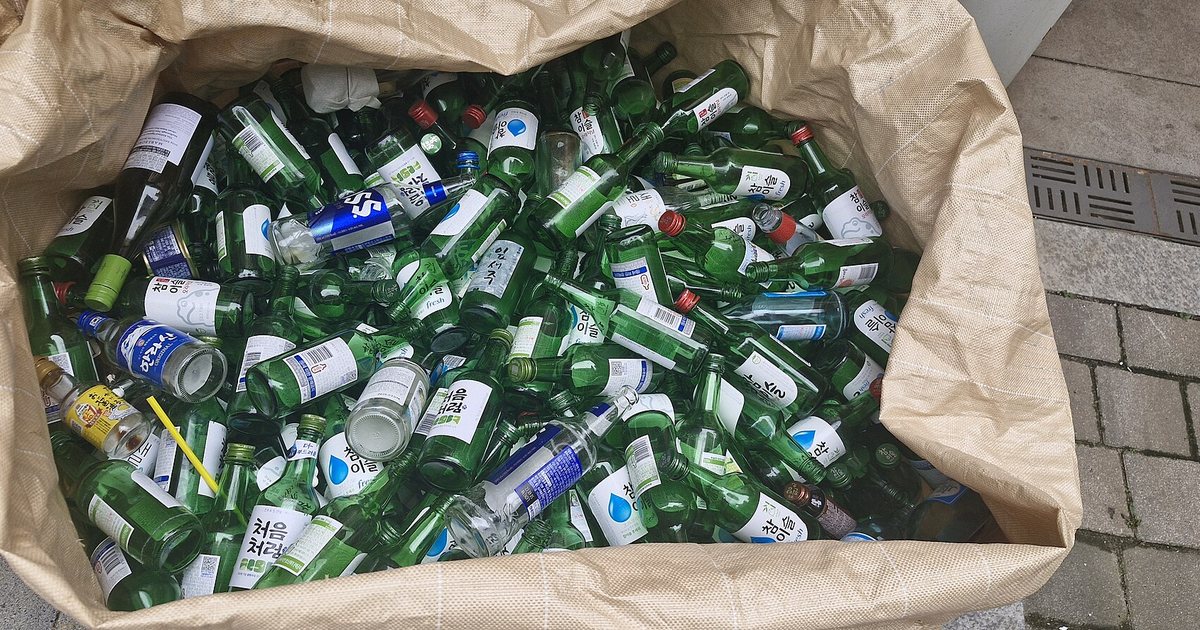
A standard green bottle holds 360ml, which pours roughly seven shots in a Korean soju glass. Do the math and a single bottle carries about as much alcohol as a bottle of wine. Koreans often order bottles for the table rather than by the glass, so it’s easy to lose count when glasses are refilled before they’re empty.
Why does soju come in green bottles?
The green bottle became the look of soju in the 1990s, when a popular brand marketed its spirit as clean and fresh and used green glass to say so. Rivals followed, and green turned into a category signal, the way a tall brown bottle reads as beer.
The bottles also became standardized across major makers so they could be collected, washed and reused regardless of brand. That’s why a Chamisul (참이슬) bottle and a Chum Churum (처음처럼) bottle feel almost identical in your hand. Some newer and retro-styled brands use clear or different glass to stand out, so green isn’t a rule, just the default.
The bottle rituals you’ll see at Korean tables
Before opening, people often turn the bottle upside down and swirl it to make a little whirlpool inside, or give the bottom a firm smack with the palm. Once the cap is off, someone may twist the metal tab and flick it as a party game. None of it changes the drink. It’s table theater, and joining in is a good icebreaker.
Fruit soju vs green bottle vs traditional soju: which to try first
Three styles cover almost everything you’ll see on a menu or shelf. Here’s how they compare.
| Type | Typical strength | Taste | Best for | Try it with |
|---|---|---|---|---|
| Green-bottle soju (diluted, 희석식) | About 16 to 21% | Clean, faintly sweet, little aroma | The classic Korean table experience | Samgyeopsal (grilled pork belly), stews, raw fish |
| Fruit soju (과일소주) | Usually lower, often low teens | Sweet, like flavored candy or juice | First-timers who dislike the taste of alcohol | Fried chicken, tteokbokki (spicy rice cakes) |
| Distilled soju (증류식, e.g. Andong soju 안동소주) | Often 25% to 40%+ | Grainy, rice-forward, warming | Sipping slowly, gifts, spirits fans | Grilled beef, jeon (savory pancakes), a quiet dinner |
Is fruit soju a good choice for beginners?
Yes, with one warning. Flavors such as grapefruit, green grape, peach, plum and strawberry hide the alcohol so well that fruit soju is famous for catching people out. Treat each bottle as real alcohol, because it is.
Which soju brands will you actually see?
Outside Korea, the names you’ll meet most are Jinro and Chamisul from HiteJinro, and Chum Churum from Lotte Chilsung. In Korea you’ll also find regional soju that’s popular in its home province, and premium distilled brands such as Hwayo (화요). Current lineups and strengths change, so check the brand’s official site before you hunt for a specific bottle.
How to drink soju politely: the pouring rules Koreans follow
Soju is a social drink, and the etiquette is about respect for age and status, the same idea behind why Koreans bow. You won’t offend anyone as a foreign guest by getting it slightly wrong, but getting it right gets noticed.
- Don’t pour your own glass. Someone else fills it, and you fill theirs. If your neighbor’s glass is empty, refill it.
- Pour with two hands for elders. Hold the bottle with your right hand and touch your left hand to your right wrist or forearm. With friends your age, one hand is fine.
- Receive with two hands. Hold your glass up with both hands, or your right hand with the left supporting it, when an older person pours.
- Wait for the toast. The first glass is usually drunk together after someone says geonbae (건배, “cheers”).
- Turn away from elders. When drinking in front of a senior, turn your head slightly to the side and cover the glass with your hand.
- Clink lower. When glasses meet, keep the rim of yours a little below an elder’s.
Do you have to finish every shot?
No. The first glass is often a full shot, called one-shot (원샷) in Konglish, but after that sipping is normal. If you want to slow down, leave some soju in your glass: a full glass can’t be refilled, which is a polite way to pause. At company dinners called hoesik (회식), pressure to drink used to be strong, and it has eased a lot. Our guide to Korean work culture covers how those dinners work today.
What is somaek, and how do you mix it?
Somaek (소맥) combines the words soju and maekju (맥주, beer). It’s soju poured into a glass of light lager, and it’s probably the most ordered mixed drink in Korea. Beer softens the soju, soju strengthens the beer, and the bubbles cut through greasy barbecue.
A common starting point is about three parts soju to seven parts beer, but every table has its own idea. Many people pour soju to a set line in the glass, top it with beer, and then tap the glass or use a chopstick to stir until it foams up. Some restaurants sell somaek glasses with printed fill lines so you can pour it the same way every time.
What’s the difference between somaek and a soju bomb?
A soju bomb drops a full shot glass of soju into a glass of beer, glass and all, often after balancing it on chopsticks and knocking it in. Somaek is simply mixed. The bomb is the party version and goes down fast, so treat it as a one-off.
Soju cocktails: how to make yogurt soju and other easy mixes
Koreans mix soju with whatever is in the convenience store fridge. Three combinations come up again and again: soju with a sweet yogurt drink, soju with lemon-lime soda (Koreans call it saida, 사이다), and watermelon soju, or subak soju (수박소주), served inside a hollowed-out watermelon at summer parties.
How to make yogurt soju (요구르트 소주)
- 1 bottle (360ml) green-bottle soju, chilled
- 2 small bottles (about 65ml each) Korean yogurt drink, such as the probiotic drinks sold in Korean groceries
- 1 cup (240ml) lemon-lime soda, chilled
- 1 cup ice cubes
- 2 thin lemon slices, optional
- Chill the soju, yogurt drink and soda for at least an hour so you need less ice.
- Pour the soju and yogurt drink into a jug and stir gently until evenly cloudy.
- Add the soda slowly to keep some fizz, then stir once.
- Fill small glasses with ice, pour, and add a lemon slice. Taste before serving and add more soda if it’s too strong.
What to use if you can’t find Korean ingredients
Any sweet, drinkable cultured milk works in place of the Korean yogurt drink, though it’ll be thicker. Sprite or 7UP stands in for Korean saida. If you can’t find soju at all, a lower-proof neutral spirit diluted with water gets you close in strength, but not in taste. Korean grocery chains such as H Mart in the US usually carry yogurt drinks and Korean sodas, and some stores sell soju where local liquor laws allow.
What to eat with soju, and the Korean hangover foods that follow
Soju is almost never drunk on an empty stomach in Korea. The food served with drinks is called anju (안주), and the pairing logic is simple: salt, fat, spice and broth.
- Samgyeopsal (삼겹살): grilled pork belly wrapped in lettuce with garlic and ssamjang (a thick dipping paste). The default soju meal.
- Kimchi jjigae (김치찌개): bubbling kimchi stew, eaten from the middle of the table.
- Jeon (전): savory pancakes, especially on rainy days.
- Hoe (회): Korean-style raw fish, often with a spicy dip built on gochujang (고추장), Korea’s fermented chili paste.
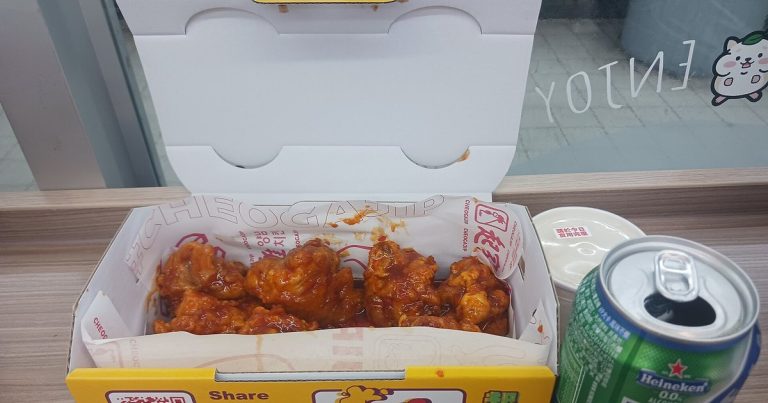
- Fried chicken and tteokbokki for fruit soju and somaek nights.
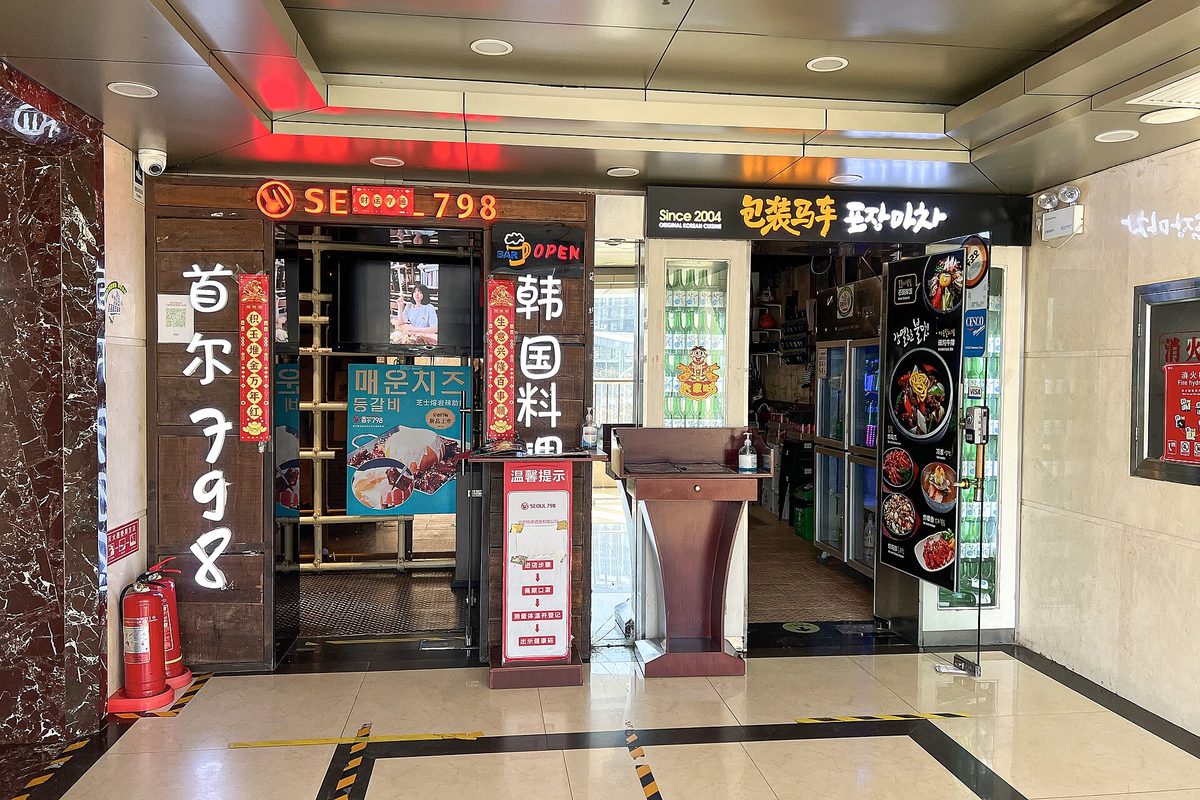
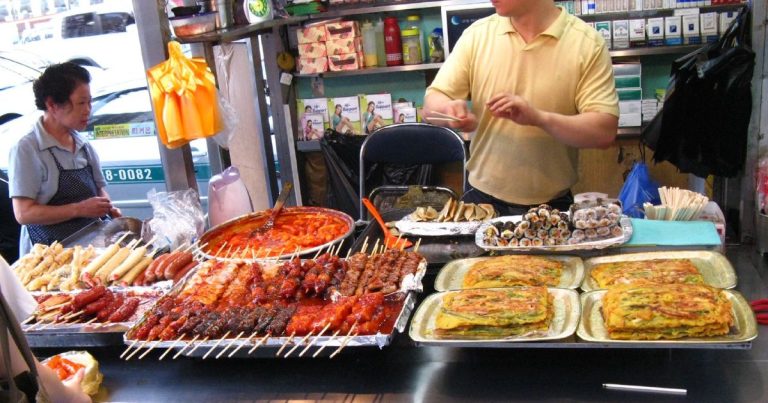
The classic setting is a pojangmacha (포장마차), a tented street bar with plastic stools and an orange tarp. If you’re in Seoul, see our list of things to do in Seoul at night for areas where late eating and drinking cluster.
What do Koreans eat for a hangover?
The morning-after meal has its own word: haejang (해장), roughly “soothing the stomach.” Popular choices include haejang-guk (해장국), a hearty soup often made with ox-bone broth, cabbage and congealed blood; kongnamul-guk (콩나물국), a light bean sprout soup; bugeo-guk (북어국), dried pollack soup; and, for many students, instant ramyeon. Korean convenience stores also sell small “hangover drinks” next to the checkout. These are customs and comfort foods, not medicine: water, rest and drinking less are what actually help.
How to buy soju outside Korea, and drink it responsibly
In the US, the easiest places to try soju are Korean BBQ restaurants and Korean grocery stores. In some states, including California and New York, rules allow businesses with a beer-and-wine license to sell soju below a set alcohol level, which is one reason it’s so common on Korean menus there. Rules differ by state and country, so check your local liquor authority if you want to know what a shop can stock.
When you’re buying, check three things on the label: the ABV, whether it’s diluted (희석식) or distilled (증류식), and the flavor. A fruit soju and a 40% distilled bottle sit side by side on some shelves and are completely different drinks. For prices and availability, check the importer’s or retailer’s site, since both vary widely by market.
How to pace a soju night
- Eat first and keep eating. Korean drinking food exists for a reason.
- Count bottles, not glasses. One 360ml bottle carries roughly a bottle of wine’s worth of alcohol.
- Alternate with water. Most Korean restaurants put a water bottle or jug on the table.
- Leave your glass partly full to stop refills without making a fuss.
- Never drive. Korea’s drunk-driving penalties are strict, and in Seoul late-night buses, taxis and designated-driver services exist so you don’t have to.
If you take medication, are pregnant or have a health condition, check with a doctor before drinking. And if anyone is too drunk to stand or respond, call for help: in Korea the emergency number is 119.
FAQ
Is soju stronger than vodka?
No. Green-bottle soju is usually around 16 to 21% alcohol, while vodka is typically 40%. Some distilled traditional soju reaches vodka-like strength, so check the label on premium bottles.
What does soju taste like?
Everyday soju tastes clean and slightly sweet with a light alcohol bite, a bit like watered-down vodka. Fruit soju tastes like sweet flavored juice. Distilled soju has more grain and rice character and a stronger finish.
Is soju the same as sake?
No. Japanese sake is brewed from rice and not distilled. Most soju is a diluted distilled spirit, and traditional soju is distilled from grains such as rice. The closest Korean cousin to sake is cheongju (청주), a clear brewed rice wine.
Should soju be served cold?
Yes, Koreans almost always drink green-bottle and fruit soju chilled, straight from the fridge, in small shot glasses. Distilled soju can be sipped cool or at room temperature, sometimes over ice.
Why is soju drunk in shot glasses?
Small glasses fit the sharing culture: everyone keeps pouring for each other, so glasses refill often and the drinking stays social. The small glass also makes toasts frequent, which is part of the fun and part of the risk.
Is soju gluten-free?
It depends on the brand and what it’s made from, since producers use different starches and additives. If you avoid gluten for medical reasons, check the maker’s official information or contact the importer rather than assuming.
Your first soju night: what to order and try next
Start with one green bottle of a mainstream brand and a plate of samgyeopsal, so you taste soju the way most Koreans do. On your second round, try a somaek to see why it took over Korean tables. Then pick one bottle of distilled soju such as Andong soju to sip slowly, because it shows you what soju tasted like before the 1965 rice restrictions changed it.
If a trip to Korea is next, plan one dinner at a barbecue restaurant and one late night at a street tent, and keep the next morning free for a bowl of haejang-guk. For current brands, strengths and flavors, the makers’ official sites are the place to check.
Related reading

Sources k-korea.blog
Prices, opening hours and availability change. Check the official page before you buy or travel.