13 min read
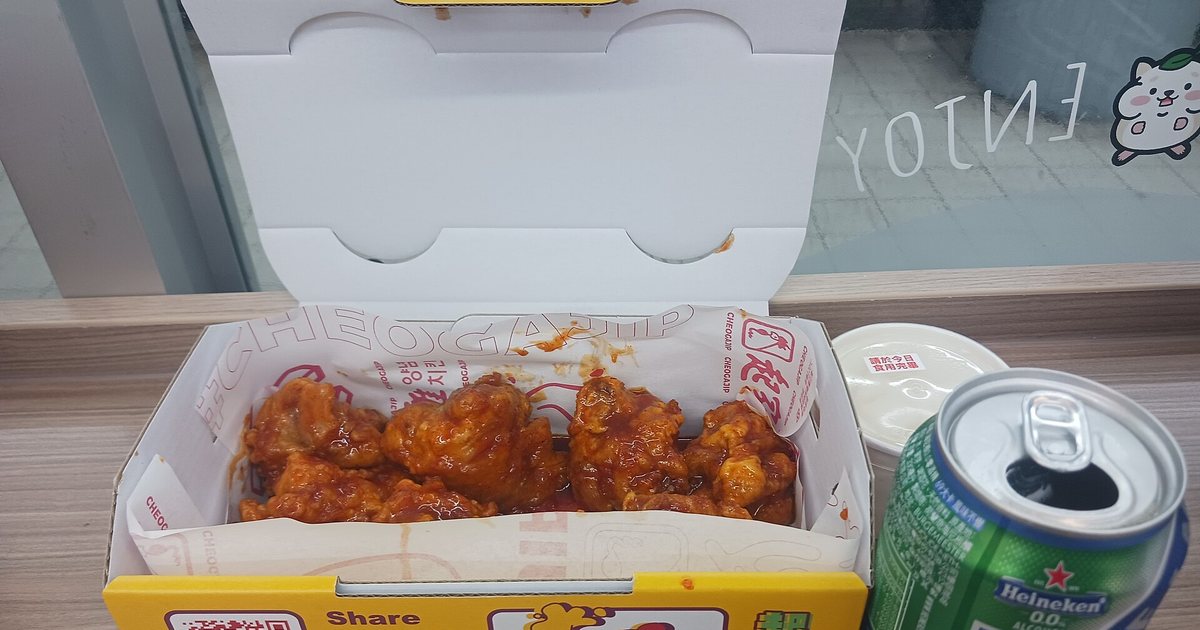
Korean fried chicken (치킨, chikin) gets fried twice, and that 2-step method keeps the crust crisp under sauce. You fry it once to cook the meat through, let it rest, then fry it again hotter. That gives you a thin, glassy shell that stays crunchy under a sticky glaze. In Korea it’s the default late-night order and the classic partner for beer. Below are the styles, the etiquette, the phrases for ordering and a home recipe that works with supermarket ingredients.
Key takeaways
- Fry 1 cooks the meat. Fry 2, at a higher heat, makes the crust. Skip the second fry and the glaze turns it soft within minutes.
- Can’t decide? Order banban (반반, half and half): half plain fried, half sweet-spicy yangnyeom, in one box.
- Chimaek means chicken (chikin) plus maekju (beer). Koreans order it at a hof (beer pub) or have it delivered, even to Han River parks.
- At home, a thin coating of potato starch or cornstarch gets you closest to the Korean crunch. Thick flour breading won’t.
Why is Korean fried chicken fried twice?
It’s all about water. A chicken piece going into hot oil is full of moisture, and on the first fry that moisture boils out through the coating. If you pulled it out then, the crust would be crisp for a minute or two. After that, steam from the meat pushes back into the crust and softens it.
Korean cooks take the chicken out after the first fry, which runs at a moderate heat (home recipes usually say about 160 to 170°C), and rest it for a few minutes. Moisture inside spreads back out to the surface during the rest. The second fry, hotter (around 180 to 190°C) and shorter, drives that last moisture off and sets the starch into a hard, brittle shell. That shell is what lets yangnyeom sauce coat the chicken without turning it soggy straight away.
What is the coating made of?
Southern American fried chicken uses buttermilk and a thick, craggy flour dredge. Korean fried chicken uses a thin batter or dry coat that is heavy on starch: potato starch, cornstarch or a commercial frying mix (튀김가루, twigim-garu). Starch fries harder and lighter than wheat flour and absorbs less oil, so the crust crackles instead of crunching. Many cooks add a little baking powder, which leaves tiny bubbles in the crust and makes it lighter still.
Why are the pieces so small?
Korean chickens for frying are usually smaller birds than the big supermarket chickens sold in the US, and they’re cut on the bone into lots of small pieces. Small pieces cook through fast, and they give you more surface area, which means more crust per bite. That’s also why a whole order is counted in birds: one mari (마리, the counter for animals) is one whole chicken, cut up.
Korean fried chicken styles: yangnyeom vs ganjang vs fried
Every chicken shop in Korea is built on the same three styles, and most menus start with them. Plain fried (후라이드, huraideu, from the English word “fried”) is the baseline. Yangnyeom (양념, “seasoning”) is the red, sweet-spicy glaze. Ganjang (간장, soy sauce) is the savory soy-garlic glaze. Everything else is a variation on those.
| Style | Korean | What it tastes like | Stays crisp? | Order it if |
|---|---|---|---|---|
| Plain fried | 후라이드 (huraideu) | Salty, peppery, all crust | Longest | You want the pure double-fry crunch, or you’re drinking beer |
| Yangnyeom | 양념치킨 | Sweet, garlicky, mild to medium heat from gochujang (fermented red chili paste) | Softens within 20 to 30 minutes | You like sticky wings and don’t mind using napkins |
| Soy garlic | 간장치킨 (ganjang) | Savory-sweet, garlic, no chili heat | Fairly well, thinner glaze | You can’t handle spice, or you’re feeding kids |
| Half and half | 반반 (banban) | Two styles in one box | Depends on the half | It’s your first time or you’re in a group |
| Scallion chicken | 파닭 (padak) | Fried chicken under a pile of thin raw scallions in a tangy sauce | Well, sauce is on the side or on top | You want something fresher to cut the oil |
| Seasoned powder | 뿌링클 style, cheese or spice powder | Dusted with sweet-salty cheese or onion powder instead of sauce | Very well | You want a snack-chip flavor with no drips |
Where did yangnyeom chicken come from?
Fried whole chickens (통닭, tongdak) cooked in big pots at traditional markets go back decades, and you can still get them at market stalls. The sweet-spicy glaze came along in the early chain-store era of the 1980s, when early chains such as Pelicana popularized it. Exactly who invented it is disputed, so be suspicious of any single origin story. Soy-garlic chicken spread later, and Kyochon made it its signature.
What about dakgangjeong?
Dakgangjeong (닭강정) is the market cousin: small boneless chunks, fried crisp and tossed in a thick, sweet glaze, often with peanuts or chili. It’s sold by the cup or box at markets and street stalls and is meant to be eaten cold or warm. Choose it when you want a snack while walking. For a sit-down dinner with beer, go for a full order of chicken.
What is chimaek, and why do Koreans eat chicken with beer?
Chimaek (치맥) combines chikin and maekju (맥주, beer). It’s the most common pairing for Korean fried chicken, and the logic is easy to follow. Salt and grease go well with cold, light lager, and plain fried chicken is a bar snack at heart. Korean mass-market lagers are crisp and not very bitter, so they don’t fight a sweet glaze either.
Chimaek is a social habit more than a recipe. Friends split a whole chicken (or two) after work, after a ballgame or on a summer night. The usual setting is a hof (호프), a casual beer pub where chicken is the main menu, but just as often it’s the living room with a delivery box. If soju (Korea’s clear distilled spirit) shows up at the same table, the rules in our guide to Korean drinking etiquette apply: pour for others, never for yourself.
Chimaek at the Han River
In warm weather, Seoul’s riverside parks along the Han River fill with people sitting on mats eating delivered chicken. Delivery riders bring orders to park entrances or set pickup points, and many shops near the parks hand out flyers. Bring a mat and take your trash home or to the bins. The parks are public and the cleanup rules are enforced.
Did a K-drama make chimaek famous abroad?
In part, yes. The 2013 to 2014 drama My Love from the Star had its lead character crave chicken and beer on the first snowy day. The line became a craze, especially in China, and helped make chimaek a word foreigners know. The city of Daegu runs a summer chimaek festival (the Daegu Chimac Festival). Dates and programs change every year, so check the festival’s official site before planning a trip around it.
How to order Korean fried chicken in Korea
You have three realistic ways to order: sit in at a hof or chicken shop, take it away, or get it delivered. As a visitor, sitting in is the easiest. Walking in to collect a takeaway order is easy too, and a nice bonus is that some shops give a small discount for pickup.
At a hof or chicken restaurant
Point at the menu, say the style and the count, and order beer by the glass or pitcher. Bone-in (뼈, ppyeo) is the default; boneless (순살, sunsal) is usually listed separately and often costs a bit more. Most menus are priced per whole chicken, so for two people one mari is normal. Prices vary by shop and change often, so read the menu board, not a blog.
Delivery apps: Baemin, Coupang Eats and Yogiyo
Most delivery in Korea goes through apps: Baedal Minjok (배달의민족, usually called Baemin), Coupang Eats and Yogiyo. They work well, but they usually need a Korean phone number for verification. Card and payment setup can also be hard without local accounts. Check each app’s current sign-up rules before you rely on one. If you can’t get in, ask your hotel or guesthouse front desk to order for you, or use the shop’s own phone number from a flyer.
Delivered chicken comes in a cardboard box with a vented lid, plus a small cup of pickled radish and often a can of cola. Glazed chicken in a closed box steams itself, so the faster you eat, the better it is.
Phrases for ordering chicken
Counting chickens uses native Korean numbers (han, du, se), which you can learn in our guide to Korean native and Sino numbers. All the phrases below use the polite -yo ending, which is right for any shop.
| English | Korean | Romanization | When to use it |
|---|---|---|---|
| One plain fried chicken, please | 후라이드 치킨 한 마리 주세요 | huraideu chikin han mari juseyo | Basic order (polite) |
| Half and half, please | 반반으로 주세요 | banbaneuro juseyo | Half plain, half yangnyeom (polite) |
| Boneless, please | 순살로 주세요 | sunsallo juseyo | If you don’t want bones (polite) |
| Sauce on the side, please | 소스 따로 주세요 | soseu ttaro juseyo | Takeaway and delivery (polite) |
| Not spicy, please | 안 맵게 해 주세요 | an maepge hae juseyo | Only works if the shop mixes its own sauce (polite) |
| One draft beer, please | 생맥주 한 잔 주세요 | saengmaekju han jan juseyo | At a hof (polite) |
| To go, please | 포장해 주세요 | pojanghae juseyo | Takeaway (polite) |
| More pickled radish, please | 치킨무 더 주세요 | chikinmu deo juseyo | Refills (polite) |
Which Korean fried chicken chains are famous, and what is each known for?
Korea has a huge number of chicken shops, from big franchises to one-family neighborhood places. The big names are good to know because their signature dishes define the styles you’ll see everywhere.
- Kyochon: soy-garlic glaze brushed on by hand, plus a honey series. The best place to start if you want ganjang chicken.
- BBQ (Genesis BBQ): known for its golden olive-oil fried chicken and a wide menu of flavors.
- bhc: best known for Ppuringkle (뿌링클), chicken dusted with a sweet, cheesy seasoning powder.
- Goobne: oven-roasted instead of deep-fried, for people who want less grease.
- Pelicana and Nene: older chains tied to the classic yangnyeom style.
Menus, limited flavors and prices change all the time, so check each brand’s official site or app for what’s current. Several of these brands, along with Bonchon (a chain that started in Korea and is now known mostly overseas), have restaurants outside Korea. Their official store locators will tell you if there’s one near you.
Chain or neighborhood shop?
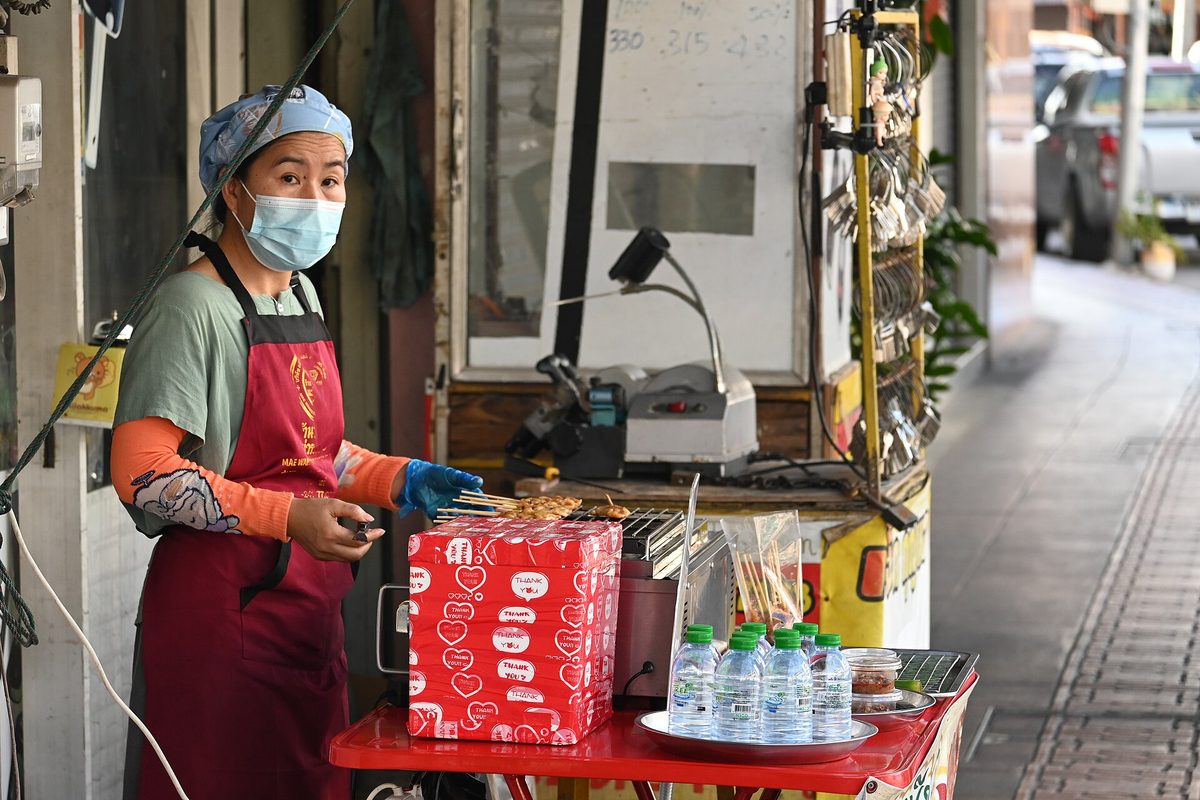
Chains are consistent and easy to order from. Small independent shops and market stalls are where you find old-school whole tongdak, thinner crusts and house sauces. If you see a market stall frying chicken in a big pot of oil with a line out front, that’s your sign.
What comes with Korean fried chicken: radish, cola and more
Every order comes with chicken-mu (치킨무): cubes of white radish pickled in a sweet vinegar brine. Its job is to cut through the oil between bites, and Koreans miss it badly when it’s not there. Other common extras:
- Cabbage salad with a sweet mayonnaise or ketchup dressing, served in many hofs.
- Cola, often a small can thrown in with delivery.
- Salt and pepper mix for dipping plain fried pieces.
- Extra sauces in small cups, sometimes a mustard dip.
- Side dishes like fries, cheese balls or rice cakes on chain menus.
A habit that sometimes surprises foreigners: people don’t tear one piece in half to share. Everyone takes whole pieces from the shared pile. Some people use chopsticks and some use plastic gloves (many shops supply them). For the wider rules on shared plates, see our guide to Korean dining etiquette for foreigners.
How to make Korean fried chicken (양념치킨) at home
- 1 kg chicken wings or drumettes, patted very dry
- 1 tsp salt and 1/2 tsp black pepper
- 1 tbsp grated garlic and 1 tsp grated ginger
- 1/2 cup potato starch (or cornstarch)
- 1/4 cup all-purpose flour
- 1 tsp baking powder
- 1/2 cup cold water (add slowly)
- Neutral oil for deep frying (about 1.5 liters)
- Yangnyeom sauce: 2 tbsp gochujang, 3 tbsp ketchup, 3 tbsp rice syrup or honey, 1 tbsp soy sauce, 1 tbsp sugar, 3 cloves minced garlic, 2 tbsp water
- To finish: 1 tbsp toasted sesame seeds, chopped peanuts (optional)
- Season the chicken with salt, pepper, garlic and ginger. Leave it for 15 minutes while you heat the oil to about 165°C in a heavy pot.
- Whisk the potato starch, flour and baking powder. Add the cold water bit by bit until you have a thin batter, about like pancake batter but runnier. Coat the chicken lightly.
- First fry: cook in small batches for 8 to 10 minutes until pale gold and cooked through. Drain on a rack, not paper.
- Rest the chicken for 5 to 10 minutes. Meanwhile raise the oil to about 185°C.
- Second fry: 2 to 3 minutes per batch until deep golden and hard to the tap. Drain on the rack again.
- Simmer all the sauce ingredients in a wide pan over low heat for 2 to 3 minutes until glossy and slightly thick. Don’t let it burn; the sugar catches fast.
- Take the pan off the heat, toss the chicken in the sauce right before serving and finish with sesame seeds and peanuts. For soy-garlic, swap the sauce for 3 tbsp soy sauce, 3 tbsp rice syrup, 1 tbsp sugar, 4 cloves garlic and 2 tbsp water.
Ingredient swaps and common mistakes with Korean fried chicken
You can make good Korean fried chicken almost anywhere. Most of the ingredients are on regular supermarket shelves, and the two specialist ones keep for months in the fridge.
Where to buy gochujang and rice syrup abroad
Gochujang is sold in red tubs at Korean grocers (H Mart in North America is the best-known chain), most Asian supermarkets and, more and more, the international aisle of big supermarkets. Rice syrup (쌀엿 or 조청) can be swapped for honey, corn syrup or maple syrup, with a slightly different flavor. Potato starch is in Asian and Eastern European groceries. Cornstarch works almost as well. If you’re new to Korean pantry basics, our Korean food guide covers the staples that come up again and again.
Mistakes that ruin the crunch
- Skipping the rest between fries. Without it, the second fry has less moisture to drive out and the crust won’t harden as well.
- Crowding the pot. Too many pieces drop the oil temperature, and the chicken goes greasy, not crisp.
- Saucing too early. Toss right before you eat. Glazed chicken that waits on the counter goes soft.
- Thick batter. Korean crust is thin. If the coating clumps, add water.
- Wet chicken. Pat it dry before seasoning, or the batter slides off.
An air fryer can’t really do a double fry, but it’s fine for reheating. Leftover plain fried chicken comes back to life in a few minutes. Glazed pieces don’t recover as well, which is one more reason to keep sauce on the side.
FAQ
What makes Korean fried chicken different from American fried chicken?
Korean fried chicken has a thin, starch-based coating and is fried twice, so the crust is lighter, thinner and crackly instead of thick and craggy. It’s usually cut into smaller pieces and often glazed after frying. American Southern-style chicken typically uses a buttermilk soak and a single fry in a heavy flour dredge.
Is Korean fried chicken spicy?
Plain fried and soy-garlic chicken aren’t spicy at all. Standard yangnyeom is sweet first, with mild to medium heat from gochujang. Some shops and chains sell much hotter versions, usually marked on the menu with a chili icon or a word like 매운 (maeun, spicy).
What does “banban” mean on a Korean chicken menu?
Banban (반반) means half and half. You get one chicken split between two styles, most often plain fried and yangnyeom. It’s the best first order, because you try both classics at once.
Can foreigners use Korean food delivery apps?
Often, but not always easily. Baemin, Coupang Eats and Yogiyo usually ask for a Korean phone number and local payment details, and the rules change. Check the app’s current sign-up requirements, or ask your accommodation to order for you.
What is the white radish that comes with Korean chicken?
It’s chicken-mu (치킨무): white radish cubes pickled in sweet vinegar brine. It refreshes your mouth between greasy bites and comes free with almost every order. You can make it at home with radish, vinegar, sugar, salt and water.
Do Koreans really eat fried chicken with beer every time?
No, but it’s the most famous pairing, and the word chimaek exists for a reason. Plenty of people order chicken with cola for a family dinner or a late-night snack. Beer is the default at a hof and on summer nights out.
What to try next with Korean fried chicken
If you’re in Korea, start with a banban order and sauce on the side. Next time, compare a soy-garlic specialist with a neighborhood market tongdak. If you visit Daegu in summer, check the Chimac Festival’s official site for that year’s dates.
If you’re cooking at home, try the plain double fry first. Once your crust stays crunchy for ten minutes on the plate, add the yangnyeom glaze. After that, try padak with a pile of shredded scallions, or make dakgangjeong with leftover boneless thighs.
Related reading
Sources k-korea.blog
Prices, opening hours and availability change. Check the official page before you buy or travel.