15 min read
The 10 best places to visit in South Korea beyond Seoul start with Busan, Gyeongju and Jeju Island. Add Jeonju’s hanok village, Sokcho and Seoraksan, Andong, Suwon’s Hwaseong Fortress, Yeosu, Tongyeong and Damyang’s bamboo forest, and you have the trips Koreans themselves take on long weekends. Most are about three hours or less from Seoul by KTX bullet train, express bus or short domestic flight, so even a first trip can fit two or three of them.
Key takeaways
- Busan is the easiest second city. The KTX from Seoul Station takes roughly two and a half hours, and the main beaches sit on the subway.
- Gyeongju was the capital of the Silla kingdom for close to 1,000 years. Bulguksa Temple and Seokguram Grotto have been a UNESCO World Heritage Site since 1995.
- Jeju is the one place to fly to. Flights from Gimpo Airport take about an hour, and Koreans treat the island as their own domestic holiday destination.
- Suwon’s Hwaseong Fortress is the only stop on this list you can reach on Seoul subway Line 1, so a half day is enough.
Best places to visit in South Korea at a glance
Choose by what you want from the trip, then by how far you’re willing to travel. Koreans sort these places roughly the same way: Busan and Jeju for the sea, Gyeongju and Andong for history, Jeonju for food, and Seoraksan for mountains, especially in autumn. Travel times below are rough. Before you buy tickets, check Korail (the national railway) or the bus operator.
| Place | Best for | From Seoul, usually by | Time to spend |
|---|---|---|---|
| Busan (부산) | Beaches, seafood, a big-city night out | KTX from Seoul Station, or a flight from Gimpo | 2 to 3 days |
| Gyeongju (경주) | Silla-era temples, royal tombs, cycling | KTX to Gyeongju Station | 1 to 2 days |
| Jeju Island (제주도) | Volcano hikes, coast roads, slow travel | Flight from Gimpo | 3 to 4 days |
| Jeonju Hanok Village (전주 한옥마을) | Traditional houses, bibimbap, makgeolli | KTX from Yongsan Station | 1 day, or a night in a hanok |
| Sokcho and Seoraksan (속초, 설악산) | Mountain hiking, autumn color, seafood markets | Express bus | 1 to 2 days |
| Andong (안동) | Hahoe Folk Village, Confucian heritage, jjimdak | KTX-Eum from Cheongnyangni Station | 1 day |
| Suwon Hwaseong (수원 화성) | A walkable 18th-century fortress | Subway Line 1 or a fast train | Half a day |
| Yeosu (여수) | Harbor night views, islands, the south coast | KTX to Yeosu Expo Station | 1 to 2 days |
| Tongyeong (통영) | Island views, oysters, naval history | Express bus | 1 to 2 days |
| Damyang (담양) | Bamboo forest, tree-lined roads, tteokgalbi | KTX to Gwangju, then a local bus | Half a day to 1 day |
Busan (부산): beaches, fish markets and the easiest KTX trip
If you only leave Seoul once, go to Busan. It’s Korea’s second-largest city and its biggest port, and it feels looser than the capital. People eat later, talk louder and spend summer nights on the sand. Most Seoul office workers think of Busan as the default weekend escape, and the KTX makes it easy.
What to do in Busan
Haeundae is the famous city beach, lined with high-rises. Gwangalli is the one locals like for evenings, because Gwangan Bridge lights up across the bay and the beachfront is packed with bars and raw-fish restaurants. Both are on Busan Metro Line 2.
Up in the hills, Gamcheon Culture Village began as a settlement for refugees during the Korean War and is now a maze of painted houses and stairways. Haedong Yonggungsa is a Buddhist temple built on the rocks at the water’s edge, which is rare in Korea, where most temples sit in the mountains. Jagalchi Market is the city’s famous fish market. You choose seafood downstairs and have it prepared upstairs.
What to eat in Busan
Order dwaeji gukbap (돼지국밥, pork and rice soup) and milmyeon (밀면, chilled wheat noodles that wartime refugees made when buckwheat was scarce). At BIFF Square, get ssiat hotteok, a fried pancake stuffed with brown sugar and seeds. It’s one of the sweets in our guide to Korean desserts.
- Area
- Southeast coast, South Gyeongsang region
- Nearest station
- Busan Station (KTX); the beaches are on Metro Line 2
- Time needed
- 2 to 3 days
- Before you go
- check opening days and fees on the official page
Gyeongju (경주) and Andong (안동): where Korean history still stands
Koreans call Gyeongju a “museum without walls,” and that’s accurate. For close to 1,000 years it was the capital of Silla (신라), the kingdom that unified most of the peninsula in the 7th century. The town still has grass-covered royal burial mounds right beside its bakeries and cafes. Korean schoolchildren take class trips here, so many adults come back years later and see it with fresh eyes.
What to see in Gyeongju
Bulguksa Temple (불국사) and the Seokguram Grotto (석굴암) Buddha above it have been on the UNESCO World Heritage list together since 1995. In the center of town you’ll find Daereungwon, a park of royal tombs, and Cheomseongdae, one of the oldest surviving astronomical observatories in East Asia. Go to Donggung Palace and Wolji Pond after dark, when the pavilions are lit and reflected in the water. Most Korean visitors come for exactly that view.
Next to the tombs, Hwangridan-gil is a street of cafes and shops in hanok (한옥, traditional Korean houses with tiled roofs). Koreans usually rent bicycles here, since the town is flat and the sights are spread out. Buy a box of Gyeongju bread (경주빵), a small pastry filled with red bean, as a gift for the office. That’s what everyone does.
- Area
- North Gyeongsang Province, about an hour north of Busan
- Nearest station
- Gyeongju Station (KTX), then a city bus or taxi into town
- Time needed
- 1 to 2 days
- Before you go
- check opening days and fees on the official page
Is Andong worth the trip?
Andong is worth it if Joseon-era Korea interests you. The Joseon dynasty ruled from 1392 to 1910, and its yangban (양반, aristocratic scholar class) families shaped Andong more than any other town. Hahoe Folk Village (하회마을) sits in a bend of the Nakdong River. Families still live in its tiled and thatched houses, and it was listed by UNESCO in 2010 together with Yangdong Village near Gyeongju. Queen Elizabeth II visited in 1999, which is still a point of local pride.
Watch for the Hahoe mask dance, and eat Andong jjimdak (안동찜닭), chicken braised in soy sauce with glass noodles. It’s a favorite of Korean students across the country. The town’s market has a whole alley of jjimdak restaurants.
- Area
- North Gyeongsang Province, inland
- Nearest station
- Andong Station (KTX-Eum from Cheongnyangni in Seoul), then a bus to Hahoe
- Time needed
- 1 day
- Before you go
- check opening days and fees on the official page
Jeju Island (제주도): why Koreans fly there instead of going abroad
Jeju is a volcanic island off the south coast, and for decades it has been Korea’s honeymoon and family-holiday island. The flight from Gimpo, Seoul’s domestic airport, takes about an hour. That’s why many Koreans weigh Jeju against a trip to Japan or Southeast Asia.
Top things to do on Jeju
Hallasan (한라산) is the highest mountain in South Korea, and climbing it is the big day hike. Some summit trails need an advance reservation, so check the national park’s official site. Seongsan Ilchulbong, a crater rising out of the sea, is where Koreans climb at dawn to watch the sunrise. Manjanggul is a lava tube cave. Together these sites became Korea’s first UNESCO natural World Heritage Site in 2007.
The Jeju Olle trails are numbered coastal walking routes. They’re a good fit if you’d rather walk than drive. Look out for the haenyeo (해녀), women free-divers who harvest seafood without breathing equipment and are now recognized by UNESCO as intangible cultural heritage. To eat, have Jeju black pork (흑돼지) grilled at the table, and buy Hallabong, the island’s knobbly citrus fruit.
Do you need a car on Jeju?
Most Korean visitors rent one, because buses are slower and the best stops are spread around the coast. To drive as a foreigner you’ll need a valid International Driving Permit along with your license. Check the current rules with your rental company before you book. Without a car, stay in Jeju City or Seogwipo and plan your days around bus routes or a hired driver tour.
- Area
- Island off the south coast
- Nearest station
- No train; fly into Jeju International Airport
- Time needed
- 3 to 4 days
- Before you go
- check opening days, fees and trail reservations on the official page
Jeonju Hanok Village (전주 한옥마을) and Damyang bamboo forest: the food-first southwest
Koreans associate the Jeolla region, in the southwest, with the country’s best food. Restaurants here bring out more banchan (반찬, the free side dishes served with a meal) than you’d get anywhere else. If you’re traveling to eat, start here.
Why go to Jeonju
Jeonju’s Hanok Village is a district packed with tiled-roof houses, guesthouses and teahouses. It’s the place in Korea where you can actually sleep in a hanok, on a heated ondol floor. You’ll see crowds of Korean and foreign visitors in rented hanbok (한복, traditional clothing). Right next to it are Gyeonggijeon, a shrine that holds the portrait of King Taejo, founder of the Joseon dynasty, and Jeondong Cathedral, one of the oldest Catholic churches in Korea.
Food is the real reason to go. Jeonju was named a UNESCO City of Gastronomy, and Jeonju bibimbap (rice topped with vegetables, beef and gochujang chili paste) is the dish every Korean names first. Locals eat kongnamul gukbap (콩나물국밥, bean sprout soup with rice) the morning after a night in the town’s makgeolli (막걸리, milky rice wine) houses, where side dishes keep coming with each kettle.
- Area
- North Jeolla region, southwest Korea
- Nearest station
- Jeonju Station (KTX from Yongsan), then a bus or taxi to the village
- Time needed
- 1 day, ideally with one night
- Before you go
- check opening days and fees on the official page
Is Damyang bamboo forest worth a detour?
Damyang is worth it if you’re already in the southwest. Juknokwon (죽녹원) is a hillside forest of tall bamboo with shaded walking paths, and the Metasequoia-lined road close by is one of the most photographed roads in the country. Soswaewon is a Joseon-era scholar’s garden. Eat tteokgalbi (떡갈비, grilled patties of minced short rib) and daetongbap, rice steamed inside a bamboo tube. Damyang doesn’t have its own KTX stop, so go through Gwangju, the biggest city nearby.
- Area
- South Jeolla region, north of Gwangju
- Nearest station
- Gwangju Songjeong Station (KTX), then a bus from Gwangju
- Time needed
- Half a day to 1 day
- Before you go
- check opening days and fees on the official page
Sokcho and Seoraksan (설악산): the best place in Korea for mountains
Seoraksan National Park, on the northeast coast, has the most dramatic granite peaks in mainland Korea. Autumn is when it’s busiest. The leaves usually turn here before they do further south, and Korean TV news shows the foliage every year. Head there on a weekday if you can.
Hikes and views in Seoraksan
The classic half-day hike goes up to Ulsanbawi (울산바위), a huge rock ridge. The last stretch is long metal stairs, so your legs need to be in decent shape. If you’d rather not climb, take the cable car to the Gwongeumseong fortress ruins, or walk the flat valley trail to Biseondae. You’ll pass Sinheungsa temple and its large bronze Buddha near the park entrance.
What to do in Sokcho
Sokcho is a fishing town, and its beach is a short ride from the park. Abai Village was settled by refugees from the North during the Korean War. It’s known for ojingeo sundae (오징어순대, squid stuffed with rice and vegetables), and to reach it you cross a channel on a small hand-pulled ferry. At the central market, Koreans line up for dakgangjeong, sweet and sticky fried chicken, and take boxes of it home.
- Area
- Gangwon Province, northeast coast
- Nearest station
- No direct train; express bus to Sokcho, then a local bus to the park
- Time needed
- 1 to 2 days
- Before you go
- check trail closures, cable car hours and fees on the official page
Suwon Hwaseong (수원 화성): the best day trip from Seoul
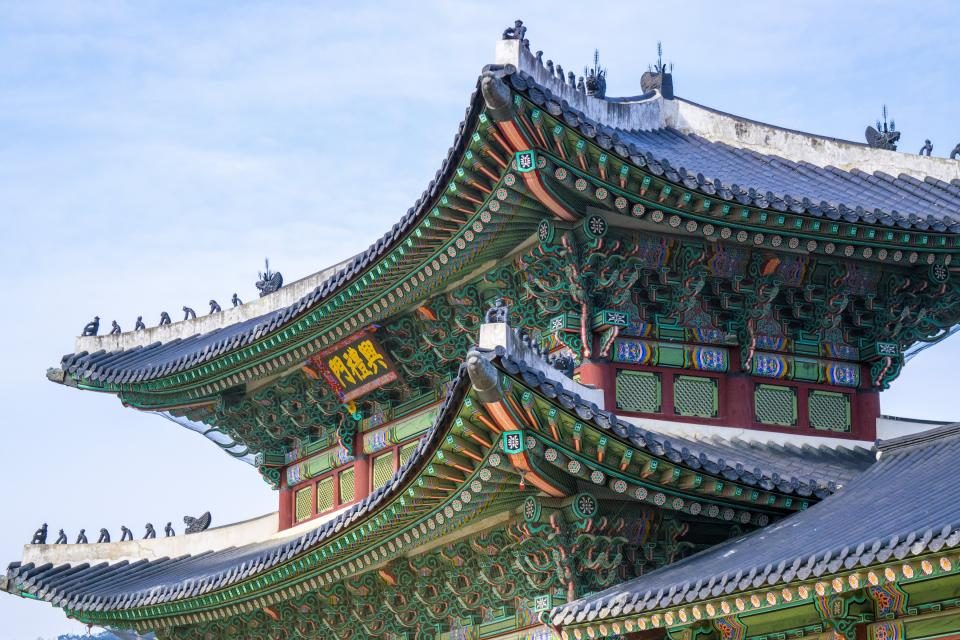
Short on time? This is the one to do. King Jeongjo had Hwaseong Fortress built between 1794 and 1796, and UNESCO listed it in 1997. Its wall loops for several kilometers around old Suwon, with gates, watchtowers and archery posts along the way. Walking the whole circuit takes a few unhurried hours, and the western stretch climbs Paldalsan hill for a view across the city.
Next to the wall is Hwaseong Haenggung, the king’s temporary palace, where traditional performances are sometimes held. Check the official schedule. For food, Koreans go to Suwon for Suwon galbi (marinated beef short ribs) and to Tongdak Street, where whole chickens are fried in big old-style pots. Suwon Station is at the southern end of Seoul subway Line 1, and the faster trains on the same route cut the trip down a lot.
- Area
- Gyeonggi Province, south of Seoul
- Nearest station
- Suwon Station (Line 1 and Korail trains), then a bus or taxi to the fortress
- Time needed
- Half a day
- Before you go
- check opening days and fees on the official page
Yeosu (여수) and Tongyeong (통영): the south coast Koreans love
Rugged peninsulas and hundreds of small islands make up the south coast, and much of it is protected in Hallyeohaesang National Park. Busan gets the foreign tourists. Yeosu and Tongyeong are where many Koreans go when they want the sea without the crowds.
Why go to Yeosu
Yeosu hosted the 2012 World Expo, and that same year the band Busker Busker released “Yeosu Night Sea” (여수 밤바다). The song made the town’s harbor lights famous across Korea. Ride the maritime cable car over the water, walk the camellia-covered island of Odongdo, and go early to Hyangiram, a hermitage on a cliff that Koreans visit for the sunrise. Order gejang (게장, raw crab marinated in soy sauce) with gat kimchi, the local mustard-leaf kimchi.
- Area
- South Jeolla region, south coast
- Nearest station
- Yeosu Expo Station (KTX from Yongsan); Yeosu also has a domestic airport
- Time needed
- 1 to 2 days
- Before you go
- check opening days and fees on the official page
Why go to Tongyeong
Tongyeong is a harbor town tied closely to Admiral Yi Sun-sin, who defeated a Japanese fleet near Hansan Island in 1592. Every Korean learns his name in school. Dongpirang is a hillside mural village above the port. The Mireuksan cable car takes you up for a sweeping view over the islands. Eat chungmu gimbap (plain rice rolls served with spicy squid and radish kimchi), and come in winter for oysters, which this coast is known for across the country.
- Area
- South Gyeongsang region, south coast west of Busan
- Nearest station
- No train; express bus to Tongyeong Bus Terminal
- Time needed
- 1 to 2 days
- Before you go
- check ferry times, cable car hours and fees on the official page
How to get from Seoul to the rest of Korea: KTX, bus or flight
Korea is small and its transport is fast, so you can see a lot of the country without renting a car. The one exception is Jeju. Here’s what Koreans actually use.
- KTX trains (Korea’s high-speed rail) leave from Seoul Station and Yongsan Station, and the private SRT runs from Suseo in southern Seoul. You can book on Korail’s official website or app. Korail also sells a rail pass for foreign visitors; whether it pays off depends on how many long trips you take, so check the current terms on Korail’s site.
- Express buses leave from Seoul Express Bus Terminal in Gangnam, Dong Seoul Terminal and Nambu Terminal. They’re cheaper than the train and the only quick option to Sokcho and Tongyeong. Premium buses have just three wide seats per row.
- Domestic flights from Gimpo Airport make sense for Jeju and can save time to Busan or Yeosu.
- On the ground, a T-money transit card works on buses and subways in most Korean cities. Our guide to how to pay in Korea as a foreigner explains how to load it. Use Naver Map or KakaoMap for directions; Koreans rely on them because Google Maps has limited directions in Korea.
A 6-day route beyond Seoul that works by train
The southeast loop is the most efficient first trip, because Busan, Gyeongju and Andong are close to each other.
Day 1: Suwon
Take Line 1 or a fast train from Seoul, walk the Hwaseong Fortress wall, then have dinner on Tongdak Street. Sleep back in Seoul.
Day 2: Busan (Haeundae and Gwangalli)
Morning KTX to Busan. Spend the afternoon at Haeundae, then go to Gwangalli for the bridge lights and a seafood dinner.
Day 3: Busan (Gamcheon and Jagalchi)
Walk Gamcheon Culture Village, have lunch at Jagalchi Market, and try ssiat hotteok at BIFF Square.
Day 4: Gyeongju
A short train ride north. Rent a bike for Daereungwon, Cheomseongdae and Hwangridan-gil, then see Donggung Palace and Wolji Pond at night.
Day 5: Gyeongju (Bulguksa) to Andong
Go to Bulguksa and Seokguram in the morning, then continue to Andong by train or intercity bus. Check Korail for the current connection.
Day 6: Andong and back to Seoul
Spend the morning at Hahoe Folk Village and eat jjimdak for lunch, then take the KTX-Eum back to Cheongnyangni.
Have more time? Add a separate southwest loop: Jeonju, then Damyang through Gwangju, then Yeosu. Put Jeju on its own leg by plane. Pack layers for Seoraksan and the coast; our Korea packing list by season covers what each month needs.
FAQ
What is the best place to visit in South Korea besides Seoul?
For most first-time visitors, Busan. It’s easy to reach by KTX and has beaches, markets, temples and nightlife in one city. If history interests you more than the sea, go to Gyeongju instead, which is close enough to combine with Busan.
How many days do you need outside Seoul?
Suwon takes half a day. Busan plus Gyeongju fits into three or four days. Jeju deserves at least three days of its own, because the island is bigger than it looks and the sights are spread out. Ten days total leaves comfortable room for Seoul and two regions.
Is the KTX the best way to travel around South Korea?
The KTX is the fastest way between Seoul and Busan, Gyeongju, Jeonju, Yeosu and Gwangju. Express buses are better for Sokcho and Tongyeong, which have no direct rail line, and flying is the only practical way to Jeju. Look up current times and fares on Korail and the bus operators’ official sites.
Can you visit Jeju without a car?
Yes, but it takes more planning. Buses connect Jeju City, Seogwipo and the main sights, although they’re slower and less frequent in rural areas. Pick one or two areas, stay close to them, and think about a day tour for the far side of the island.
When is the best time to visit South Korea outside Seoul?
Spring and autumn are what Koreans themselves pick. Gyeongju is famous for its cherry blossoms in spring, and Seoraksan and Damyang look best when the leaves turn in autumn. Summer is beach season in Busan, but it’s hot and humid, with a rainy spell.
Do you need to speak Korean to travel outside Seoul?
No, but English is less common than in Seoul. Station signs, KTX announcements and major sights usually have English. Small restaurants and buses may not. A translation app and a few phrases like annyeonghaseyo (hello) and gamsahamnida (thank you) go a long way.
Planning your first trip outside Seoul: what to book first
Begin with how you’ll get there, not where you’ll sleep. If Jeju is on your list, book that flight first, then KTX seats for any route that falls on a Korean holiday or weekend. Next, choose where to stay: a hanok guesthouse in Jeonju, somewhere near Gwangalli in Busan, and somewhere close to the Seoraksan park entrance if you plan an early hike.
Check the official site for every opening day, fee, cable car and trail reservation shortly before you go, since these change by season. If you’re still choosing between countries, our Korea vs Japan comparison sets them side by side. If you’ve already decided on Korea, start with the Busan and Gyeongju loop. It’s what most Koreans would recommend to a friend visiting for the first time.
Related reading
Sources k-korea.blog
Prices, opening hours and availability change. Check the official page before you buy or travel.