12 min read
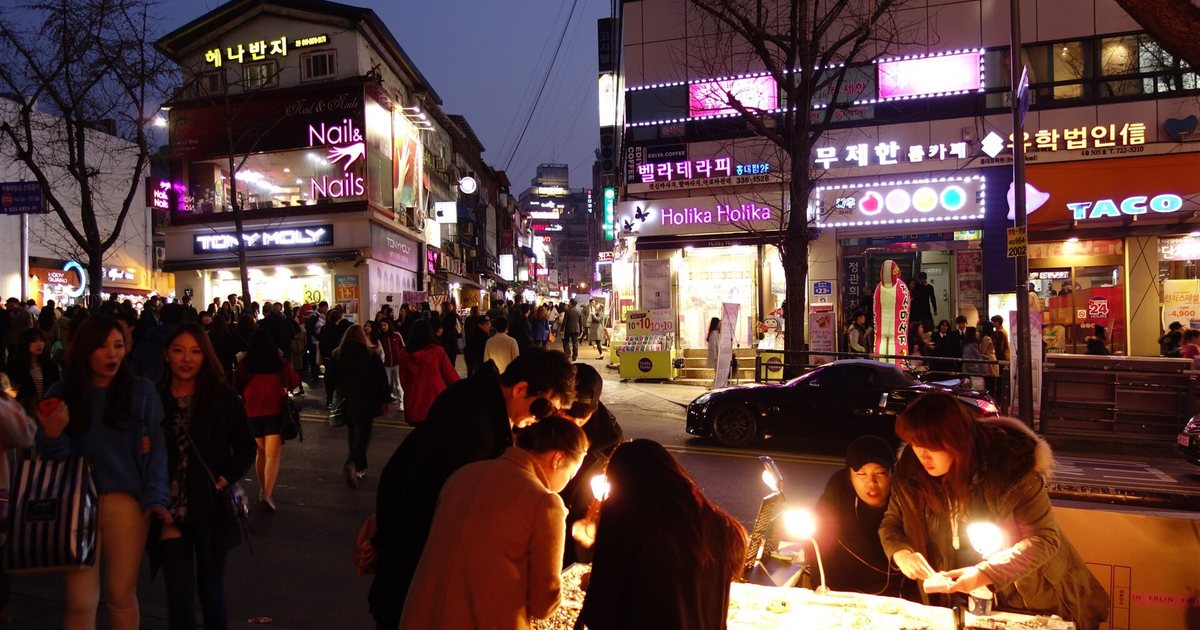
Hongdae Seoul is the student district around Hongik University, reached by 3 subway lines at one station. Come for street busking, indie clubs, late bars and cafes, then walk 10 minutes north into Yeonnam-dong and the Gyeongui Line Forest Park, where locals actually spend their weekends.
It matters for visitors for a practical reason too. The airport train from Incheon stops right here, so Hongdae is often the first Seoul neighborhood people see and the easiest one to base yourself in.
Key takeaways
- Hongik University Station serves Line 2, the Gyeongui-Jungang Line and the AREX all-stop train from Incheon and Gimpo airports.
- Exit 9 puts you on the main Hongdae streets; Exit 3 opens onto the Gyeongui Line Forest Park and Yeonnam-dong.
- Busking peaks on Friday and Saturday evenings along the Walking Street and around the old Hongdae playground.
- Clubs check ID at the door: bring your passport, because Korea’s drinking age is 19 counted by birth year.
What is Hongdae Seoul, and why do Koreans go there?
Hongdae (홍대) is short for Hongik Daehakgyo (홍익대학교), Hongik University, one of Korea’s best-known art and design schools. The name now covers the whole web of streets between Hongik University Station, Sangsu Station and Hapjeong Station in Mapo-gu (마포구), a district on the west side of Seoul north of the Han River.
The art school shaped everything. Decades of design students brought cheap rents, live music rooms, street art and late-night drinking, and Hongdae became the home of Korea’s indie music scene. Today it’s far more commercial, with global brands and K-pop merchandise shops, but the feel is still young. Most people on the street on a Saturday night are in their 20s.
Koreans treat Hongdae as a place to meet friends, not a sightseeing spot. A typical evening goes like this: meet at the station exit, eat samgyeopsal (grilled pork belly) or dakgalbi (spicy stir-fried chicken), move to a bar, then a noraebang (karaoke room) or a club. Daytime is for cafes, shopping and photo booths.
Hongdae vs Itaewon vs Gangnam: which suits you?
Pick Hongdae if you want a young, scrappy, music-and-street-life crowd and low-cost food and drinks. Itaewon is more international, with a longer foreign community history and a wider range of global restaurants. Gangnam is polished and pricier, with office-worker nightlife and big-brand clubs. For a first trip with one night out, Hongdae is the most Korean of the three.
How to get to Hongdae from Incheon Airport and central Seoul
Everything starts at Hongik University Station (홍대입구역). Three lines meet here, which is why so many guesthouses and hotels cluster nearby.
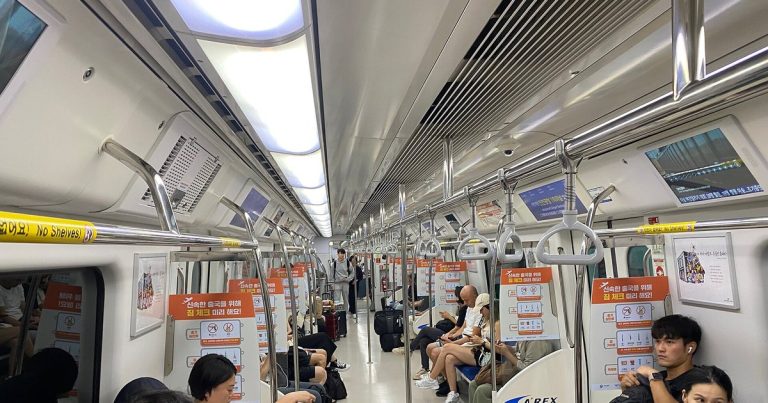
- From Incheon Airport: take the AREX (Airport Railroad Express) all-stop train, not the express. The express runs nonstop to Seoul Station and skips Hongdae. The all-stop train goes straight to Hongik University Station.
- From Gimpo Airport: the same AREX line runs from Gimpo, a short ride.
- From Myeongdong or City Hall: take Line 2 west. From Seoul Station, AREX gets you there in one stop-pattern without changing.
- From Gangnam: Line 2 runs the whole way, so no transfer is needed, though it’s a long ride.
Tap in with a T-money card (Korea’s rechargeable transit card, sold at convenience stores and station machines). Our guide on how to pay in Korea as a foreigner covers loading it with cash and which cards work. Check fares and timetables on the official AREX and Seoul Metro sites, since they change.
Which Hongdae station exit should you use?
Hongik University Station is big and the exits are far apart. Locals arrange to meet at an exit number, and you’ll hear “9번 출구” (gu-beon chulgu, Exit 9) constantly.
- Exit 9 (and Exit 8): toward the main Hongdae streets, the university and the busking areas.
- Exit 3: straight onto the Gyeongui Line Forest Park and toward Yeonnam-dong.
- Sangsu Station (Line 6): closer to the club street and the quieter, café-heavy lanes south of the university.
- Hapjeong Station (Lines 2 and 6): handy for the southern edge and for walking on to Mangwon.
Where to watch busking in Hongdae
Busking (street performance) is Hongdae’s signature. On a warm weekend evening you’ll find singers with amps, acoustic duos, and K-pop dance cover crews performing full choreography to a ring of phones.
The main stage is the Hongdae Walking Street (걷고싶은거리, “the street you want to walk”), a pedestrian strip a few minutes from Exit 9. The district marks out busking space along it, and the crowd tells you where the best act is. The other classic spot is the Hongdae playground (홍대 놀이터), officially Hongik Children’s Park, opposite the university, long tied to the hip-hop and free-market scene.
- Area
- Hongdae Walking Street, Mapo-gu
- Nearest station
- Hongik University Station, Exit 9
- Time needed
- 1 to 2 hours in the evening
- Before you go
- Performances are informal and weather-dependent; weekend evenings are the safest bet
Busking etiquette Koreans follow
- Film, but don’t block. Everyone records. Stay out of the performance space and keep your phone below the heads of the people behind you.
- Tip if you enjoyed it. Many acts have an open case or a QR code. Small cash is normal.
- Follow, don’t heckle. Dance crews post their full clips on social media. Following their account is how Koreans show support.
Rain or cold kills busking fast. In winter, plan your Hongdae evening around indoor live music instead.
Hongdae nightlife: clubs, live music and bars
Hongdae nightlife splits into three layers, and Koreans move between them in one night. It starts with dinner and drinks, moves to a second round (icha, 2차), and for some ends at a club or a karaoke room near dawn.
Indie music clubs and live houses
Hongdae built Korean indie rock, punk and electronic music in small basement venues. Long-running live houses such as Rolling Hall host local bands and touring acts. Smaller rooms come and go, so check each venue’s social media for that week’s lineup and door details rather than trusting an old blog list. Shows usually start in the evening and audiences are small enough that you’ll stand a few meters from the band.
Dance clubs in Hongdae
Hip-hop, EDM and K-pop nights dominate, concentrated around the lanes between Hongdae and Sangsu Station (often called club street). Weekend nights get packed after midnight. Two rules apply everywhere:
- Bring your passport. Bouncers check ID. Korea’s legal drinking age is 19, counted by birth year, and a foreign driver’s license is not always accepted.
- Expect a dress check at some clubs. Flip-flops and gym wear can get you turned away.
Bars, pocha and noraebang
Most of Hongdae’s drinking happens in ordinary places. A pocha (포차, short for pojangmacha, a casual tent-style bar) serves soju with spicy stews and fried snacks. A hof (호프) is a beer-and-fried-chicken pub. If you’re new to Korean drinking customs, read what soju is and how the pour works before you go.
Noraebang (노래방, karaoke rooms rented by the hour) are on every block, plus coin noraebang (코인노래방), tiny booths where you pay per song. Students use coin noraebang alone or in pairs on any night of the week.
For more ideas after dark across the city, see our list of things to do in Seoul at night.
Hongdae cafes and themed cafes worth your time
Hongdae and the neighborhoods around it hold some of the densest café streets in Seoul. Korean café culture is about the space as much as the coffee: students study for hours, friends meet for dessert, and new spots compete on interior design and one signature drink or cake.
What Koreans order at a Hongdae café
- Iced Americano, year-round, even in January. Koreans call it “ah-ah” (아아, short for ice Americano).
- Signature lattes such as cream-topped, black sesame or sweet potato drinks.
- Bakery desserts: salt bread, croffles (croissant waffles), and elaborate cakes.
Weekend afternoons are busy. If a café has a waiting list, there’s often a tablet at the door where you enter a Korean phone number. Without one, ask staff; many will add you by name.
Themed cafes in Hongdae
Hongdae is where many of Seoul’s themed cafés started: board-game cafés, comic-book cafés (manhwabang, 만화방, where you read webtoons and comics by the hour), character cafés and animal cafés. Two points before you book:
- Animal cafés: Korea tightened rules on displaying wild animals outside zoos, so exotic-animal cafés are far less common than old travel blogs suggest. Cat and dog cafés remain. Look for ones that limit handling and give animals space to retreat.
- Pop-up and character cafés often run for a few weeks only. Check the brand’s or café’s official social media for current dates.
Gyeongui Line Forest Park and Yeonnam-dong
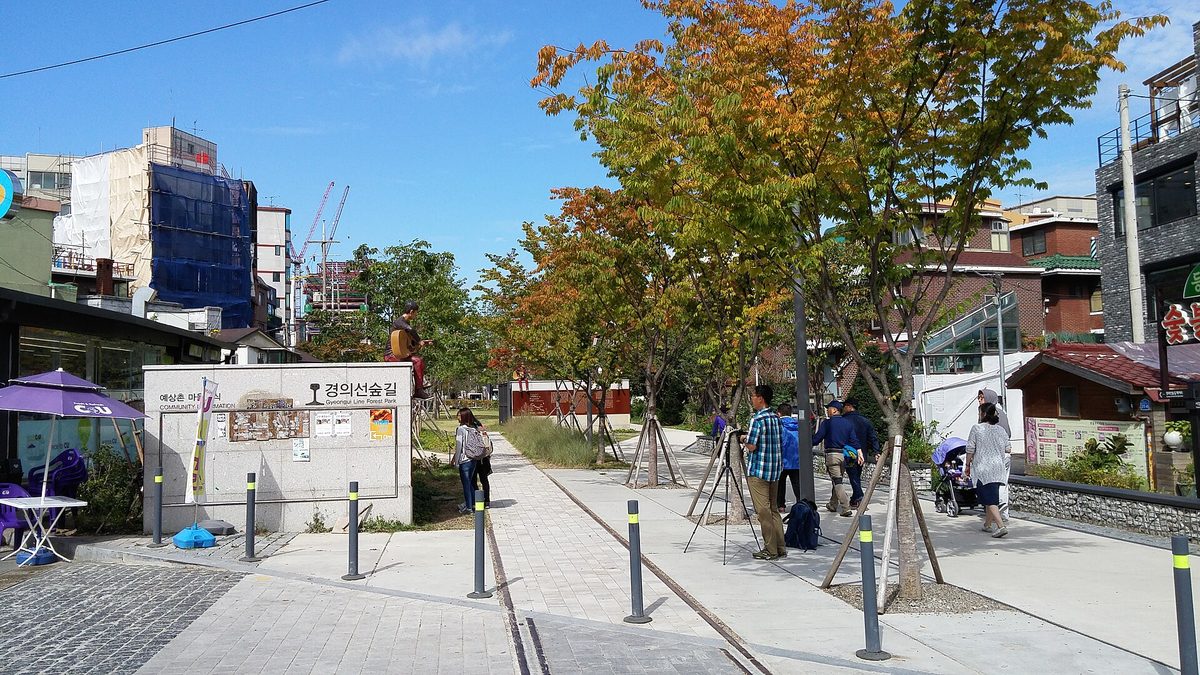
If you only have time for one part of greater Hongdae by day, make it this one. The Gyeongui Line Forest Park (경의선숲길) is a long, narrow park built where the old Gyeongui railway once ran above ground; the trains now run underground. The stretch next to Hongik University Station is so popular that Koreans jokingly call it “Yeontral Park” (연트럴파크), a blend of Yeonnam and Central Park.
On sunny weekends, the lawn fills with people on picnic mats eating convenience-store snacks and fried chicken. Along both sides runs Yeonnam-dong (연남동), a residential neighborhood turned into lanes of small restaurants, wine bars, bakeries and design shops. It’s calmer and a little older in crowd than central Hongdae.
- Area
- Gyeongui Line Forest Park and Yeonnam-dong, Mapo-gu
- Nearest station
- Hongik University Station, Exit 3
- Time needed
- 2 to 3 hours for a walk, lunch and a café
- Before you go
- The park is open-air and free; check individual restaurants’ opening days on their official pages or Naver Map
Where to go beyond Yeonnam-dong
- Mangwon-dong (망원동): a short ride on Line 6 or a walk from Hapjeong. Mangwon Market is a traditional market where locals buy groceries and snacks, and the Han River park is close by.
- Sangsu-dong and Hapjeong: quieter streets south of the university with cafés, small bars and record shops.
| Area | Best for | Nearest station | Best time to go |
|---|---|---|---|
| Hongdae main streets | Busking, shopping, street food, clubs | Hongik University (Exit 9) | Weekend evenings and late night |
| Gyeongui Line Forest Park | Picnics, walking, people-watching | Hongik University (Exit 3) | Sunny afternoons, spring and autumn |
| Yeonnam-dong | Restaurants, cafés, small shops | Hongik University (Exit 3) | Lunch to early evening |
| Sangsu and club street | Clubs, bars, quieter cafés by day | Sangsu (Line 6) | After 10 pm on weekends |
| Hapjeong | Cafés, dinner, a calmer base | Hapjeong (Lines 2 and 6) | Weekday evenings |
| Mangwon-dong | Traditional market, Han River access | Mangwon (Line 6) | Late morning to afternoon |
Shopping in Hongdae and the photo booths everyone uses
Hongdae shopping is about trends, not luxury. Expect street-fashion boutiques, vintage and secondhand clothing, sneaker stores, K-pop merchandise and album shops, stationery, and character stores. The AK& Hongdae mall sits right on top of the station for a quick indoor option.
What to buy in Hongdae
- Korean street fashion: oversized tees, wide-leg trousers and caps from local brands. Sizes run small; try things on.
- K-beauty: Olive Young (Korea’s main health-and-beauty chain) has branches here, as do brand shops for local makeup and skincare.
- K-pop goods: albums, photocards and light sticks at dedicated record and merch stores.
- Stationery and small gifts: stickers, notebooks and phone accessories in design shops.
- Everyday cheap finds: Daiso, the discount household chain, for travel basics and snacks.
For a wider shopping list and where else to find it, see what to buy in Korea. Ask about instant tax refunds at participating stores if you spend enough in one place; current thresholds are on the official refund operators’ pages.
Korean photo booths: how they work
Self-photo booths are a ritual for young Koreans. Friends, couples and fan groups duck into one after dinner and walk out with a strip of four photos, the format known as insaeng-necut (인생네컷, “life four cuts”), which is also the name of one major chain. Other common brands include Photoism and Harufilm. Hongdae has dozens of booths, some open around the clock.
- Pick a frame on the touchscreen. Many booths offer limited frames tied to K-pop artists or characters.
- Pay by card or cash at the machine.
- Grab props from the wall: headbands, glasses, hats.
- Pose for a set number of shots on a countdown, then choose your favorites.
- Print, and scan the QR code to download the digital files and a short clip.
The mistake first-timers make is wasting the countdown deciding on a pose. Agree on four poses before you step in.
One day in Hongdae: a plan Koreans would recommend
This plan assumes a weekend day and follows the way Seoul locals use the area, from quiet morning lanes to a busy night.
Late morning: Mangwon Market
Start at Mangwon Station on Line 6. Walk Mangwon Market for street snacks like fried chicken bites, tteokbokki (spicy rice cakes) and hotteok (sweet filled pancakes), then stroll to the Han River park nearby if the weather is good.
Lunch and afternoon: Yeonnam-dong and the Forest Park
Head to Yeonnam-dong for lunch at one of the small restaurants off the Gyeongui Line Forest Park. Spend the afternoon walking the park and stopping at a café. Pick one place with a signature dessert rather than café-hopping.
Early evening: shopping and a photo booth
Cross to the main Hongdae streets via Exit 9 territory. Browse street fashion and K-pop shops, then take a four-cut photo strip before dinner.
Night: dinner, busking and a second round
Eat samgyeopsal or dakgalbi with soju, watch busking on the Walking Street, then choose your second round: a live show, a pocha, a club, or a coin noraebang. Check the last train before ordering the next bottle.
Common mistakes in Hongdae
- Taking the AREX express from the airport. It doesn’t stop at Hongdae. Use the all-stop train.
- Arriving on a weekday morning expecting a scene. Hongdae wakes up after lunch. Busking and nightlife are evening events.
- Leaving your passport at the hotel. No ID, no club.
- Skipping Yeonnam-dong. Many visitors see only the main streets and miss the part locals like best.
- Leaving trash in the Forest Park. Bins are scarce in Seoul; Koreans carry trash home or to a convenience store.
FAQ
Is Hongdae worth visiting in Seoul?
Yes, if you want street life, music and a young local crowd. It’s the best Seoul neighborhood for busking and indie shows, and Yeonnam-dong next door is one of the city’s most pleasant areas for food and cafés. If you prefer palaces and history, give it one evening rather than a full day.
Which subway station is Hongdae?
Hongik University Station (홍대입구역), on Line 2, the Gyeongui-Jungang Line and AREX. Use Exit 9 for the main streets and Exit 3 for the Gyeongui Line Forest Park and Yeonnam-dong. Sangsu and Hapjeong stations also serve the southern side.
Is Hongdae safe at night?
Hongdae is busy and generally considered safe late at night, with crowds and convenience stores open on most blocks. Use normal city sense: watch your drink, keep your phone secure in crowds and agree with friends on how you’ll get home. Korea’s emergency number is 112 for police.
What time does Hongdae get busy?
Shops and cafés fill up from early afternoon. Busking usually starts in the evening, and clubs get crowded after midnight, especially on Friday and Saturday. Weekday afternoons are the calmest time to shop.
Can you stay in Hongdae as a tourist?
Many visitors do, because the AREX airport train stops here and Line 2 reaches most of central Seoul and Gangnam. The trade-off is noise on weekend nights. Pick a place near Hapjeong or Yeonnam-dong if you want quieter streets within walking distance.
Do I need cash in Hongdae?
Cards work almost everywhere, including bars and photo booths. Keep a little cash for street food, market stalls and tipping buskers. A loaded T-money card covers the subway and buses.
Plan your next stop after Hongdae
Hongdae pairs well with the Han River: Mangwon Han River Park is close enough for a sunset walk before dinner. If you’re landing with only a few hours, our Incheon Airport layover guide shows how Hongdae fits into a short stop via AREX. Before you go, check three things on official pages: the last train time on your line, the social media of any live house you want to see, and the weather forecast, since rain empties the busking streets.
And if Seoul is only your starting point, Busan, Gyeongju and Jeju are the obvious next moves; see our best places to visit in South Korea.
Related reading
Sources k-korea.blog
Prices, opening hours and availability change. Check the official page before you buy or travel.