13 min read
These 20 Korea travel tips fix the mistakes first-time visitors make most, starting with maps. The short version: install Naver Map or KakaoMap before you fly, don’t tip, carry your own trash, keep your voice down on the subway, and save the numbers 112, 119 and 1330.
None of these mistakes will ruin a trip. Together, though, they cost you hours of wandering and a few awkward moments at dinner. Every tip below is what a Korean would tell a friend landing in Seoul for the first time.
Key takeaways
- Google Maps often can’t give walking or driving directions in Korea. Koreans use Naver Map (네이버 지도) or KakaoMap (카카오맵).
- Tipping isn’t part of Korean culture. The price on the menu is the price you pay.
- Public trash bins are rare on Seoul streets, so carry a small bag and use the bins in convenience stores and subway stations.
- Save 112 (police), 119 (fire and ambulance) and 1330 (the Korea Travel Hotline, with interpreters) in your phone before you land.
Korea travel tips: the 20 mistakes at a glance
Here’s the whole list in one table, grouped by where the mistake usually happens. The sections below explain each fix and what Koreans actually do instead.
| # | The mistake | What to do instead |
|---|---|---|
| 1 | Relying on Google Maps for directions | Use Naver Map or KakaoMap |
| 2 | Searching places only in English | Save addresses in Hangul (Korean script) |
| 3 | Waving at taxis in the rain or late at night | Book through Kakao T |
| 4 | Landing without a translator app | Install Papago (파파고) |
| 5 | Arriving with no mobile data | Sort an eSIM, SIM or roaming plan before you fly |
| 6 | Leaving a tip | Don’t. Pay the listed price |
| 7 | Assuming every machine takes your foreign card | Carry some cash as backup |
| 8 | Buying single subway tickets every ride | Get a T-money (티머니) transit card |
| 9 | Hunting for street trash bins | Carry your trash to a station or convenience store |
| 10 | Taking phone calls on the subway | Text, or talk quietly and briefly |
| 11 | Sitting in priority seats | Leave them free, even when the car is empty |
| 12 | Waiting for a server to notice you | Press the table call button or say “jeogiyo” |
| 13 | Waiting for the bill at the table | Pay at the counter on the way out |
| 14 | Standing chopsticks upright in rice | Lay them on the table or the rest |
| 15 | Pouring your own soju | Pour for others; let them pour for you |
| 16 | Wearing shoes onto raised floors | Shoes off at homes, floor-seat restaurants and temple halls |
| 17 | Writing someone’s name in red ink | Use black or blue |
| 18 | Beckoning with your palm up | Wave with your palm facing down |
| 19 | Assuming food delivery apps will just work | Ask your hotel or use a convenience store |
| 20 | Not saving emergency numbers | Save 112, 119 and 1330 |
Why Google Maps doesn’t work well in Korea, and what Koreans use
This is mistake number 1, and it catches almost everyone. South Korea restricts the export of detailed map data, so Google Maps has long been able to show bus and subway routes but usually can’t give walking or driving turn-by-turn directions. You get a route on the screen and then you’re on your own for the last 400 meters, which in a maze like Bukchon or the back streets of Euljiro is where you actually get lost. The rules have been under discussion for years, so check whether anything has changed before you fly. Either way, Koreans don’t use Google Maps for this.
Naver Map vs KakaoMap: which one to download
Koreans use Naver Map (네이버 지도), from Naver, the country’s biggest search portal, or KakaoMap (카카오맵), from the company behind KakaoTalk, the messaging app nearly every Korean has. Both give walking directions, live bus arrivals, subway exits and which train car stops closest to your transfer. Naver Map has a solid English interface and is the one most foreign visitors settle on.
KakaoMap is great too, especially if you’ll also use Kakao T for taxis. Install both. It costs nothing, and when one can’t find a small restaurant the other usually can.
Search in Hangul, not just English
Mistake number 2 is typing “that famous tofu stew place” in English and getting nothing back. Many small restaurants and cafes are listed only in Korean. Copy the Hangul name or address from the place’s social media page or your booking confirmation and paste it into the map. Do the same for your hotel.

Apps to install before you land in Korea
Koreans run their daily lives through a handful of local apps. Set these up at home on hotel Wi-Fi, not in the arrivals hall.
- Naver Map or KakaoMap: directions, covered above.
- Kakao T (카카오 T): the taxi app Koreans use. This is mistake number 3: standing in the rain waving at taxis that are already booked through the app. Check whether it accepts your foreign card when you register; if not, you can usually choose to pay the driver directly.
- Papago (파파고): Naver’s translator. Mistake number 4 is landing without one. Papago is built for Korean and handles menus, signs and spoken phrases, and its camera mode reads a whole menu at once.
- KakaoTalk (카카오톡): Korea’s default messaging app. Guesthouses, tour guides and small shops often prefer it to email.
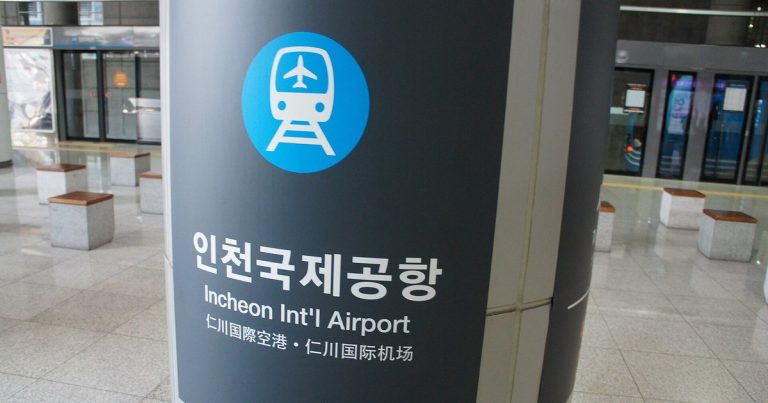
Mistake number 5 is arriving with no data. Every app above needs a connection, and so do many restaurant ordering systems. Buy an eSIM, a local SIM or a roaming plan before the trip and compare current options on the carriers’ official sites. If you’re still planning the ride from the airport, our Incheon Airport to Seoul guide compares AREX, bus and taxi.
Money in Korea: cards, cash and the no-tipping rule
Do you tip in Korea?
No. That’s mistake number 6. Tipping isn’t part of Korean culture at restaurants, cafes, taxis or hair salons, and a left-behind coin can make staff chase you down the street to return it. The price on the menu is what you pay. Some hotels and upscale restaurants add a service charge to the bill; that’s already included, so don’t add more on top.
Cards vs cash in Korea
Korea is one of the most card-friendly countries anywhere. Convenience stores, cafes, taxis and most restaurants take cards, and Koreans rarely carry much cash. Mistake number 7 is assuming that means every foreign card works everywhere. Some self-order kiosks, ticket machines and Korean payment apps only accept Korean-issued cards, and some traditional market stalls and street food carts still prefer cash. Carry a modest amount of won as backup and withdraw it from ATMs marked “Global” or “Foreign Card”.
Get a T-money card on day one
Mistake number 8 is buying a single-journey ticket for every subway ride. Koreans tap a rechargeable transit card, and for visitors that usually means T-money (티머니). You can buy and top one up at convenience stores and subway stations. It works on the Seoul subway, city buses, many taxis and in other cities too, and it handles transfer discounts automatically.
Top-up machines in stations have traditionally taken cash, which is another reason to keep some won. Tap out when you leave the bus as well as when you board, or you can miss the transfer discount.
Subway and street etiquette Koreans actually follow
Where are the trash bins in Seoul?
Mostly, there aren’t any. Mistake number 9 is walking three blocks with an empty coffee cup looking for one. Public bins are scarce on Seoul streets, and Koreans simply carry their trash until they reach a subway station, a convenience store or home. Recycling is separated (general waste, plastics, cans, paper), so look at the labels before you drop something in. A small plastic bag in your day pack solves the whole problem.
Why the Seoul subway is so quiet
Step into a Seoul subway car at rush hour and the loudest sound is the station announcement. People text, watch dramas with earphones and doze. Mistake number 10 is a speakerphone call or a loud group conversation, which draws looks fast. If you have to take a call, keep it short and low. Eating smelly food on the train gets the same reaction.
Priority seats on the subway
Mistake number 11: sitting in the seats at the ends of each car, which are reserved for older people, people with disabilities and pregnant women. Many Seoul trains also have pink seats for pregnant passengers. Koreans tend to leave these empty even when the train is half full, so do the same. Let people off before you board, and line up beside the doors, not in front of them.
One thing visitors misread: on packed sidewalks and trains, people may brush past you without saying sorry. That’s crowd behavior in a dense city. Nobody means it as rudeness, so don’t take it as such.
Korean restaurant etiquette: call buttons, the bill, shoes and soju
How to call the server in a Korean restaurant
Mistake number 12 is sitting politely, trying to catch someone’s eye. In busy Korean restaurants staff won’t hover. Many tables have a call button; press it. If there isn’t one, raise your hand and say jeogiyo (저기요, “excuse me”) in a clear voice. That’s what Koreans do, and nobody finds it pushy.
Water is often self-service from a fridge or dispenser, and refills of banchan (반찬, the free small side dishes like kimchi) are usually free; some places have a self-serve banchan bar.
Paying at the counter
Mistake number 13 is waiting for a bill that never comes. At most casual Korean restaurants you take the receipt (often left on your table) to the counter by the exit and pay there. Splitting a bill item by item is less common among Koreans, who often take turns paying. As a visitor, asking to pay separately is fine, and most places will do it.
Chopsticks and table manners
Mistake number 14: sticking your chopsticks upright in a bowl of rice. It resembles incense at ancestral memorial rites, so Koreans avoid it at the table. Lay them on the table or a rest. Korean meals use a spoon for rice and soup, so don’t wrestle soup with chopsticks.
Blowing your nose loudly at the table is also frowned on; step away to do it. If you’re nervous about spice, our Buldak flavors ranked by heat gives a feel for how hot Korean “spicy” can get.
Shoes off: where and when
Mistake number 16 (we’ll come back to 15) is walking onto a raised floor in shoes. Koreans take shoes off at home, in some guesthouses, in temple halls and at restaurants with floor seating. The signal is simple: a step up to a raised platform, often with shoe racks or a pile of shoes at the edge. When you see it, shoes off. Wear socks without holes and shoes you can slip off quickly.

Korean drinking etiquette for first-timers
Mistake number 15 is pouring your own soju (소주, Korea’s clear distilled spirit, served in small green bottles). At a Korean table you pour for others and they pour for you. When a glass next to you is empty, fill it. When someone fills yours, hold the glass with two hands or with one hand supported by the other.
Age and seniority shape the rest of the ritual. When drinking with someone clearly older, or a boss, younger Koreans turn their head slightly to the side as they drink. You won’t be judged harshly as a visitor, but doing it earns instant goodwill. Pour for an elder with two hands too.
The first round is often a shared toast; the common word is geonbae (건배, “cheers”). You’ll also see somaek (소맥), soju mixed into beer. You don’t have to keep up. Leave some drink in your glass and people will stop topping it up, while an empty glass signals you’re ready for more. Saying no is fine, and nobody should push a guest who declines.
What Koreans find rude, and what they don’t
A few gestures that mean nothing at home land differently in Korea.
- Red ink for names (mistake 17). Writing a living person’s name in red is traditionally linked to death. Use black or blue on cards and forms.
- Beckoning palm up (mistake 18). Calling someone over with a curled finger or upturned palm is how you’d call a dog. Koreans beckon with the palm facing down, fingers waving toward themselves.
- One-handed giving. When handing money, a card or a gift to someone older, Koreans use two hands, or the right hand with the left touching the wrist.
- Loud behavior in quiet places. Palaces, temples, residential alleys in Bukchon Hanok Village and the subway all expect low voices. Bukchon is a lived-in neighborhood, and residents have long complained about noise.
Some things visitors worry about aren’t rude at all. Being asked your age is normal, because Korean speech levels depend on who is older. Slurping noodles is fine. Eating alone in a restaurant is common, and solo diners get the same service.
24-hour Korea: convenience stores, late nights and food delivery
Korean cities don’t really close, and visitors who plan around a 10 p.m. shutdown miss half the fun. Convenience stores, called pyeonuijeom (편의점), are everywhere: GS25, CU and 7-Eleven, many open around the clock. Koreans use them for far more than snacks: hot instant ramyeon cooked at the in-store station, triangle kimbap, T-money top-ups, bottled water and a place to sit down.
Many restaurants in nightlife areas serve late, and a jjimjilbang (찜질방, a 24-hour bathhouse-sauna with heated rest rooms) is a classic Korean late-night stop. Check each venue’s own page for current hours.
Can tourists use food delivery apps in Korea?
Delivery is a huge part of Korean life; fried chicken delivered to a Han River park is a Seoul summer ritual. The main apps are Baemin (배달의민족), Coupang Eats and Yogiyo.
Mistake number 19 is assuming they’ll just work for you. They’re built for Korean phone numbers, Korean addresses and often Korean payment methods, so sign-up can fail for visitors. Your easiest workarounds: ask your hotel or guesthouse front desk, or skip delivery and use a 24-hour convenience store. If you want late-night streets with food and crowds, our Hongdae guide covers where Seoul stays up.
Korean phrases and emergency numbers to save
10 Korean phrases first-time visitors actually use
English signage is good in central Seoul, but a few polite phrases change how people respond to you. All of these are in the polite form, which is right for strangers, shops and restaurants.
| English | Korean | Romanization | When to use it |
|---|---|---|---|
| Hello | 안녕하세요 | annyeonghaseyo | Entering any shop or greeting anyone (polite) |
| Thank you | 감사합니다 | gamsahamnida | Paying, leaving, getting help (polite, formal) |
| Excuse me (to call staff) | 저기요 | jeogiyo | Getting a server’s attention |
| This one, please | 이거 주세요 | igeo juseyo | Pointing at a menu item (polite) |
| How much is it? | 얼마예요? | eolmayeyo? | Markets and street stalls (polite) |
| Can I pay by card? | 카드 돼요? | kadeu dwaeyo? | Before ordering at stalls (polite) |
| Not spicy, please | 안 맵게 해 주세요 | an maepge hae juseyo | Ordering stews and stir-fries (polite) |
| The bill, please | 계산해 주세요 | gyesanhae juseyo | At the counter (polite) |
| Where is the restroom? | 화장실 어디예요? | hwajangsil eodiyeyo? | Anywhere (polite) |
| I’m sorry | 죄송합니다 | joesonghamnida | Bumping into someone, mistakes (polite, formal) |
Emergency numbers in Korea
Mistake number 20 is not having these saved. They work from any phone in South Korea.
- 112: police.
- 119: fire and ambulance.
- 1330: the Korea Travel Hotline run by the Korea Tourism Organization, with interpreters for travel questions, complaints and help talking to a taxi driver or shop.
For your country’s embassy in Seoul, check its official website and save the number before you fly. For pharmacies, look for the Korean word 약국 (yakguk) on signs.
FAQ
Does Google Maps work in South Korea?
Partly. It usually shows subway and bus routes, but it often can’t give walking or driving directions because South Korea restricts the export of detailed map data. Koreans use Naver Map or KakaoMap, and both are free to download.
Is tipping rude in Korea?
Not rude, just not expected. Staff may be confused or try to return the money. Pay the listed price, and note that any service charge at hotels or upscale restaurants is already on the bill.
Do I need cash in Korea?
Less than in most countries, but carry some. Cards work almost everywhere, while some markets, street food stalls and transit top-up machines may need cash. Global ATMs at convenience stores and banks accept foreign cards.
What is considered rude in Korea for tourists?
Loud phone calls on the subway, sitting in priority seats, wearing shoes onto raised floors, standing chopsticks upright in rice and writing names in red ink are the common ones. Using two hands when giving something to an older person is a small gesture that Koreans notice and appreciate.
Is Korea safe for first-time travelers?
South Korea has a strong reputation for public safety, with busy streets late at night and lost items often handed in. Normal city sense still applies. Save 112, 119 and 1330, and check your own government’s travel advice before you go.
What apps should I download before going to Korea?
Naver Map or KakaoMap for directions, Kakao T for taxis, Papago for translation and KakaoTalk for messaging. Set them up before you fly, along with an eSIM or roaming plan so they work from the moment you land.
What to plan next for your first Korea trip
Start with the boring wins this week: install the map and taxi apps, sort your data plan, and screenshot your hotel address in Hangul. Then check entry requirements for your passport, including whether you need a K-ETA (Korea’s electronic travel authorization) or a visa, on the official Korean government sites, since rules change.
Once the logistics are done, build your days. Our 7-day Seoul itinerary gives a realistic first-trip plan, and the Myeongdong guide is a good first evening near most central hotels. Learn three phrases from the table above (hello, thank you and jeogiyo) and you’ll already be ahead of most first-time visitors.
Related reading

Sources k-korea.blog
Prices, opening hours and availability change. Check the official page before you buy or travel.