11 min read
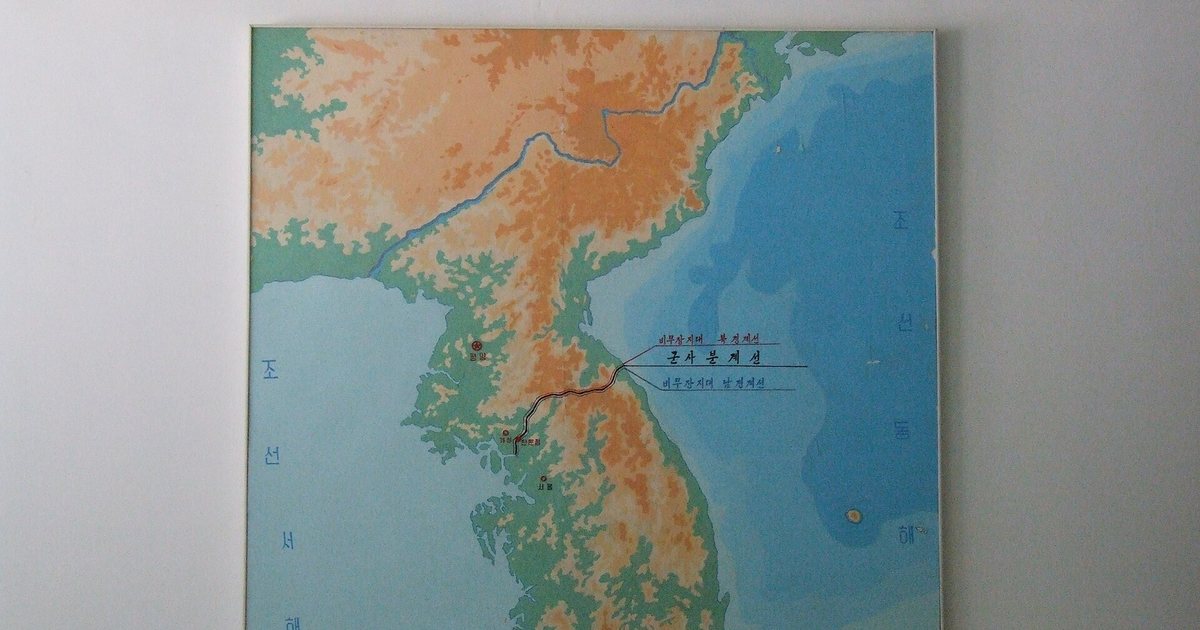
North Korea vs South Korea differences go back to 1945, when the peninsula was split in two. In the eight decades since, the South became a democracy and one of the world’s big export economies, and the North became a one-party state led by three generations of the same family. This guide covers how the split happened, what life is like on each side, and whether anyone can cross the line.
Key takeaways
- The US and the Soviet Union divided Korea at the 38th parallel in 1945, and two rival states were declared in 1948.
- The Korean War (1950-1953) ended with an armistice, not a peace treaty, so the two Koreas are technically still at war.
- South Korea elects its presidents, while North Korea has been ruled by the Kim family since 1948: Kim Il Sung, Kim Jong Il and now Kim Jong Un.
- Ordinary citizens on either side can’t freely visit, phone or message each other, and the roughly 4 km wide DMZ stays sealed.
Why did Korea split into North and South?
Japan ruled Korea as a colony from 1910 to 1945. When Japan surrendered at the end of World War II in August 1945, the United States and the Soviet Union agreed to take the Japanese surrender in Korea, with the 38th parallel as the dividing line. Soviet troops held the north and American troops held the south.
The line was supposed to be temporary. As the Cold War set in, talks on a single government for the whole peninsula went nowhere. The South held UN-supervised elections in May 1948 and declared the Republic of Korea on August 15, 1948, with Syngman Rhee as president. The North declared the Democratic People’s Republic of Korea (DPRK) on September 9, 1948, with Kim Il Sung as leader.
Was the division meant to be permanent?
No. Both governments claimed to be the only legitimate government of all Korea, and both still do in their constitutions. That shared claim explains a lot, from the North’s view of the South as territory to be “reunified” to the South treating North Korean defectors as its own citizens when they arrive.
What happened in the Korean War (1950-1953)?
On June 25, 1950, North Korean forces invaded the South with Soviet backing. Seoul fell within days. A UN-backed coalition led by the United States came in on the South’s side, and the September 1950 landing at Incheon, the port west of Seoul, turned the war around. UN forces pushed north toward the Chinese border, and late in 1950 China sent huge numbers of troops in to support the North.
By 1951 the front had settled roughly back around the 38th parallel. The next two years brought bloody fighting over hills and ridges while negotiators argued, largely over prisoners of war. Millions of people, soldiers and civilians, died or were wounded, and countless families ended up on opposite sides of the new border.
Why is the Korean War still not over?
The fighting stopped with an armistice signed at Panmunjom on July 27, 1953, by the UN Command, the North Korean army and the Chinese forces. South Korea’s government refused to sign it. An armistice is a ceasefire between militaries. It isn’t a political settlement, and no peace treaty has followed in more than 70 years, which is why you’ll hear that the two Koreas are “technically still at war.”
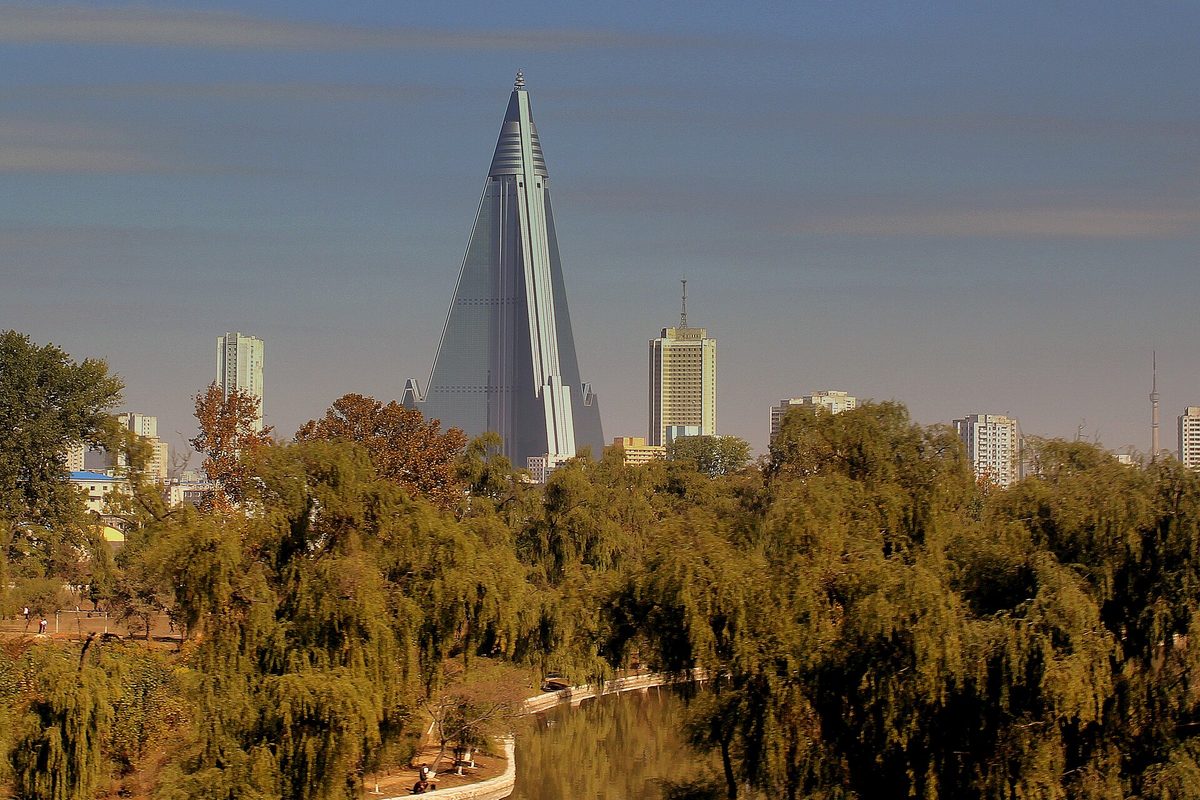
North Korea vs South Korea differences at a glance
The table puts the basics side by side. It sticks to long-established facts. For current statistics such as GDP or population, check the Bank of Korea, which publishes annual estimates of North Korea’s economy, or the UN’s population data.
| Topic | North Korea (DPRK) | South Korea (Republic of Korea) |
|---|---|---|
| Capital | Pyongyang | Seoul |
| State founded | September 9, 1948 | August 15, 1948 |
| Political system | One-party state led by the Workers’ Party of Korea | Multiparty democracy with a directly elected president |
| Leadership | Hereditary: Kim Il Sung, Kim Jong Il, Kim Jong Un (since 2011) | President limited to a single five-year term |
| Economy | State-planned, under UN sanctions, with informal markets | Export-driven market economy (chips, cars, ships, entertainment) |
| Internet | Most people limited to a closed domestic intranet | One of the most connected countries in the world |
| Population | Roughly half the South’s | About twice the North’s |
| Land area | Slightly larger | Slightly smaller |
| Visiting as a foreigner | Only on tightly controlled tours, often unavailable; many governments advise against travel | Open to tourists; many nationalities enter visa-free or with an online travel authorization |
How are the political systems different?
South Korea spent its first decades under authoritarian governments, including military-backed rule under Park Chung-hee and his successors. Mass protests in 1987 forced a new constitution with direct presidential elections. Since then the country has had regular elections, peaceful handovers of power between rival parties, an elected National Assembly, independent courts and a loud, free press.
North Korea is a one-party state. Real power sits with the Workers’ Party of Korea and the Supreme Leader. Its official ideology is Juche, usually translated as self-reliance, and under Kim Jong Il the state also promoted Songun, or “military-first” politics. Elections exist, but voters are given one approved candidate. There is no independent media, and a 2014 UN Commission of Inquiry documented systematic and serious human rights violations.
How does power pass from one leader to the next in North Korea?
So far it has passed within one family: from Kim Il Sung to his son Kim Jong Il in 1994, and to Kim Jong Un after his father died in 2011. Who comes next is one of the most watched questions about the country. AP News reported that many North Korean defectors see Kim Jong Un’s daughter as his likely heir. That reflects defectors’ views as AP gathered them, not an official announcement from Pyongyang.
How do the North and South Korean economies compare?
In the decades after the war, South Korea went from deep poverty to an industrial powerhouse, a stretch Koreans call the “Miracle on the Han River.” Growth was built on exports and on chaebol, the big family-controlled business groups such as Samsung, Hyundai, SK and LG. Today you meet the South’s economy every time you use a Samsung phone, drive a Hyundai or Kia, or stream a K-drama. Our guide to Samsung vs SK Hynix explains the memory chip business behind much of that wealth.
North Korea runs a centrally planned economy where the state owns most industry and land. It suffered a devastating famine in the 1990s, and since 2006 the UN Security Council has imposed rounds of sanctions over its nuclear and missile programs. China is by far its main trading partner. Informal markets, known as jangmadang, spread after the famine and became a big part of how ordinary people get food and goods.
How does North Korea earn foreign money?
Under sanctions, a lot of its known foreign earnings come through channels the US and UN say are illegal, including cyber theft and overseas IT workers using false identities. One recent example: according to Cleveland.com, US federal authorities say an Ohio man’s video game company was used as a front in a $3 million North Korea scheme. Those are prosecutors’ allegations, which a court has yet to rule on.
What is daily life like in North Korea compared with South Korea?
The day-to-day gap is wider than the economic numbers suggest, because it covers what people can read, watch, say and where they can go.
Internet, phones and media
South Koreans live online: fast mobile data, delivery apps, webtoons and streaming. In North Korea, most people can’t reach the global internet at all. Mobile phones exist but run on a domestic network, and computers connect to a closed national intranet called Kwangmyong. Foreign media is restricted, and defectors and human rights groups report harsh punishments for watching or sharing South Korean dramas and music.
Do North and South Koreans speak the same language?
Yes. Both speak Korean and write it in the same alphabet (Hangul in the South, called Chosongul in the North). After 80 years apart, though, vocabulary has drifted. South Korean speech is full of English loanwords, while the North has deliberately replaced many foreign words with native Korean ones. Defectors often say South Korean slang and loanwords are among the hardest things to pick up.
Military service
Both countries conscript men. In the South, service usually runs about a year and a half to just under two years depending on the branch, which is why K-pop idols and actors take a career break in their twenties. North Korean service is reported to be far longer, commonly around a decade for men.
Food both sides share
The menu is still largely shared: kimchi, rice, soups and barbecue. Pyongyang-style naengmyeon (cold buckwheat noodles in a chilled broth) is a much-loved dish in Seoul, often at restaurants opened by families who fled south during the war. If you’re eating Korean food abroad, our guide on how to eat Korean BBQ covers the table habits you’ll see in the South.
What is the DMZ, and can you visit it?
The Korean Demilitarized Zone (DMZ) is the buffer strip the 1953 armistice created. It runs across the peninsula for about 250 km (roughly 155 miles) and is about 4 km wide: 2 km on each side of the Military Demarcation Line, the actual border. Despite the name, it is one of the most heavily fortified borders on Earth, with fences, guard posts and minefields. With people mostly kept out for decades, it has also become an unexpected refuge for wildlife.
The best-known spot is the Joint Security Area at Panmunjom, where the blue negotiation huts sit right on the line. It’s where North and South Korean leaders met in 2018, when Moon Jae-in and Kim Jong Un stepped across the border together.
DMZ tours from Seoul
Tours from Seoul usually visit sites on the southern edge, such as Imjingak park, the Third Infiltration Tunnel (dug by the North and discovered in the 1970s) and Dora Observatory, where you can look across into North Korea. Joint Security Area tours run on a separate, stricter system and have been suspended several times over the years. Check the official Korea Tourism Organization (VisitKorea) site or a licensed tour operator for what’s running.
Can people travel between North and South Korea?
For ordinary people, no. There are no regular flights, trains, mail or phone links between the two countries. South Korean law requires government approval, through the Ministry of Unification, for South Koreans to visit the North or even make contact with North Koreans. North Koreans can’t leave their country without state permission. Joint projects such as the Kaesong Industrial Complex, where South Korean firms once employed North Korean workers, have been shut down (Kaesong closed in 2016).
The one-way traffic that does happen is defection. More than 30,000 North Koreans have resettled in the South, most of them after a long, dangerous journey through China and Southeast Asia. On arrival they go through a resettlement program, including the Hanawon education center, before starting new lives as South Korean citizens.
Can foreigners visit North Korea?
Only on tightly controlled tours run by approved agencies, mostly through China, with government minders throughout. North Korea closed its borders in early 2020 because of the pandemic, and tourism has reopened only in limited and shifting ways since. Since 2017, US passports have been invalid for travel to North Korea without a special validation from the State Department. Many other governments advise against all travel there. Check your own foreign ministry’s travel advisory before planning anything.
What’s in the news about the two Koreas right now?
Several recent reports show where tension and diplomacy stand. Keep in mind that claims from North Korean state media can’t be independently checked.
- Weapons claims: North Korea says its navy will deploy a new “high-speed torpedo” in early 2027, according to NK News. That is Pyongyang’s own claim and hasn’t been verified.
- Summit diplomacy: A former US official told The Korea Herald that North Korea’s demand to be recognized as a nuclear power could hinder prospects for a Trump-Kim summit.
- Succession: AP’s reporting on how defectors view Kim Jong Un’s daughter, covered above, has put the succession question back in the headlines.
FAQ
Are North and South Korea still at war?
Technically, yes. The 1953 armistice stopped the fighting but no peace treaty was ever signed. The border has seen periodic clashes since, but there has been no return to full-scale war.
Which is bigger, North or South Korea?
North Korea is slightly larger by land area. South Korea has roughly twice the population and a far larger economy. For current figures, check UN population data and the Bank of Korea’s estimates of North Korea’s economy.
Can I visit the DMZ from Seoul?
Yes, on organized tours that leave from central Seoul and visit sites such as the Third Infiltration Tunnel and Dora Observatory. Bring your passport, and check VisitKorea or a licensed operator for current schedules, since tours are sometimes suspended.
Can Americans travel to North Korea?
Not on a regular US passport. Since 2017 the State Department has made US passports invalid for travel to North Korea unless specially validated, which is granted only in limited cases. Check the State Department’s travel page for the current rules.
Why are they called the DPRK and the Republic of Korea?
Those are the official names: the Democratic People’s Republic of Korea in the North and the Republic of Korea in the South. In Korean, the South calls the country Hanguk and the North calls it Choson, each using a different historical name for Korea.
Will North and South Korea ever reunify?
Both governments have long said they want reunification, but on completely different terms, and talks have rarely gone further than summits and short-lived agreements. Nobody can responsibly put a date or a likelihood on it.
What to watch, read and plan next
If you’re following the two Koreas from abroad, keep an eye on three threads: any official word from Pyongyang on succession, whether US-North Korea summit talks get anywhere, and new weapons announcements (always read those as state claims until they’re independently confirmed). Planning a trip to Seoul? Check DMZ tour availability when you book your flights, not the week before.
For a feel of the division through drama, Park Chan-wook’s film Joint Security Area (2000) is set at Panmunjom, and the tvN series Crash Landing on You (2019), on Netflix in many countries, is a romance that crosses the border. Both are fiction, but they show how deeply the split runs in South Korean storytelling.
Related reading
Sources news.google.com · k-korea.blog
Prices, opening hours and availability change. Check the official page before you buy or travel.