11 min read
Korean dining etiquette for foreigners comes down to 9 habits, and letting elders go first matters most. Wait for the oldest person to start eating. Pour drinks for other people, never for yourself, and take a glass with two hands. Pay at the counter on your way out and don’t leave a tip.
Nobody expects a visitor to get every rule right, and most Koreans will forgive a slip without a second thought. Still, getting the big ones right shows respect the table will notice. That matters most at a business dinner, a meal with a partner’s parents or a first night out with Korean colleagues.
Key takeaways
- The oldest or most senior person picks up their spoon first. Everyone else waits, even if the stew is already bubbling.
- Never fill your own glass. Fill your neighbor’s, and they will fill yours back.
- Your rice bowl stays on the table. Eat the rice with a spoon, and never stand chopsticks upright in it.
- Korea has no tipping custom. Menu prices usually include tax, and you normally pay at the counter by the door.
Why elders eat first at a Korean table
Korean table manners grew out of Confucian ideas about age and hierarchy, and you can still see them at almost every shared meal. The rule is simple. The eldest or most senior person (a grandparent, the boss, the client) lifts their spoon or chopsticks first, and then everyone else starts. If you dig in while the food is landing, people notice right away.
Where to sit and who sets the table
The senior person usually gets the seat farthest from the door, often with their back to the wall. Unless someone points you to a seat, let the host choose. At casual places the cutlery sits in a drawer built into the table or in a box on top. The youngest person at the table usually sets out spoons and chopsticks on paper napkins and pours water for everyone. If you’re the youngest, offering to do it wins you goodwill straight away.
What to say before and after the meal
Before eating, Koreans say jal meokgesseumnida (roughly “I will eat well”), especially to whoever is paying or cooked. Afterwards it’s jal meogeosseumnida (“I ate well”). You don’t need perfect pronunciation, and an honest attempt goes over well. If you want to read menus and signs too, our weekend plan for learning Hangul gets you most of the way.
Pacing yourself around the senior person
Try not to finish long before the eldest does, and don’t get up while they’re still eating. At family meals people often hold off on the last piece of the best dish, or offer it to the elder first. Nobody expects a show of deference. The point is to keep the table moving at the senior person’s pace.
How to pour and receive drinks in Korea
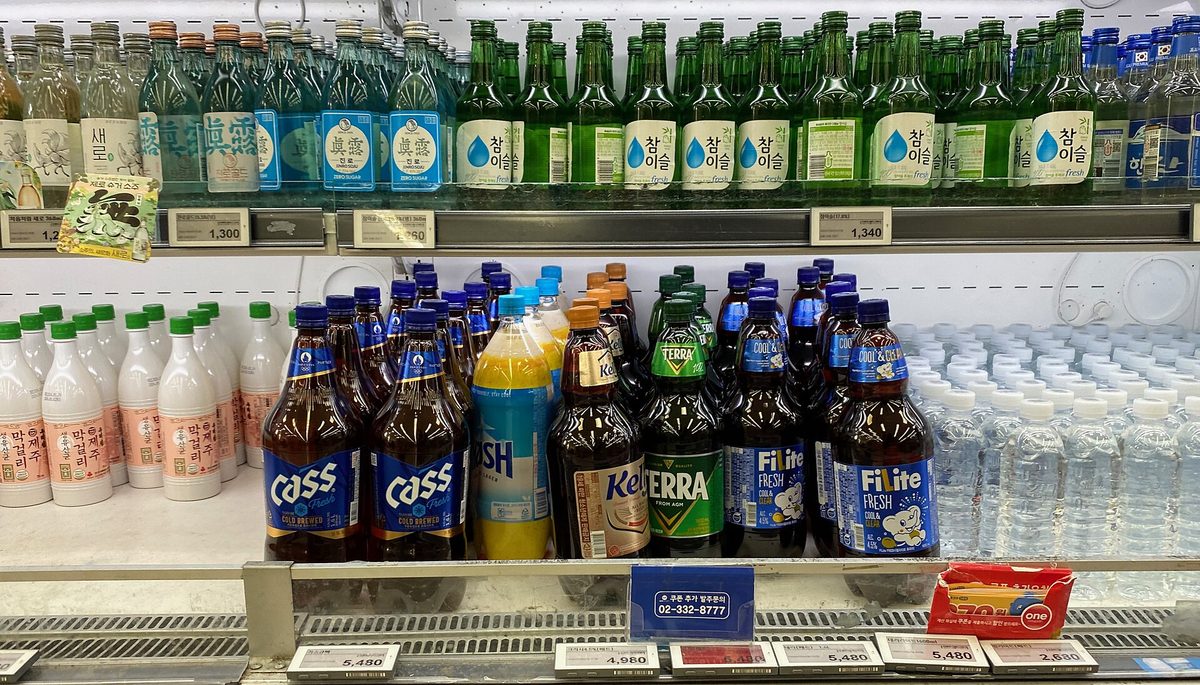
Drinks are where foreigners make the most visible mistakes, because the rules are physical and everyone can see them. Soju (a clear distilled spirit, usually drunk from small shot glasses) and beer are poured for each other, never for yourself. Pouring for someone is a small act of care. Filling your own glass looks a little lonely, and in older company a little rude.
Pouring for someone older
Hold the bottle in your right hand and touch your left hand lightly to your right wrist, forearm or chest. That supporting hand is the gesture that matters. Wait until their glass is empty before you refill it. Topping up a half-full glass of soju isn’t the custom, though beer is looser about this.
Receiving a drink
When someone senior pours for you, lift your glass with both hands, or with your right hand and your left supporting it. Hold it out toward the bottle. Then return the pour. If the senior person poured for you, offer to pour for them once their glass runs low.
The first glass and turning your head
At many dinners everyone drinks the first glass together after geonbae (“cheers”). When you clink with an elder, keep your glass rim slightly lower than theirs. When you drink in front of someone much older, turn your head slightly away and cover the glass with your free hand. In younger groups and among friends many Koreans skip this. With a boss or a partner’s father, do it.
Korean chopsticks and spoon rules foreigners get wrong
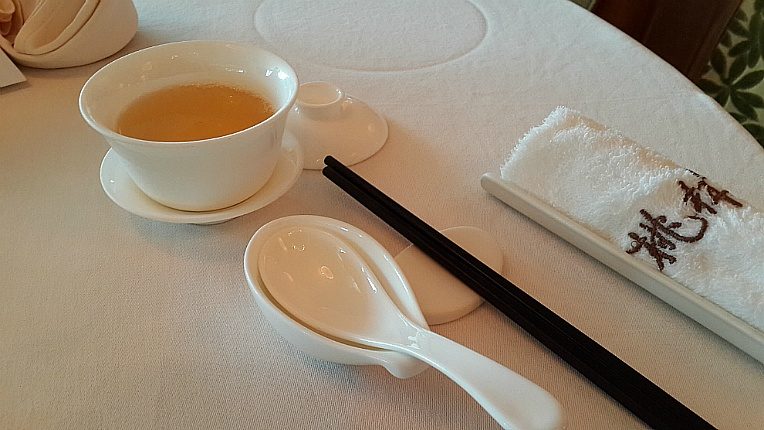
Korean chopsticks are usually metal, flat and thinner than Chinese or Japanese ones, and they come with a long-handled spoon. Each one has its job, and mixing them up is the most common table mistake visitors make.
Use the spoon for rice and soup
In Japan and China people lift the rice bowl toward their mouth. Koreans don’t. The rice bowl and soup bowl stay on the table, and you eat rice and soup with the spoon. Chopsticks are for banchan (the small shared side dishes like kimchi, seasoned spinach or fish cake) and for picking up meat or noodles. Using chopsticks for everything isn’t offensive, but lifting the bowl to your lips reads as foreign.
Never stand chopsticks upright in rice
Chopsticks stuck straight up in a bowl of rice look like the offerings set out at jesa (ancestral memorial rites), which is why Koreans find it unsettling at a normal meal. When you take a break, lay your chopsticks and spoon on the table or the napkin, or rest them across a side plate.
Small habits that read as careless
- Holding the spoon and chopsticks in the same hand at the same time.
- Digging through a shared dish for the best piece. Take what’s on top nearest you.
- Blowing your nose at the table. Step away and do it in the restroom.
- Leaving the spoon in a shared stew instead of returning it to your own bowl.
How sharing banchan and stews works
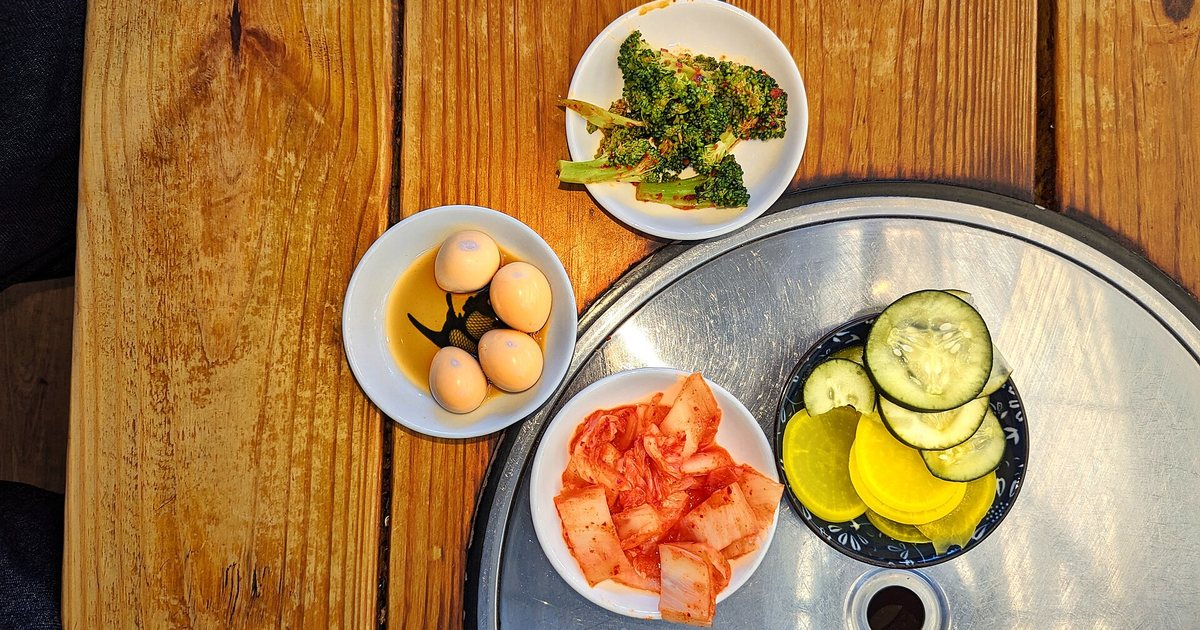
A Korean meal is built for sharing. The banchan arrive in small dishes for the whole table, and stews like kimchi jjigae often come in one pot in the middle. In casual groups people still eat straight from the shared pot with their own spoons. With new acquaintances, or when a ladle and small bowls come with the pot, serve yourself into your own bowl first.
At most traditional restaurants you can ask for more banchan, and refills of the basic side dishes are usually free. Some places have a self-serve station near the kitchen, often marked “셀프” (self). Don’t bother asking for a refill of something expensive like a whole fish or a pancake. That’s usually a paid item.
Korean BBQ adds its own rules about the grill, the scissors and who does the cooking. Our guide to how to eat Korean BBQ, from cuts to ssam wraps covers that table in detail. In short, the most junior person usually handles the tongs.
The 9 Korean table mistakes at a glance
Save this table to your phone before a work dinner. The right-hand column tells you how strict each rule is in the company you’re likely to be in.
| Mistake | What to do instead | How much it matters |
|---|---|---|
| Eating before the eldest starts | Wait for the senior person to lift their spoon | High with family, bosses and clients |
| Pouring your own drink | Pour for others; let them pour for you | High in mixed-age groups |
| Taking a pour with one hand | Hold the glass with two hands | High with elders |
| Drinking facing an elder | Turn your head slightly away | Medium; often relaxed among friends |
| Chopsticks upright in rice | Lay them on the table or a napkin | High everywhere |
| Lifting the rice bowl | Leave it on the table and use the spoon | Low; just reads as foreign |
| Digging through shared dishes | Take from the top, nearest you | Medium |
| Waiting at the table for the bill | Pay at the counter on the way out | Low; just confusing |
| Leaving a tip | Say thanks; no money needed | Low, but staff may chase you to return it |
How paying works at Korean restaurants
In most casual Korean restaurants nobody brings a bill to the table. You walk to the counter by the door, give your table number if asked, and pay there. Many places now take orders by tablet or kiosk, and at some fast-casual spots you pay before you eat. If you sit waiting for a check that never comes, the staff will just assume you’re still eating.
Who pays the bill in Korea?
Traditionally the senior person or whoever did the inviting pays for everyone. That’s especially true when a boss takes a team out or when the host is clearly older. Juniors often offer anyway, and a short polite tussle at the counter is common. If you were invited, offer once, accept graciously if they refuse, and offer to cover the next round or the coffee afterwards. That’s how the favor usually gets returned.
Splitting the bill with friends
Among friends and younger people, splitting evenly is common. Koreans call it N-bbang (the total divided by the number of people) or “Dutch pay.” Often one person pays the whole bill by card and everyone else sends their share by mobile transfer apps. Some restaurants will split a bill across several cards, but at a busy lunch counter that slows everything down. One payment plus transfers is the smoother move.
Do you tip in Korea?
No. Korea has no tipping custom at restaurants, cafes, bars or taxis, and menu prices usually already include tax. Leaving cash on the table can confuse the staff, and someone may run after you to hand it back, assuming you forgot it. A sincere gamsahamnida (“thank you”) and a clean table are what count as good manners.
Some upscale hotels and international restaurants add a service charge to the bill, and that will be printed on the receipt. Check the receipt or the venue’s own page if you’re unsure. Don’t add anything on top unless something on the bill or a sign tells you to.
Korean drinking etiquette after dinner: rounds, refusals and soju
A Korean night out often moves through cha (rounds): dinner with soju or beer as 1-cha, a bar or pub as 2-cha, sometimes karaoke as 3-cha. A different person often pays for each round, which is how the inviter’s generosity gets shared out. You don’t have to stay for every round. Leaving after the first, with a polite thank-you to the senior person, is fine.
How to say no to another drink
Pressure to drink has eased in recent years, especially among younger office workers, and saying no is more accepted than it used to be. The easiest signal is to leave some drink in your glass. A full glass means nobody needs to refill it. If you don’t drink alcohol, say so early and give a short reason (health, medication, religion, driving), then ask for a soft drink so you can still join every toast. Clinking an empty glass looks odder than clinking a cola.
Somaek and the “one shot”
Somaek is soju mixed into beer, and it’s a fixture at group dinners. You’ll also hear “one shot!”, meaning finish the glass in one go. Joining in once is friendly. Matching every round isn’t required, and you can sip slowly.
Korea’s legal drinking age and rules are set by law, and ID checks do happen at bars and convenience stores. For a cheaper late-night snack after the bars, see our Korean convenience store food picks.
A worked example: your first Korean team dinner
Say your Korean colleagues invite you to a hoesik (a company dinner) at a BBQ restaurant. Here’s how the evening usually goes, step by step.
- Arrive on time and wait to be seated. The manager takes the far seat. Sit where you’re pointed.
- Help set the table. If you’re among the youngest, lay out spoons and chopsticks and pour water.
- Wait for the first move. When drinks arrive, the senior person usually pours first or proposes the toast. Hold your glass with two hands to receive.
- Toast and turn. Say geonbae, keep your glass slightly lower than the manager’s, and turn your head a little as you drink.
- Start eating after the senior does. Use the spoon for rice and stew, chopsticks for meat and banchan.
- Watch the glasses. When a colleague’s glass is empty, offer to pour, with your left hand supporting your right.
- Let the senior pay, then thank them. Say jal meogeosseumnida, and offer to buy coffee or the next round.
Do those seven things and you’ll come across as someone who bothered to learn, which is the whole point.
FAQ
Is it rude to pour your own drink in Korea?
In mixed-age or formal company, yes, it comes across as a little rude or lonely. Pour for the person next to you, and they will usually pour for you in return. Among close friends of the same age, people are more relaxed about it.
Should you use two hands when someone pours for you?
Yes, especially when the person pouring is older or senior to you. Hold the glass with both hands, or with your right hand while your left supports it. When you pour for an elder, touch your left hand to your right wrist or forearm.
Do Koreans eat rice with chopsticks or a spoon?
Mostly with a spoon. The rice bowl stays on the table, and the spoon handles rice and soup while chopsticks handle side dishes and meat. Never leave chopsticks standing upright in the rice, because it looks like an ancestral rite offering.
Is tipping expected in South Korea?
No. Tipping isn’t part of Korean restaurant culture, and menu prices usually include tax. Some hotels and high-end venues add a service charge, which will appear on the bill.
Who pays at a Korean dinner?
Usually the oldest or most senior person, or whoever did the inviting. Friends and younger groups often split the bill evenly, with one person paying and the others sending money by mobile transfer. If someone treats you, offer to pay for the next round or coffee.
What do you say before eating in Korea?
Say jal meokgesseumnida, roughly “I will eat well,” before the meal, especially to the host or cook. After eating, say jal meogeosseumnida, “I ate well.” Both are polite and widely used.
What to practice before your trip to Korea
You can rehearse three things at home. Practice pouring with your left hand supporting your right wrist until it feels automatic. Eat a bowl of rice with a spoon while the bowl stays flat on the table. And learn jeogiyo, geonbae and jal meogeosseumnida well enough to say them without looking at your phone.
Before a business dinner or a family meal, ask your Korean contact one question: how formal will it be? The answer tells you how strictly to follow the elder rules in the table above. At a casual BBQ with friends you can relax most of them. With a partner’s grandparents, follow every one.
Related reading
Sources k-korea.blog
Prices, opening hours and availability change. Check the official page before you buy or travel.