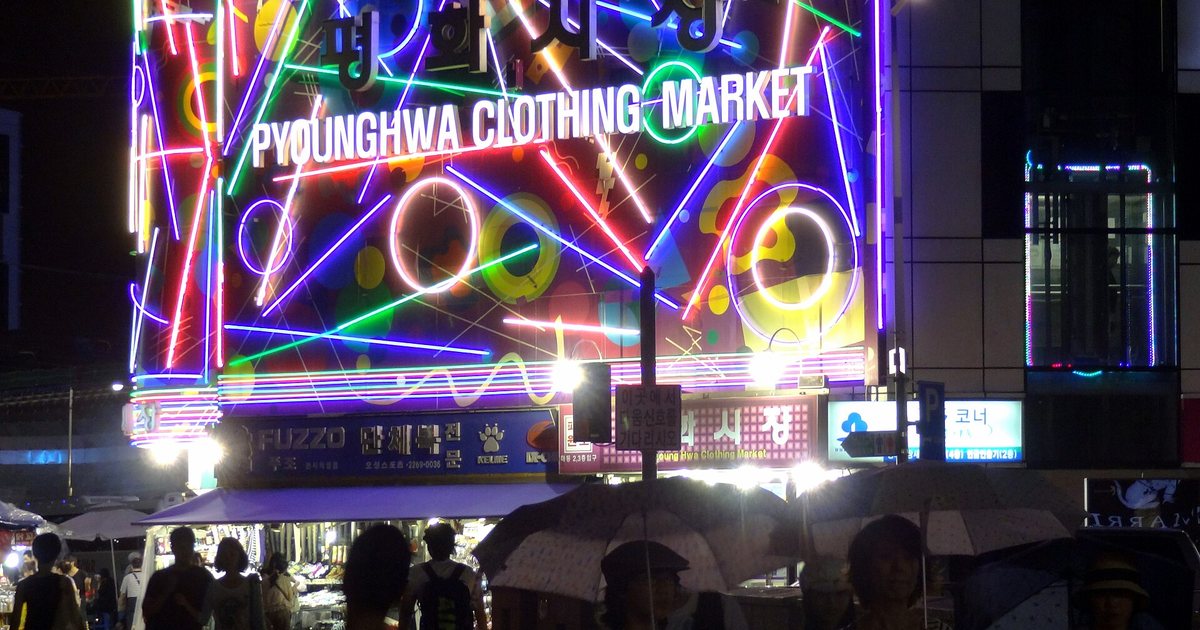
11 min read
In a Korean size chart to US terms, women’s 55 is about a US 4 and men’s 100 fits like a US M. Shoes are simpler than either: Korea labels them by foot length in millimetres, so a 240 is roughly a women’s US 7 and a 270 is about a men’s US 9. Below you’ll find conversion tables for women’s, men’s, bottoms and shoes, plus why “free size” so often doesn’t fit and how to read the measurement charts Korean shops post online.
Key takeaways
- Women’s sizes go up in steps of 11: 44 is XS, 55 is S, 66 is M, 77 is L and 88 is XL. A 55 is close to a US 4 or a UK 8.
- Men’s tops are labelled by chest in centimetres. A 100 is a Korean Large, but it usually fits like a US Medium, so size up one step from your US letter.
- A Korean shoe size is your foot length in mm. Measure heel to longest toe and you have your size, rounded to the nearest 5 mm.
- “Free size” (프리사이즈) is usually cut for a Korean 55 to 66 frame, which is roughly a US 2 to 8. Check the 실측 (measured) chart before you buy.
Korean size chart to US: women’s clothing conversion
Korean women’s clothing uses a two-digit system that confuses almost everyone the first time: 44, 55, 66, 77, 88. The numbers aren’t measurements. They’re shorthand labels, and each step is about one US dress size (two at the larger end).
Tops and dresses sometimes carry a second set of numbers instead, 85, 90, 95, 100 and 105. These come from the Korean Standards (KS) system, which sizes tops by bust circumference in centimetres. A top marked 90 and a top marked 55 are aimed at the same person.
| Korean size | Bust-number label | Letter | US | UK | EU |
|---|---|---|---|---|---|
| 44 | 85 | XS | 0-2 | 4-6 | 32-34 |
| 55 | 90 | S | 4 | 8 | 36 |
| 66 | 95 | M | 6-8 | 10-12 | 38-40 |
| 77 | 100 | L | 10-12 | 14 | 42 |
| 88 | 105 | XL | 14 | 16-18 | 44-46 |
Treat this as a starting point. Korean brands cut slimmer through the shoulders and upper arms than most American labels, and sleeves are often shorter. If you’re between sizes, or your shoulders are broad, go up one.
How Korean women’s sizes work: 44, 55, 66 and 77 explained
The 44/55/66 system is old, informal and still everywhere. You’ll hear it in Dongdaemun wholesale stalls, on Korean shopping apps and in everyday conversation. A Korean friend saying “I’m a 55” means she wears a small.
Where do the numbers 44 and 55 come from?
The most widely repeated explanation ties the labels to a national body-size standard set in the early 1980s. The average young Korean woman was described as about 155 cm tall with an 85 cm bust, and the last digit of each figure produced “55”. The other labels grew out from there. Whatever the exact history, the practical meaning today is simple: 55 is the default small, and many brands design their whole range around it.
Is 55 a small or a medium?
It’s a small. That matters because a lot of Korean brands offer only 44, 55 and 66, or just 55 and 66, so the Korean “medium” (66) is roughly where many American mid-range brands put their small-to-medium. If you wear a US 8 or above, expect fewer options in mainstream Korean brands and check whether a store carries 77 and 88 before you travel across town for it.
Why the same 55 fits differently between brands
There’s no legal requirement that a garment marked 55 match a single set of measurements. Two 55 blouses can differ by several centimetres across the chest. This is exactly why Korean online shops publish detailed measurement charts (more on those below), and why Korean shoppers read them more than the size label itself.
Korean men’s sizes: what 95, 100 and 105 mean
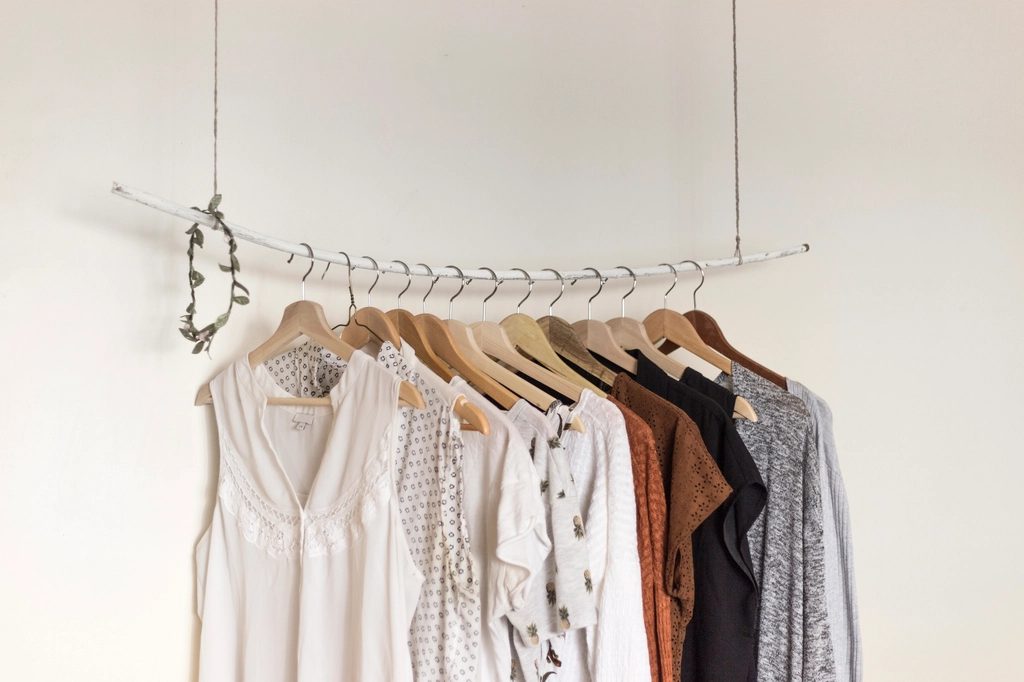
Men’s tops are easier, because the number is real: it’s the chest circumference in centimetres that the garment is designed for. A 100 fits roughly a 100 cm (about 39 inch) chest.
The trap is the letter that goes with it. Korean brands call 100 a Large, but by American sizing a 39 inch chest is a Medium. So if you’re a US Medium, look for a 100, and if you’re a US Large, look for a 105.
| Korean size | Korean letter | Fits like US | Approx. chest (inches) | UK chest | EU |
|---|---|---|---|---|---|
| 90 | S | XS-S | 35 | 35-36 | 44-46 |
| 95 | M | S | 37 | 37-38 | 46-48 |
| 100 | L | M | 39 | 39-40 | 48-50 |
| 105 | XL | L | 41 | 41-42 | 50-52 |
| 110 | XXL | XL | 43 | 43-44 | 52-54 |
Does oversized Korean menswear change the rule?
Yes, a little. A lot of Korean streetwear is cut deliberately boxy, with dropped shoulders and long bodies, so a 100 from a streetwear label can fit a US Large chest comfortably. Body length and sleeve length are the measurements that give it away. If you want the relaxed Seoul look in our Korean street fashion style guide, compare the chart’s chest width with a hoodie you already own instead of trusting the letter.
Korean pants and jeans sizes: inches, centimetres and S/M/L
Bottoms are where Korean sizing gets messy, because you’ll see three systems, sometimes on the same website.
- Waist in inches (26, 28, 30, 32): common on jeans and men’s trousers. These mean the same as in the US, though Korean cuts tend to be slimmer in the thigh.
- Waist in centimetres (61, 64, 67, 70 for women; 76, 81, 86 for men): older and department-store labels use this. Divide by roughly 2.5 to get inches, or use any online cm-to-inch converter.
- Letters or 44/55/66: skirts and casual women’s trousers often reuse the top sizes.
How long are Korean pants?
Usually shorter than US standard lengths, and many shops hem to order or sell “long” versions separately. Taller readers should look for the 총장 (total length) figure and compare it with their own trousers’ outer seam. If you’re over about 180 cm, assume standard lengths will be short unless the chart says otherwise.
Korean shoe size conversion: millimetres to US, UK and EU
Korea skips the abstract numbers and labels shoes by foot length in millimetres, in steps of 5 mm. Once you know your foot length, you know your Korean size, which makes this the most reliable part of any Korean size chart to US conversion.
Women’s shoe sizes
| Korea (mm) | US women | UK | EU |
|---|---|---|---|
| 220 | 5 | 2.5-3 | 35 |
| 225 | 5.5 | 3 | 35.5 |
| 230 | 6 | 3.5-4 | 36 |
| 235 | 6.5 | 4 | 37 |
| 240 | 7 | 4.5-5 | 37.5 |
| 245 | 7.5 | 5.5 | 38 |
| 250 | 8 | 6 | 39 |
| 255 | 8.5 | 6.5 | 39.5 |
| 260 | 9 | 7 | 40 |
Men’s shoe sizes
| Korea (mm) | US men | UK | EU |
|---|---|---|---|
| 250 | 7 | 6 | 40 |
| 255 | 7.5 | 6.5 | 40.5 |
| 260 | 8 | 7 | 41 |
| 265 | 8.5 | 7.5 | 42 |
| 270 | 9 | 8 | 42.5 |
| 275 | 9.5 | 8.5 | 43 |
| 280 | 10 | 9 | 44 |
| 285 | 10.5 | 9.5 | 44.5 |
| 290 | 11 | 10 | 45 |
These are typical equivalents. Global sneaker brands publish their own charts, and those can sit half a size apart from the table above, so check the brand’s official size guide for the exact model.
How to measure your foot for a Korean shoe size
- Stand on a sheet of paper against a wall, heel touching the wall, wearing the socks you’d wear with the shoes.
- Mark the tip of your longest toe (not always the big toe).
- Measure from the wall to the mark in millimetres. Do both feet and use the longer one.
- Round up to the next 5 mm. A 243 mm foot is a 245.
Measure in the evening, when feet are at their largest. Wide feet are the big exception: many Korean everyday shoes are cut narrow, so if you usually buy wide fittings, go up 5 mm or look for a shop that lists 발볼 (ball width) as wide.
Why “free size” in Korea runs small
Free size, written 프리사이즈 or just F, is the label foreign shoppers most often get burned by. It sounds like “fits everyone”. In practice it means “one size, designed for our core customer”, and in Korea that core customer is usually a 55, with some stretch toward 66.
Three things make it run small for many readers abroad:
- The base pattern is a Korean small. Roughly, free size works for a US 2 to 8, and for some items only up to a US 6.
- Loose isn’t the same as large. An oversized knit may fit a broad chest but still be tight across the shoulders or short in the sleeves, because the armhole is cut for a smaller frame.
- Fabric decides the real range. Stretch jersey and rib knits forgive a lot. Woven cotton, linen and anything with buttons forgive almost nothing.
The fix is the same every time: ignore the F and read the measured dimensions. If the chest width laid flat is smaller than a top you already own and like, it won’t fit you, whatever the label promises.
How to read a Korean size chart when buying online
Korean shopping sites, from big fashion platforms such as Musinsa to tiny Instagram boutiques, usually post a 실측 (silcheuk, “actual measurement”) chart. It lists the garment’s own measurements, taken flat, in centimetres. Korean shoppers trust this far more than the size label, and you should too.
| Korean term | Romanization | What it measures | How to compare |
|---|---|---|---|
| 총장 | chongjang | Total length, shoulder or waist to hem | Measure your own garment the same way |
| 어깨너비 | eokkae neobi | Shoulder width, seam to seam | The hardest number to fudge; match it closely |
| 가슴단면 | gaseum danmyeon | Chest width laid flat (half the circumference) | Double it for the full chest |
| 소매길이 | somae gil-i | Sleeve length | Check if you have long arms |
| 허리단면 | heori danmyeon | Waist width laid flat | Double it for the full waist |
| 밑위 | mitwi | Rise, crotch seam to waistband | Tells you high-rise or low-rise |
| 허벅지단면 | heobeokji danmyeon | Thigh width laid flat | Often where Korean jeans run tight |
A worked example: will this sweatshirt fit?
Say a chart lists a free-size sweatshirt with 가슴단면 58, 어깨너비 54 and 총장 68. Take a sweatshirt you like, lay it flat and measure it the same way. Suppose yours reads 60 across the chest, 50 at the shoulders and 70 long.
The Korean one is 2 cm narrower across the chest laid flat, which means 4 cm smaller around your body. That’s noticeable but fine in a relaxed fit. The shoulder seam is 4 cm wider, so it will drop off your shoulders in the slouchy way the designer intended.
It’s 2 cm shorter, which barely matters. Verdict: it’ll fit as an oversized piece. If the chest had been 6 cm narrower laid flat, you’d skip it.
Watch for the small print under the chart
Most charts note that measurements can vary by 1 to 3 cm because they’re taken by hand. Some also list the model’s height and the size she or he wears, which is useful for judging length. Check the shop’s own page for return and exchange rules before ordering from abroad, because international returns from small Korean sellers can be slow or not offered at all.
Shopping for clothes in Seoul: fitting rooms, exchanges and asking for your size
Buying in person removes the guesswork, but Seoul’s shops have their own habits. Department stores and big brand stores behave much like their equivalents abroad. Small boutiques, underground shopping arcades and market stalls work differently.
- Not every shop lets you try things on. Some small stores don’t allow trying on tops, especially light colours, because of makeup marks. Ask first.
- Face covers are normal. Where trying on is allowed, staff may hand you a thin fabric hood to wear over your face. Use it.
- Exchanges are easier than refunds. Smaller shops often offer exchange only, and some offer neither on sale items. Ask before paying, not after.
- Bigger sizes may not be on display. Staff can sometimes bring a 77 from the back, so it’s worth asking.
A few phrases help (polite forms throughout):
- “Can I try this on?” 입어 봐도 돼요? (ibeo bwado dwaeyo?)
- “Do you have a bigger size?” 더 큰 사이즈 있어요? (deo keun saijeu isseoyo?)
- “Do you have a smaller size?” 더 작은 사이즈 있어요? (deo jageun saijeu isseoyo?)
- “Can I exchange it?” 교환 돼요? (gyohwan dwaeyo?)
- “Can I get a refund?” 환불 돼요? (hwanbul dwaeyo?)
For more everyday lines, see our basic Korean phrases for travelers.
Common Korean sizing mistakes foreigners make
Most fit problems come from the same handful of assumptions.
- Reading 66 as a US 6. The numbers look similar but mean different things. A Korean 66 is closer to a US 6 to 8, and a 55 is a US 4.
- Buying your usual US letter in menswear. A Korean L (100) is a US Medium in most cuts. Go up one step.
- Forgetting that “단면” means half. A 50 cm 가슴단면 is a 100 cm chest, not a 50 cm one. Double every flat measurement before comparing it with your body.
- Comparing garment measurements with body measurements. A 100 cm garment chest on a 100 cm body is skin-tight. Compare garment to garment, or allow several centimetres of ease.
- Trusting free size on woven fabric. Stretch knits forgive; shirts and blazers don’t.
- Ignoring shoulders and sleeves. Those are the measurements most likely to be short on Korean patterns, and they can’t be altered easily.
Winter shopping adds one more: Korean padded coats are often sized to go over a thick knit, so check the chest width before sizing up. Our Korean winter fashion guide covers what Seoul actually wears in the cold.
FAQ
What US size is a Korean 55?
A Korean 55 is roughly a US 4, a UK 8 and an EU 36. It’s the Korean small, and many brands build their size range around it. Because cuts vary, check the measured chest and shoulder width on the brand’s chart before you buy.
What is Korean size 66 in US?
A 66 is about a US 6 to 8, a UK 10 to 12 and an EU 38 to 40. It’s the Korean medium. If you’re at the top of that range or have broad shoulders, look for a 77 or a brand that publishes detailed measurements.
What US shoe size is a Korean 240?
A 240 means a foot about 240 mm long, which is around a women’s US 7, a UK 4.5 to 5 and an EU 37.5. For men, the common sizes start around 250 (a US 7). Brand charts can differ by half a size, so check the official size guide for the specific shoe.
Does Korean free size fit a US size 10?
Often not, at least for fitted or woven pieces. Free size is usually designed for a Korean 55 to 66, roughly a US 2 to 8. Stretchy, oversized knits sometimes stretch further, so compare the flat chest width with a top you own before ordering.
How do Korean bra sizes convert?
Korean bras use the underbust in centimetres plus a cup letter, so a 75B means a roughly 75 cm band. As a general guide, 70 is about a US 32, 75 a 34, 80 a 36 and 85 a 38. Cup sizing differs between brands, so check the maker’s own chart.
How do Korean kids’ clothing sizes work?
Children’s clothes in Korea are usually labelled by the child’s height in centimetres, such as 100, 110 or 120. That makes them easy to buy if you know your child’s height. Some brands also use numbered sizes, so look for the height range on the label or chart.
What to check before your next Korean clothing order
Start with your own numbers, not the label. Measure your chest or bust, waist, hips and foot length once, and measure one top and one pair of trousers you love, laid flat. That’s the reference every Korean size chart to US conversion depends on.
Then, for each item, find the 실측 chart and compare shoulder width and chest first, length second. Use the tables above to pick the closest label, size up one step in menswear, and treat free size as a Korean small unless the measurements prove otherwise. Before you pay, check the shop’s official page for international shipping, exchange and return terms, since those vary widely between sellers.
Planning to shop in person instead? Pair this guide with our guide to Seoul’s street style and where to shop and bring a tape measure.
Related reading
Sources k-korea.blog
Prices, opening hours and availability change. Check the official page before you buy or travel.