12 min read
Korean names put the family name first, and about 1 in 5 South Koreans is a Kim. Most names have 3 syllables, a one-syllable surname followed by a two-syllable given name, so in Son Heung-min (손흥민) the surname is Son and the given name is Heung-min.
If you deal with Korean colleagues, fans, in-laws or classmates, that one rule covers most of what you need. The harder part is that Koreans rarely call each other by name at all, and the rest of this guide explains what they say instead.
Key takeaways
- Kim, Lee and Park together cover close to half of South Korea, which is why Koreans add titles and clan origins to tell people apart.
- The family name always comes first in Korean: Bong Joon Ho is Mr. Bong, not Mr. Ho.
- Korean women keep their own surname when they marry; children usually take the father’s surname, and since 2008 parents can agree to use the mother’s.
- Calling a senior colleague by name alone, or “Kim-ssi” by surname only, sounds rude; use a job title plus 님 (nim) instead.
How Korean names work: family name first, then a 2-syllable given name
A standard Korean name reads surname, then given name, with no middle name. Take 이상혁 (Lee Sang-hyeok), the League of Legends player better known as Faker. 이 (Lee) is the family name he shares with millions of strangers. 상혁 (Sang-hyeok) is his own name.
The order follows the same logic as East Asian names in China and Japan: the group comes before the individual. Koreans don’t flip it when speaking Korean, ever. Many do flip it in English-language passports, emails and business cards to suit Western systems, which is where most confusion starts.
How long are Korean names?
Three syllables is the default. Two-syllable names exist (a surname plus a one-syllable given name, like the film director 김기덕), and four-syllable names usually mean a two-syllable surname. Each syllable is written as one Hangul block and, traditionally, one Chinese character (hanja, the Chinese script Korea used for official writing for centuries).
Two-syllable Korean surnames
A small number of surnames take two syllables: 남궁 (Namgung), 황보 (Hwangbo), 제갈 (Jegal), 선우 (Seonu) and 독고 (Dokgo). They are rare enough that Koreans notice them. If you meet a Namgung Min, the surname is Namgung, not Nam.
Why Kim, Lee and Park dominate Korean surnames
Korean census data has long shown the same pattern: Kim (김) at roughly 21 percent of the population, Lee (이) at around 15 percent and Park (박) at around 8 percent. Add Choi (최) and Jung (정) and you cover more than half the country. South Korea has only a few hundred surnames in total, compared with tens of thousands in the United States.
The reason is historical, not genetic. For most of the Joseon dynasty (1392 to 1910), surnames were tied to status. Aristocrats (yangban, the scholar-official class) had them; many commoners and enslaved people did not. As the class system broke down in the 1800s and modern household registers arrived in the early 1900s, everyone needed a surname. Families with a choice picked the prestigious ones, and the prestigious ones were already Kim, Lee and Park.
What is bon-gwan (본관), the clan origin?
Koreans separate one Kim from another through bon-gwan, the ancestral seat of the clan. Gimhae Kim (김해 김씨), which traces itself to the founding king of the ancient Gaya confederacy, is the single largest clan. Jeonju Lee (전주 이씨) was the royal clan of Joseon. Miryang Park (밀양 박씨) is the biggest Park line.
Two people called Kim with different bon-gwan count as unrelated. Until the late 1990s, South Korean civil law banned marriage between people with the same surname and the same bon-gwan, even if no shared ancestor could be traced for hundreds of generations. The Constitutional Court struck that rule down, and the law was later rewritten around actual blood relation instead.
Do Koreans with the same surname feel related?
Mostly no, unless the bon-gwan matches and the family is traditional. Asking “which Kim?” (어느 김씨예요?) is a normal small-talk question among older Koreans, and the answer is the clan seat, not a hometown.
How to spell Korean names in English
There is no single English spelling for a Korean name, and that’s why you see Lee, Yi and Rhee for the same 이. South Korea’s official system since 2000 is Revised Romanization, which gives Gim for 김, I for 이 and Bak for 박. Almost nobody uses those for their own surname. Passports let the holder choose a spelling, and families tend to keep the older, familiar forms.
North Korea adds another layer. South Korean spelling drops an initial ㄹ (r/l) sound before certain vowels, so 리 became 이 (Lee) in the South while North Korea kept 리 (Ri). The same goes for 류/유 (Ryu or Yoo) and 림/임 (Rim or Lim).
| Hangul | Common spelling | Official (Revised Romanization) | Other spellings you’ll see |
|---|---|---|---|
| 김 | Kim | Gim | Ghim |
| 이 | Lee | I | Yi, Rhee, Ri (North Korea) |
| 박 | Park | Bak | Pak, Bahk |
| 최 | Choi | Choe | Choy, Chey |
| 정 | Jung | Jeong | Chung, Cheong |
| 조 | Cho | Jo | Joe, Chough |
| 윤 | Yoon | Yun | Youn |
| 노 | Roh | No | Noh |
Why is it “Park” when Koreans say “Bak”?
박 is pronounced close to “bahk” with an unaspirated b. Early English spellings borrowed the look of the English word park, and it stuck. Roh (노) and Rhee (이) work the same way: they were chosen so English speakers wouldn’t read “No” or “I” as words.
Heung-min, Heungmin or Heung Min?
All three appear for the same given name. A hyphen (Heung-min) or a single word (Heungmin) keeps the name together. A space (Heung Min) is the risky one: Western forms and databases often file “Min” as a middle name, and the person ends up as “Heung M. Son” on a booking. If you’re entering a Korean friend’s name into any system, copy their passport spelling exactly.
What are Korean generation names (돌림자)?
A generation name, dollimja (돌림자), is one syllable that all members of the same generation in a clan share in their given names. If two brothers are 성민 and 성훈, the 성 is likely the generation syllable, and their male cousins on the father’s side may carry it too.
Traditional clans pick these syllables in advance and record them in the jokbo (족보), the family genealogy book. Many follow a cycle based on the Five Elements of East Asian philosophy (wood, fire, earth, metal, water), with each generation’s character containing the radical for the next element. Some families also alternate the position, first syllable in one generation and second in the next.
Do Koreans still use generation names?
Less and less. The custom applied mainly to sons, and plenty of urban parents now skip it to pick a name they simply like. You’ll still see it in conservative families and among older Koreans, which is why siblings in their fifties often share a syllable while their children don’t.
Do Korean women change their surname when they marry?
No. A Korean woman keeps her surname for life, and this isn’t a modern feminist reform. It’s an old custom rooted in the idea that she remains part of her birth clan. A Kim who marries a Park is still Kim, on her ID card, at work and in the family record.
Abroad this causes paperwork headaches. Hotel clerks, schools and immigration officers sometimes assume a couple with different surnames isn’t married, or that a mother isn’t her child’s parent. Carrying a family relations certificate or a translated marriage certificate saves time.
Whose surname do Korean children get?
By default, the father’s. South Korea abolished the old hoju (호주) family-head registry in 2008, which had put a male head at the top of every household record. Since then, parents can agree at marriage registration to give children the mother’s surname, and courts can approve a surname change for a child after divorce, remarriage or adoption. Most families still use the father’s name, but the option is real.
For the ceremony side of marriage, including how the bride’s family fits into the traditions, see our guide to Korean wedding traditions.
What to call people in Korea instead of their name
This is where foreigners slip most. Koreans use given names freely with close friends and people younger than them. With anyone older or more senior, the name gets replaced by a title, a relationship word or a role. Using someone’s bare name upward sounds as blunt as calling your boss by their surname in a shout.
| English | Korean | Romanization | When to use it |
|---|---|---|---|
| Mr./Ms. (full or given name) | 민준 씨 | Minjun-ssi | Polite, for peers or people you don’t know well; never with the surname alone for someone senior |
| Honored (title suffix) | 님 | nim | Very polite, after a job title or for customers (고객님, gogaek-nim) |
| Teacher | 선생님 | seonsaeng-nim | Teachers, doctors, and as a respectful default for an older adult |
| Department head | 김 부장님 | Kim bujang-nim | Office: surname plus job title plus nim |
| Boss, owner | 사장님 | sajang-nim | Owners of restaurants and small shops, even if you don’t know them |
| Older sister (said by a woman) | 언니 | eonni | A woman to an older woman she is close to; also to friendly shop staff |
| Older brother (said by a woman) | 오빠 | oppa | A woman to an older man she is close to |
| Older sister (said by a man) | 누나 | nuna | A man to an older woman he is close to |
| Older brother (said by a man) | 형 | hyeong | A man to an older man he is close to |
| Senior / junior | 선배 / 후배 | seonbae / hubae | Someone ahead of or behind you at school or work |
| Excuse me | 저기요 | jeogiyo | Getting a stranger’s or server’s attention without a name |
Why Koreans avoid the word “you”
Korean has words for “you”, but 당신 (dangsin) can sound cold or confrontational in conversation, and 너 (neo) is only for close friends and younger people. So Koreans repeat the title instead: “Does bujang-nim want coffee?” rather than “Do you want coffee?” It sounds odd in English and completely normal in Korean.
“Minjun’s mom”: naming parents by their child
Once Koreans have children, neighbors and other parents often call them by the child’s name: 민준 엄마 (Minjun eomma, Minjun’s mom) or 민준 아빠 (Minjun appa). It’s friendly, not dismissive, and it spares everyone from guessing an adult’s given name and status.
Common mistakes foreigners make with Korean names
Most errors come from treating a Korean name like a Western one. These are the ones Koreans notice.
- Calling someone by their surname as if it were a first name. “Hi, Park!” sounds abrupt. Use the full name with 씨 or a title.
- Using “Kim-ssi” for a senior. Surname plus ssi alone is how a boss might address a junior employee. For someone above you, use the title: 김 과장님 (Kim gwajang-nim, Manager Kim).
- Splitting the given name. Ji-woo is one name. Calling her “Ji” or “Woo” changes it, unless she has chosen that nickname herself.
- Assuming the last word in English is the surname. Check whether the person wrote their name in Korean order (Lee Sang-hyeok) or Western order (Sang-hyeok Lee). Ask if the email signature doesn’t make it clear.
- Calling a married woman “Mrs. [husband’s surname]”. She has her own surname. Use it.
- Adding 씨 to your own name. Titles are for other people. Introduce yourself as “저는 Alex예요” (I’m Alex), with no suffix.
How Koreans choose given names, and how to pick a Korean name for yourself
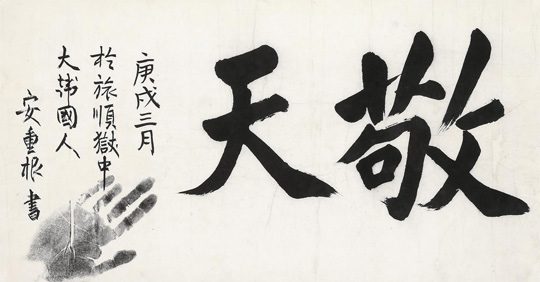
Traditional given names are built from two hanja, each chosen for meaning: 지 (wisdom), 현 (virtuous), 민 (quick or clever), 수 (excellence). Two names that sound identical in Hangul can mean different things depending on the characters. Some parents still pay a professional name maker at a jakmyeongso (작명소, a naming house) to match the characters to the child’s birth date and the balance of the Five Elements.
A growing share of parents choose native Korean names (순우리말 이름) with no hanja at all, such as 하늘 (Haneul, sky), 슬기 (Seulgi, wisdom) or 나래 (Narae, wings). They sound soft and modern, and they work for any gender more easily than many hanja names.
Can Koreans change their name?
Yes, through a family court. Since the mid-2000s, Korean courts have approved most adult requests unless there’s a sign of fraud or crime, so changing a name you dislike is common and carries little stigma. Many Koreans who study or work abroad also adopt an English name (Grace, Daniel, Jenny) for daily use, while their legal Korean name stays unchanged.
Worked example: building a Korean name as a foreigner
Say Emily Carter wants a Korean name for a language class. Option one is to transliterate her real name: 에밀리 카터 (Emilli Kateo), which every Korean will understand and nobody will mistake for a native name. Option two is to build a Korean-style name: pick a real surname, say 김, and a two-syllable given name with a meaning she likes, such as 서연 (Seo-yeon), giving 김서연. That reads as fully Korean, so keep it for class or online use and leave it off official forms abroad.
One practical test: ask a Korean speaker to say the name out loud. If it sounds like a word with a bad meaning or an awkward pun, change one syllable. The rules of Korean sentence order also affect how names attach to particles like 은/는, which our Korean grammar for beginners guide explains.
FAQ
Why do so many Koreans have the same last name?
Surnames spread late to commoners, mostly in the 1800s and early 1900s, and people chose the most prestigious clan names available. Kim, Lee and Park were already the names of royal and aristocratic lines. The result is that a few surnames cover close to half of South Korea.
Do Koreans have middle names?
No. A Korean name is surname plus given name. What looks like a middle name in English (the “Min” in “Heung Min Son”) is the second syllable of the given name, and it shouldn’t be dropped or turned into an initial.
Is Kim a first name or a last name in Korea?
Kim is almost always a family name in Korea. In Kim Yuna, Kim is the surname and Yuna the given name. Kim as a given name is a Western usage.
What does “ssi” mean after a Korean name?
씨 (ssi) is a polite suffix roughly like Mr. or Ms. Attach it to the full name or the given name (Seo-yeon-ssi). It isn’t high enough for bosses, teachers or much older people, who get a title with 님 instead.
Why do North and South Koreans spell the same name differently?
South Korean spelling drops an initial r/l sound in some names, so 리 became 이 (Lee), while North Korea kept Ri. The two Koreas also use different romanization habits, so the same surname can appear as Lee in Seoul and Ri in Pyongyang.
Can a Korean child take the mother’s surname?
Yes. Since the family-head registry was abolished in 2008, parents can agree when registering their marriage to give children the mother’s surname. Courts can also approve a child’s surname change in some family situations. For the exact procedure, check the official Supreme Court family registry pages in Korea.
What to learn next if you want to get Korean names right
Start with the order and the titles: surname first, given name kept whole, and a job title or relationship word for anyone older. Then learn how age decides who calls whom 언니 or 형, because Koreans settle that within minutes of meeting; our explainer on Korean age vs international age shows how age is counted now. After that, practice the honorific endings that go with each title, so the name and the verb sound equally polite.
Related reading



Sources k-korea.blog
Prices, opening hours and availability change. Check the official page before you buy or travel.