13 min read
A 7 day Seoul itinerary works best as 4 neighborhood days, 2 trips out of the city and 1 slow day. Group each day around one cluster of subway stations so you spend your time in palaces, markets and cafes, not on transfers. Below is the order that makes sense, what Koreans actually do in each area, and how to handle the DMZ, Suwon or Nami Island, and the T-money card.
Key takeaways
- Do the palaces on Day 1, while you’re still jet-lagged and awake early. Gyeongbokgung and Changdeokgung close on different weekdays, so check both before you lock in the date.
- Book the DMZ as a guided tour before you fly. You can’t visit it on your own, and you need your passport on the day.
- For the day trip, pick Suwon if you want history with zero planning (Seoul subway Line 1 goes there). Pick Nami Island if you want trees and a ferry ride.
- Buy a T-money card at any convenience store on arrival. It works on the subway, buses and many taxis, and you top it up with cash.
7 day Seoul itinerary at a glance
Seoul is big, but the sights cluster neatly. The old palace district sits north of the Han River (한강, the river that splits the city in two). Myeongdong and Namsan are just south of it, Hongdae is out west, and Gangnam and Seongsu are south and east across the water. If you keep each day inside one of those zones, a week is enough to see the city properly and still leave a day for doing nothing.
Day 1: Gyeongbokgung, Bukchon and Insadong
Royal palaces, a hanok (traditional Korean house) neighborhood on the hill, then tea shops and craft stores in Insadong. This is the oldest part of Seoul, and it’s walkable from end to end.
Day 2: Myeongdong, Namsan and Gwangjang Market
A morning market lunch, Myeongdong cosmetics shopping in the afternoon, and N Seoul Tower on Namsan mountain at sunset.
Day 3: Hongdae, Yeonnam-dong and Mangwon
The student and indie-music side of Seoul: street buskers, cafes along an old railway park, and a neighborhood market Koreans really use.
Day 4: Gangnam, COEX and Seongsu
Modern Seoul. A Buddhist temple facing a giant mall, the Starfield Library, then the converted factories of Seongsu.
Day 5: DMZ day trip
A guided tour to the Demilitarized Zone (DMZ), the strip of land that has divided North and South Korea since the 1953 armistice.
Day 6: Suwon Hwaseong or Nami Island
Pick one: walk the walls of an 18th-century fortress, or take a ferry to a tree-lined island.
Day 7: Jjimjilbang, cafes and the Han River
A slow day the way Seoul people take one: a bathhouse in the morning, a hanok cafe in the afternoon, convenience-store ramyeon by the river at night.
You can swap Days 5 and 6 around. Tour companies run the DMZ on fixed days, so let the tour date decide where everything else goes.
Day 1: Gyeongbokgung (경복궁), Bukchon and Insadong
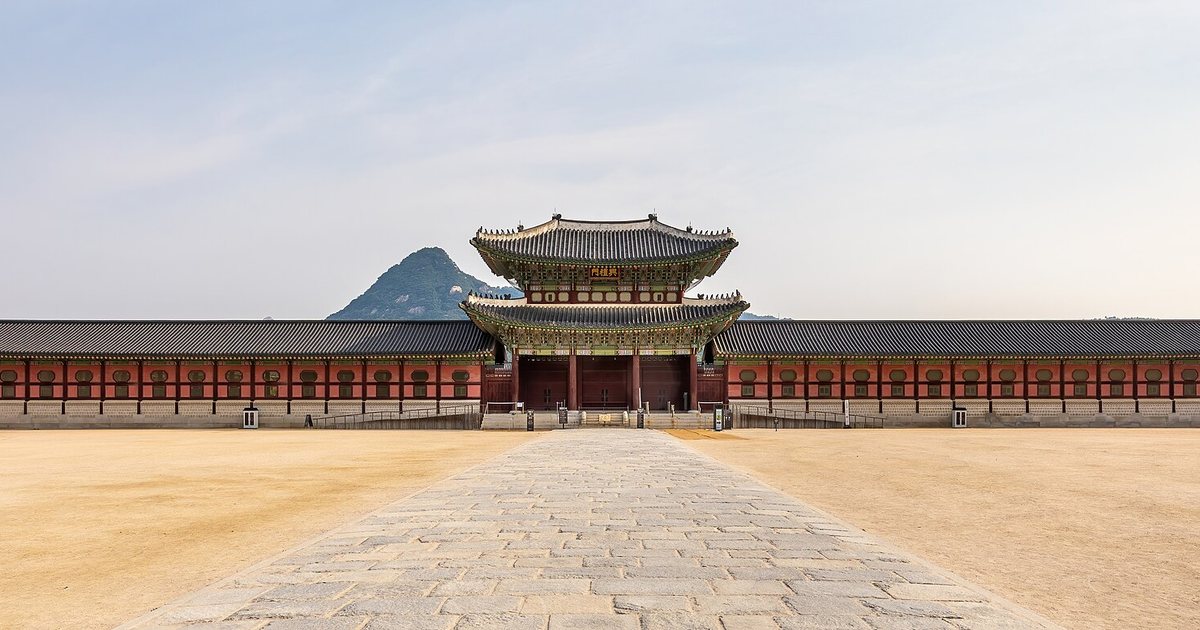
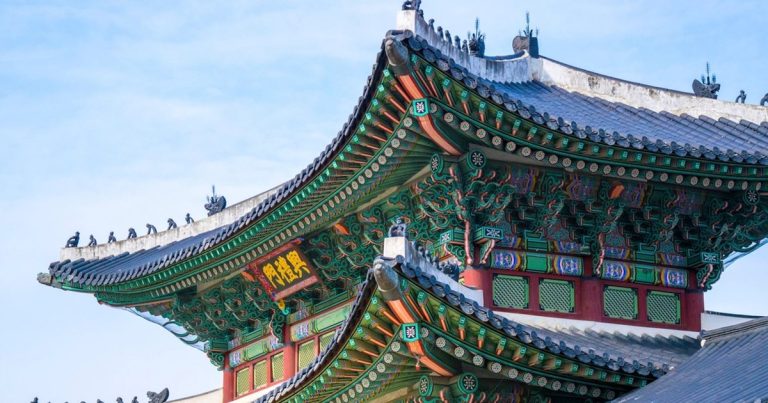
Start at Gyeongbokgung, the main royal palace of the Joseon dynasty (1392 to 1910). Get there when it opens. Tour groups arrive mid-morning, and the guard-changing ceremony at the Gwanghwamun main gate is easiest to watch before the crowds build. Plenty of visitors (Koreans included) rent a hanbok (한복, traditional Korean clothing) from the shops around the station. The palaces have long let hanbok wearers in for free, so check the current rule on the official palace site.
- Area
- Jongno-gu, central Seoul
- Nearest station
- Gyeongbokgung Station (Line 3)
- Time needed
- 2 to 3 hours, including the National Folk Museum inside the grounds
- Before you go
- check opening days and fees on the official page
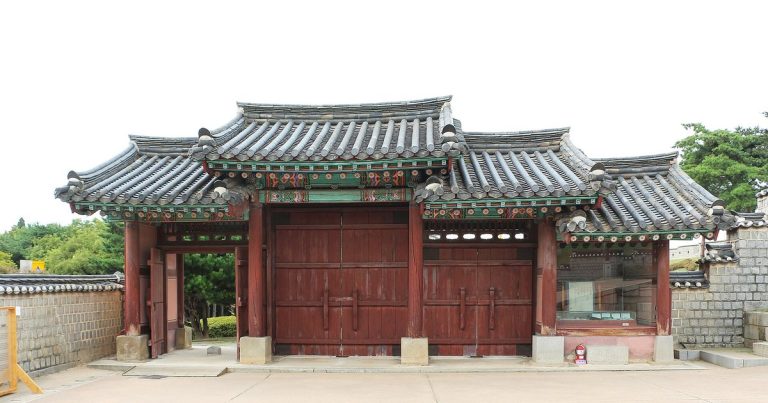
Walk east to Changdeokgung (창덕궁), the palace Koreans often like better because it follows the hills instead of flattening them. Its Secret Garden (Huwon) is only open on guided tours with limited spots, so book ahead on the official site.
How to see Bukchon Hanok Village without annoying residents
Bukchon Hanok Village (북촌한옥마을) sits on the slope between the two palaces, and people still live in those houses. Seoul has added visiting-hour limits and quiet zones in parts of the village. Keep your voice down, don’t try doors, and check the district’s current rules before you go. Anguk Station (Line 3) is the closest stop.
Finish in Insadong (인사동), a street of tea houses, galleries and stores selling hanji (Korean paper) and pottery. Ssamziegil, a spiral shopping arcade, is the easiest place to start. For dinner, Koreans head to the alleys of Ikseon-dong next door, where old hanok buildings now house restaurants and bars.
Day 2: Myeongdong (명동), Namsan and Gwangjang Market
Have an early lunch at Gwangjang Market (광장시장), one of Seoul’s oldest traditional markets, near Jongno 5-ga Station (Line 1). Sit at one of the counter stalls and order bindaetteok (빈대떡, crispy mung bean pancakes fried in front of you), mayak gimbap (마약김밥, small rice rolls served with mustard sauce) and, if you’re feeling brave, yukhoe (육회, seasoned raw beef). Most stalls post prices on the wall, and you pay at the end.
What to buy in Myeongdong
In the afternoon, take the subway to Myeongdong Station (Line 4). This is Seoul’s tourist shopping district: cosmetics flagships, Olive Young (Korea’s big health-and-beauty chain) stores on nearly every block, and street-food carts selling tteokbokki (떡볶이, rice cakes in spicy sauce), egg bread and grilled cheese skewers once evening comes. Our Myeongdong guide lists what’s worth your time and what to skip.
- Area
- Jung-gu, central Seoul
- Nearest station
- Myeongdong Station (Line 4)
- Time needed
- 2 to 3 hours for shopping, more if you stay for the evening food carts
- Before you go
- check store hours on each brand’s official page
Before sunset, walk up to the Namsan cable car or take the trail to N Seoul Tower (남산서울타워) on Namsan mountain. Koreans actually hike this path after work. The city lights come on as you reach the top, and that’s the best view in this itinerary that doesn’t need a ticket. For dinner, the street below the cable car is known for donkatsu (돈까스, breaded pork cutlet).
Day 3: Hongdae (홍대), Yeonnam-dong and Mangwon Market
Hongdae is the area around Hongik University, an art school, and it’s where young Seoul goes out. Get off at Hongik University Station, where Line 2, the AREX airport railroad and the Gyeongui-Jungang Line all meet. That makes it a handy place to stay if you fly in to Incheon.
Spend the late morning in Yeonnam-dong (연남동) along the Gyeongui Line Forest Park, a long, narrow park built over an old railway line. Locals call it “Yeontral Park.” The side streets are full of small cafes, bakeries and vintage stores. For lunch, walk or take a short bus ride to Mangwon Market (망원시장), a neighborhood market where locals buy groceries and pick up fried chicken, hotteok (호떡, filled sweet pancakes) and croquettes.
Is Hongdae worth it at night?
Yes, if you like music. Buskers and dance crews perform on the main walking street in the evening, and the area has live clubs and late-night bars. Have dinner at a samgyeopsal (삼겹살, grilled pork belly) restaurant where you cook the meat at your table and wrap it in lettuce. Our Hongdae guide covers the busking spots, clubs and quieter cafe streets.
Day 4: Gangnam (강남), COEX and Seongsu-dong
Gangnam means “south of the river.” It’s where Seoul’s money, offices and plastic surgery clinics are, and it feels nothing like the palace district. Start at Bongeunsa (봉은사), a Buddhist temple founded over a thousand years ago, which sits right across the road from the COEX mall. A temple facing a glass mega-mall is about as Gangnam as it gets.
- Area
- Samseong-dong, Gangnam-gu
- Nearest station
- Samseong Station (Line 2) for COEX; Bongeunsa Station (Line 9) for the temple
- Time needed
- 2 to 3 hours for the temple, Starfield Library and COEX mall
- Before you go
- check temple programs and mall hours on the official pages
Inside COEX, the Starfield Library (별마당 도서관) has two-story bookshelves and is free to walk through. If you’d rather shop, go to Sinsa-dong’s Garosu-gil, a tree-lined street of boutiques and cafes, instead. Our Gangnam guide covers the stops from COEX to Sinsa.
Why Koreans go to Seongsu-dong
Spend the afternoon in Seongsu-dong (성수동), along Line 2 at Seongsu or Ttukseom Station. It used to be a district of shoe workshops and factories. Now the old brick buildings house cafes, design stores and brand pop-up stores, and Seoul’s twenty-somethings come here on weekends to see what’s new. Seoul Forest park is next door if you need some grass.
Day 5: DMZ day trip from Seoul
The DMZ is a strip of land about 4 km wide that runs across the peninsula, set up when the Korean War stopped in 1953 with an armistice rather than a peace treaty. You can’t drive there on your own. Visits go through licensed tour operators, and most trips leave central Seoul in the morning and get back in the afternoon. For the history behind the line, read our explainer on why Korea is divided.
What a standard DMZ tour includes
- Imjingak (임진각): a park near the border with memorials and the Freedom Bridge.
- The Third Infiltration Tunnel (제3땅굴): a tunnel dug from the North and discovered in 1978. You walk down into it, and the ceiling is low.
- Dora Observatory (도라전망대): a lookout where, on a clear day, you can see into North Korea.
- Dorasan Station: a railway station built for a line to the North that doesn’t run.
The Joint Security Area (JSA) at Panmunjom, where the blue negotiation huts stand, is a separate and more restricted visit. Access has been suspended and resumed several times over the years, so treat any JSA tour listing with care and check what the operator actually confirms.
In the evening, back in Seoul, do what office workers do on a weeknight: chimaek (치맥, fried chicken and beer) at any neighborhood chicken place.
Day 6: Suwon Hwaseong or Nami Island day trip
Both are easy from Seoul, and they’re very different days. Here’s how to choose.
Suwon Hwaseong Fortress (수원 화성)
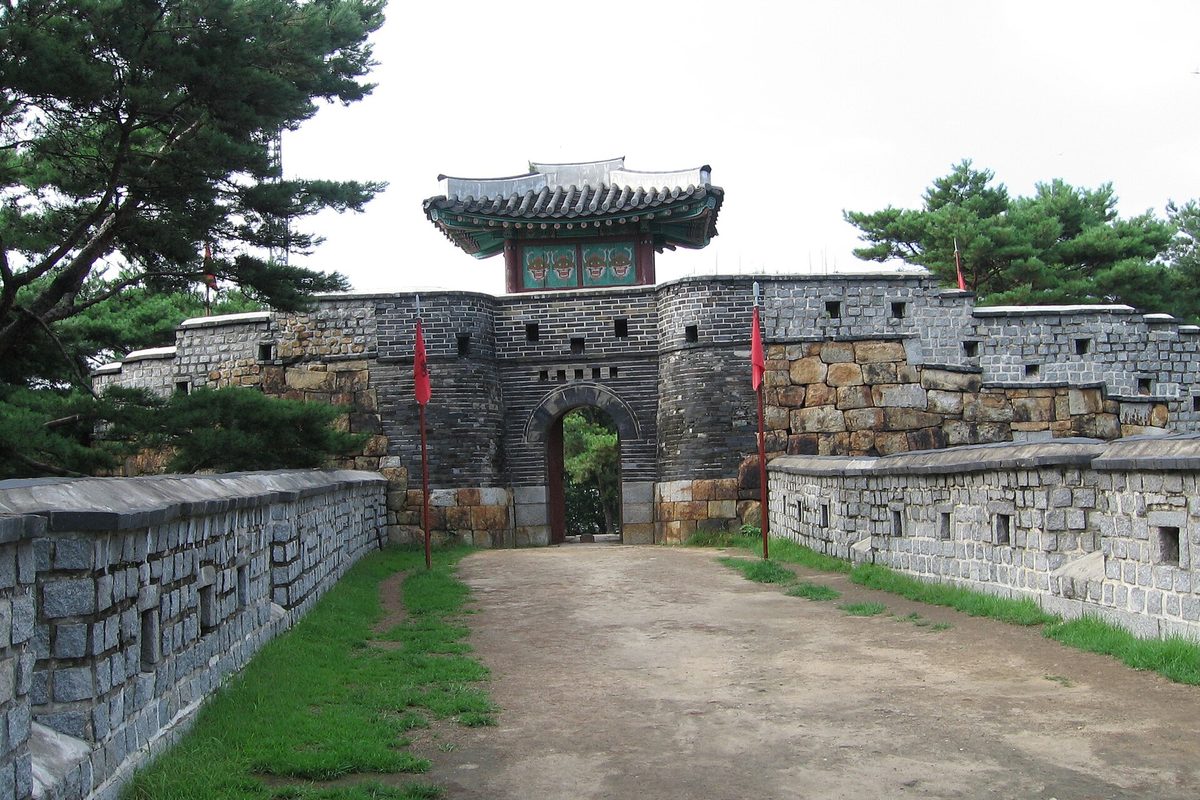
King Jeongjo built Hwaseong in the 1790s, and it has been a UNESCO World Heritage Site since 1997. The fortress wall loops for several kilometers around old Suwon, with gates, watchtowers and archery posts along the way. You can walk the whole thing in a few hours, or just do the stretch up Paldalsan hill for the view. Hwaseong Haenggung, the king’s temporary palace, sits inside the walls.
- Area
- Suwon, Gyeonggi Province, south of Seoul
- Nearest station
- Suwon Station (Seoul subway Line 1 or Korail trains), then a local bus or taxi to the fortress
- Time needed
- A full day, including travel
- Before you go
- check opening days and fees on the official page
Suwon is famous across Korea for Suwon galbi (수원 갈비), big marinated beef ribs grilled at the table. The city is also known for its fried chicken alley near the fortress. Eat one of them before you head back.
Nami Island (남이섬)
Nami is a small island on a river in Gapyeong, northeast of Seoul. It became famous abroad as a filming location for the 2002 drama Winter Sonata. The rows of ginkgo and metasequoia trees are the reason to go, and they look best in autumn. To get there, take the ITX-Cheongchun train or the Gyeongchun Line to Gapyeong Station, then a short taxi or shuttle to the ferry dock. Many visitors pair it with Petite France or the Garden of Morning Calm on a combined tour.
The local dish is dakgalbi (닭갈비, spicy stir-fried chicken cooked on a big iron pan), which comes from nearby Chuncheon.
Choose Suwon if you’re relying on the subway, you like history, or it’s winter. Choose Nami if it’s autumn or spring and you want scenery and a slower pace.
Day 7: A slow Seoul day with a jjimjilbang and cafes
A jjimjilbang (찜질방) is a Korean bathhouse and sauna complex, open long hours, where families, couples and students spend whole afternoons. It works in two parts. The bath area is split by gender and you bathe nude, Korean style, after showering first. The shared area is mixed, and everyone wears the cotton uniform you get at the front desk. There, you lie on heated floors, move between hot rooms and eat.
What to order at a jjimjilbang
Koreans order the same two things: sikhye (식혜, a sweet, chilled rice drink) and maekbanseok gyeran (eggs baked in the hot sauna rooms until the whites turn brown). Fold your towel into the little “sheep head” shape if you want a photo that every Korean will recognize. Dragon Hill Spa in Yongsan and Siloam Sauna near Seoul Station are two big jjimjilbangs that are used to foreign visitors. Check facilities and hours on their sites.
Spend the afternoon in a hanok cafe in Ikseon-dong or Seochon, the quieter neighborhood west of Gyeongbokgung. If you want to move, Bukhansan National Park, on the city’s northern edge, is where Seoul people go hiking on weekends.
End the trip by the Han River. Yeouido Hangang Park is the classic spot: buy instant ramyeon at the riverside convenience store, cook it in the store’s hot-water machine and eat it outside facing the water. It costs very little and it’s one of the most Seoul things you can do. Use the morning before your flight for a last Olive Young run for sheet masks and sunscreen.
Where to stay in Seoul for 7 days, and how to get around
Since this itinerary moves around, stay somewhere with a direct subway line to most days. Here’s how the usual bases compare.
| Area | Best for | Key subway lines | Downside |
|---|---|---|---|
| Myeongdong / Jung-gu | First-timers, shopping, short rides to the palaces | Line 4, Line 2 nearby; Seoul Station close by | Crowded and touristy in the evening |
| Insadong / Jongno | Palaces, Bukchon, hanok guesthouses | Line 1, 3, 5 | Quieter nightlife |
| Hongdae | Nightlife, cafes, direct AREX from Incheon Airport | Line 2, AREX, Gyeongui-Jungang | Noisy late at night; far from Gangnam |
| Gangnam | Business trips, modern hotels, Seongsu and COEX | Line 2, Line 9, Sinbundang | Long rides to the palace district |
On a first trip, Myeongdong or Jongno makes this itinerary easiest. Every stop on Days 1, 2 and 7 is a short ride away, and Seoul Station is right there for the Suwon trip.
How the T-money card works
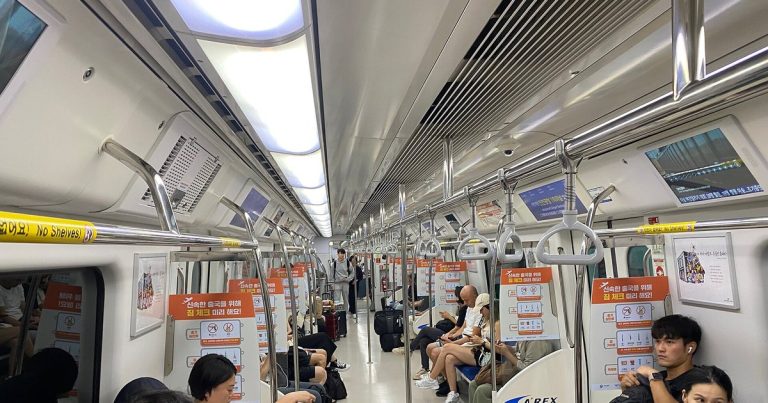
T-money (티머니) is Seoul’s rechargeable transit card. Buy one at a convenience store (GS25, CU, 7-Eleven) or a subway station machine, then top it up with cash at the station machines or at the store counter. Tap in and out on the subway.
On buses, tap when you get off as well as when you get on, or you’ll miss the transfer discount between bus and subway. Many taxis take it too. Some prepaid cards made for foreign visitors combine T-money with a payment card, so compare the current options on their official sites.
Which apps to download before you land
Koreans navigate with Naver Map or KakaoMap. Google Maps handles transit routes, but its walking and driving directions in Korea are limited. Get Kakao T for taxis and Papago, a translation app that handles Korean well, for menus and signs. Both map apps have English modes and show which subway car to board for the fastest transfer.
FAQ
Is 7 days in Seoul too long?
No. A week covers the main neighborhoods, the DMZ and a day trip, and still leaves a slow day. Most visitors who plan only 3 or 4 days end up dropping the DMZ or the day trip. If you have more time, add Busan or Gyeongju by KTX high-speed train.
What is the best month to do a 7 day Seoul itinerary?
Spring (April to May) and autumn (late September to November) have mild weather, cherry blossoms in spring and foliage in autumn. July and August are hot, humid and rainy during the monsoon. Winter is cold but clear, and it’s a good season for jjimjilbangs.
Do I need to book the DMZ tour in advance?
Yes. Tours run on set days and fill up, and the operator usually needs your passport details beforehand. Book before you fly and keep a backup day free in case of a security cancellation.
Can I do Suwon and Nami Island on the same day?
It’s not realistic. They sit in opposite directions from Seoul, south and northeast, so you’d spend most of the day in transit. Pick one, or drop the slow day and do both.
Is Seoul easy to get around without speaking Korean?
Yes. Subway signs and announcements are in English, and stations have numbers as well as names. Taxi drivers may not speak English, so show them the destination in Korean on your map app. Learning how to say thank you in Korean goes a long way.
Do I need cash in Seoul?
Only a little. Cards work almost everywhere, including market stalls more and more often. Keep some cash for topping up T-money and for small street-food vendors.
What to plan next for your Seoul week
Lock in three things first: your DMZ tour date, a Changdeokgung Secret Garden slot, and a hotel near a Line 2 or Line 4 station. Then check the official palace pages for closing days, look up the season for Nami’s trees, and download Naver Map before you board. If you still have a day spare, our list of places to visit beyond Seoul shows what’s one KTX ride away.
Related reading
Sources k-korea.blog
Prices, opening hours and availability change. Check the official page before you buy or travel.