12 min read
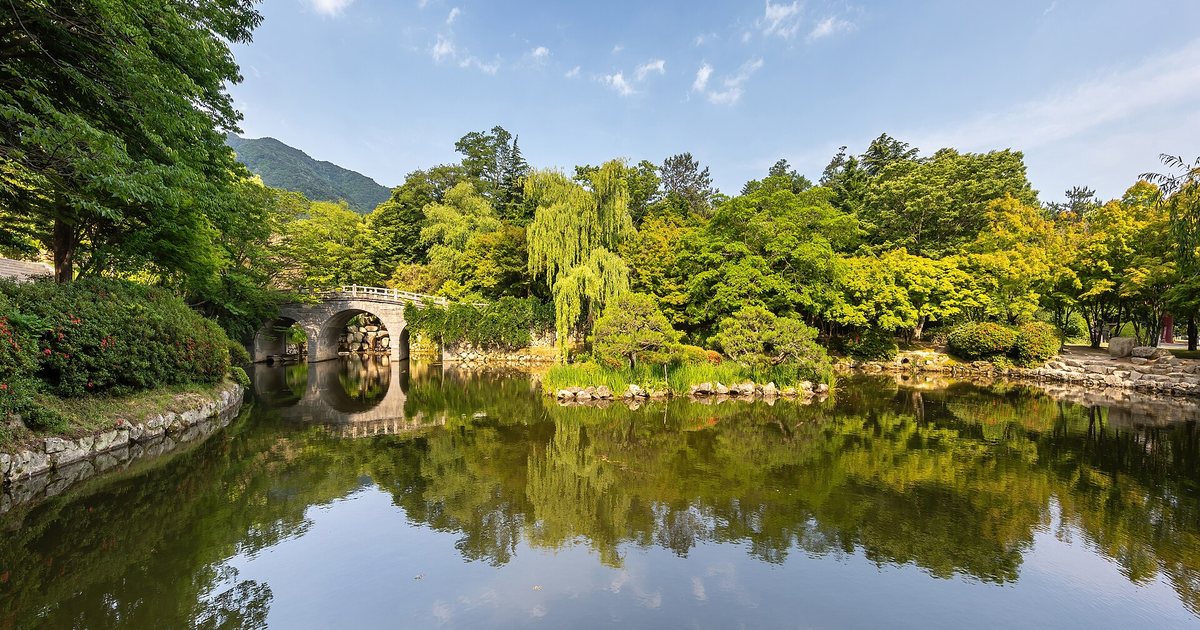
This Gyeongju travel guide says to plan 2 full days for the 8 sites that matter most in Korea’s oldest royal city. Gyeongju (경주) was the capital of the Silla kingdom for almost 1,000 years, and its temples, burial mounds and palace ponds are spread across town, so you see them at walking pace instead of behind museum glass.
It is also the best second stop after Seoul for anyone who wants Korean history without the crowds of the capital. Koreans know it from school trips, and many come back as adults for the night views, the hanok cafés and the cherry blossoms.
Key takeaways
- Silla ruled from Gyeongju from 57 BC to AD 935, which is why the town is called a museum without walls.
- Bulguksa and Seokguram were listed together by UNESCO in 1995; do both in one morning, temple last if you hike.
- The downtown core (Daereungwon, Cheomseongdae, Donggung and Wolji Pond, Hwangridan-gil) is walkable in one afternoon and evening.
- KTX trains from Seoul reach Gyeongju in roughly 2 hours; from Busan it is an easy day trip by train or bus.
What is Gyeongju, and why do Koreans call it a museum without walls?
Gyeongju was Seorabeol, the seat of the Silla (신라) dynasty, one of the Three Kingdoms of ancient Korea. Silla lasted from 57 BC to AD 935, and in the 7th century it allied with Tang China to defeat its rivals Baekje and Goguryeo, uniting most of the peninsula for the first time.
That long run left an unusual amount above ground. Royal tombs sit as grassy hills between bakeries and bus stops. A stone observatory stands in a field next to the main road. Buddhist relics fill the hills around the town. In 2000 UNESCO listed the Gyeongju Historic Areas as a World Heritage Site, five separate zones scattered through the city.
For a visitor this matters in one practical way: you are not doing “a museum” but a town tour. Comfortable shoes, a bike or a taxi app, and a rough map in your head are worth more than any ticket.
Silla history in 60 seconds
- Early Silla: a kingdom of powerful clans burying their kings under huge earth mounds filled with gold crowns and horse gear.
- Buddhism arrives: Silla officially adopted Buddhism in the 6th century, which is why temples and stone pagodas are everywhere.
- Unified Silla: after unification in the late 7th century, the capital grew rich, building Donggung Palace and, in the 8th century, Bulguksa and Seokguram.
- The end: Silla surrendered to the new Goryeo dynasty in 935, and Gyeongju became a provincial city that kept its past almost intact.
Gyeongju travel guide: the 8 sites worth your time
Gyeongju has dozens of listed sites. These eight are what Koreans actually put on a first or second visit, and together they cover the whole Silla story from burial mounds to Buddhist art.
| Site | Korean name | What it is | Best time | Time needed |
|---|---|---|---|---|
| Bulguksa Temple | 불국사 | 8th-century temple with the stone pagodas Dabotap and Seokgatap | Early morning | 1.5 to 2 hours |
| Seokguram Grotto | 석굴암 | Granite cave shrine with a seated Buddha, on Tohamsan mountain | Morning, before tour buses | 1 hour plus travel |
| Daereungwon Tomb Complex | 대릉원 | Park of royal burial mounds; Cheonmachong is open inside | Late afternoon | 1 hour |
| Cheomseongdae | 첨성대 | 7th-century stone observatory | Sunset, or after dark when lit | 20 minutes |
| Donggung Palace and Wolji Pond | 동궁과 월지 | Reconstructed palace pavilions over a royal pond | Just after sunset | 1 hour |
| Hwangridan-gil | 황리단길 | Hanok street of cafés, bakeries and small shops | Afternoon or evening | 1 to 2 hours |
| Gyochon Village and Woljeonggyo Bridge | 교촌마을, 월정교 | Traditional hanok village and a rebuilt covered bridge | Evening, when the bridge is lit | 1 hour |
| Gyeongju National Museum | 국립경주박물관 | Silla gold crowns and the Sacred Bell of King Seongdeok | Any time; good on a rainy day | 1.5 to 2 hours |
Opening hours, closing days and admission rules change, so check each site’s official page or the Gyeongju city tourism site before you go.
Bulguksa and Seokguram: how to see both in one morning
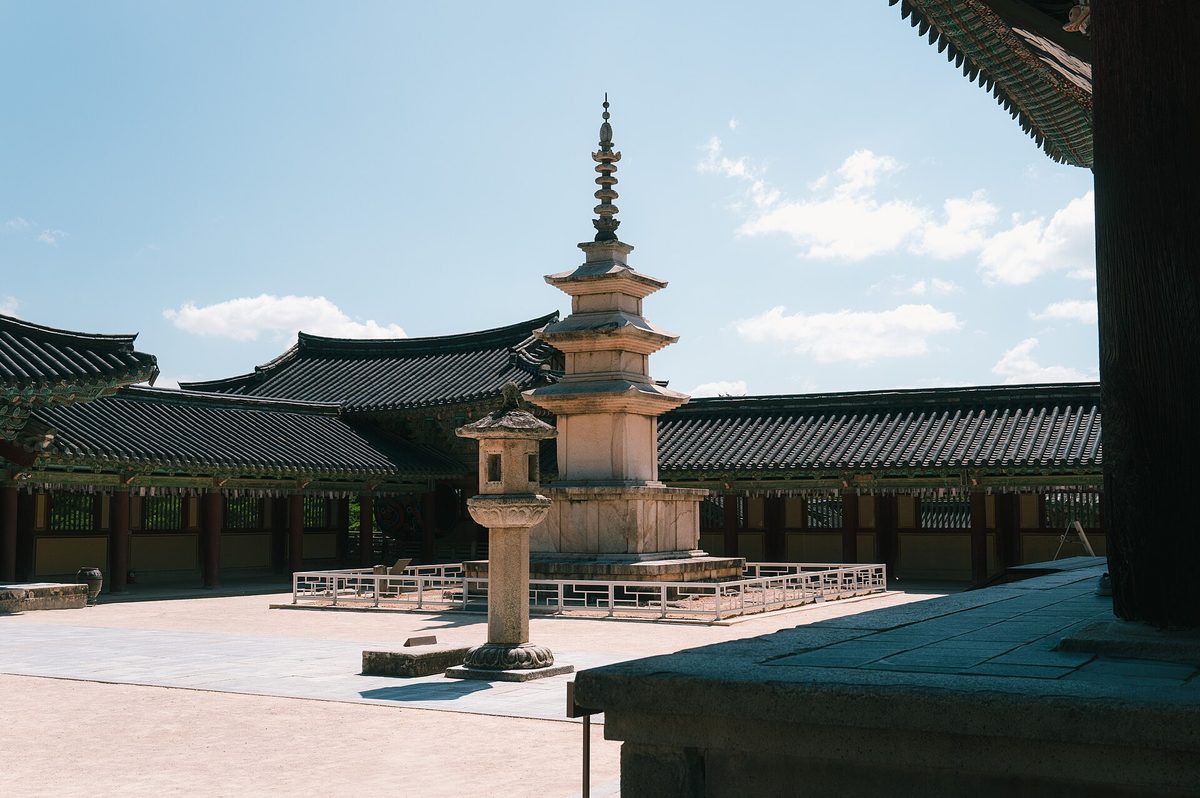
Bulguksa (불국사, “Temple of the Buddha Land”) and Seokguram (석굴암, “Stone Cave Hermitage”) are the reason most foreigners come to Gyeongju, and UNESCO listed them together in 1995. Both date to the mid-8th century, when the official Kim Dae-seong is traditionally credited with starting them.
What to look for at Bulguksa
Walk past the stone staircases called Cheongungyo and Baegungyo (the Blue Cloud and White Cloud bridges) and into the main courtyard. The two pagodas there are a lesson in Silla taste. Seokgatap is plain and perfectly proportioned; Dabotap is fussy and inventive. Dabotap is the pagoda on Korea’s 10-won coin, which you can check in our guide to Korean banknotes and coins.
Most of the wooden halls were burned during the Japanese invasions of the 1590s and rebuilt later. The stonework is the original Silla layer.
- Area
- Jinhyeon-dong, southeast of downtown Gyeongju
- Nearest station
- No subway in Gyeongju; local buses run from downtown and from Gyeongju Station (KTX)
- Time needed
- 1.5 to 2 hours
- Before you go
- check opening days and fees on the official page
Seokguram: small, quiet, unforgettable
Seokguram sits higher up Tohamsan (토함산). Inside an artificial granite cave, a seated Buddha faces east toward the sea, surrounded by carved guardians and bodhisattvas. A glass wall now protects it, and photos inside are not allowed, so the visit is short. Koreans still treat it as one of the high points of Buddhist sculpture anywhere in Asia.
You have two ways up. A local bus or taxi climbs the mountain road to the Seokguram parking lot. Or you hike the forest trail from near Bulguksa, roughly an hour uphill, which is how many Koreans do it on a cool day.
- Area
- Tohamsan mountain, above Bulguksa
- Nearest station
- No subway; local bus or taxi from Bulguksa, or the hiking trail
- Time needed
- About 1 hour on site, plus travel
- Before you go
- check opening days and fees on the official page
The best order
Go up to Seokguram first, early, then come down to Bulguksa. School groups and tour buses tend to arrive mid-morning, and you’ll have done the mountain while they are still parking. If you hike, reverse it: Bulguksa at opening, then climb.
Daereungwon and Cheomseongdae: Gyeongju’s royal tombs on foot
Daereungwon (대릉원) is the image of Gyeongju that ends up on postcards: 23 grassy burial mounds rising out of a manicured park, some taller than the trees around them. These are tumuli, tombs where a wooden chamber was covered in stones and then a mountain of earth, which is why so many escaped grave robbers.
Cheonmachong, the tomb you can walk into
Cheonmachong (천마총, the Heavenly Horse Tomb) was excavated in 1973 and named after a painting of a flying white horse on a birch-bark saddle flap found inside. A section of the tomb is open, so you can see how the burial was built and replicas of the gold crown and grave goods. The biggest mound in the park, Hwangnamdaechong, is a double tomb for a king and queen.
The photo Koreans line up for is the gap between two mounds framing a single magnolia tree. You’ll spot the queue.
- Area
- Hwangnam-dong, downtown Gyeongju
- Nearest station
- No subway; walkable from the intercity and express bus terminals
- Time needed
- About 1 hour
- Before you go
- check opening days and fees on the official page
Cheomseongdae, the oldest observatory in East Asia
A short walk east, Cheomseongdae (첨성대) is a bottle-shaped tower of stacked stone from the reign of Queen Seondeok in the 7th century. It is usually described as the oldest surviving astronomical observatory in East Asia. Scholars still debate how exactly it was used, which is part of its charm.
It takes twenty minutes to see. Time it for sunset, then stay as the lights come on. In early autumn the fields around it fill with pink muhly grass (핑크뮬리) and cosmos, and the area becomes one of the most photographed spots in the country.
Donggung Palace and Wolji Pond at night
If you only have one evening in Gyeongju, spend it here. Donggung (동궁, the East Palace) was the crown prince’s palace in Unified Silla, and Wolji (월지, “pond reflecting the moon”) was its landscaped pond, created under King Munmu in 674. For decades it was called Anapji, and older maps and taxi drivers still use that name.
Three pavilions were rebuilt on the original foundations. By day it is pleasant. After dark, floodlights turn the pavilions gold and the still water doubles them, and that view is why Koreans travel across the country for a weekend in Gyeongju. Excavations of the pond in the 1970s also pulled up thousands of objects, including a 14-sided dice used for drinking games, now in the Gyeongju National Museum.
- Area
- Inwang-dong, east of Cheomseongdae
- Nearest station
- No subway; about a 15 to 20 minute walk from Cheomseongdae
- Time needed
- About 1 hour
- Before you go
- check opening days and fees on the official page
Walk the route Koreans walk
The classic evening loop runs Cheomseongdae, then Donggung and Wolji, then back west to Woljeonggyo (월정교), a reconstructed Silla-style covered bridge that is lit at night, with Gyochon hanok village (교촌마을) beside it. It is flat, safe and lit the whole way.
Hwangridan-gil: where Koreans eat, drink coffee and shop in Gyeongju
Hwangridan-gil (황리단길) is a street of low hanok, traditional tiled-roof houses, beside Daereungwon. The name is a joke borrowed from Gyeongnidan-gil, a trendy café street in Seoul, with “Hwang” taken from Hwangnam-dong, the neighborhood. Over the past decade it has become the place Korean couples and friends spend their afternoons in Gyeongju: rooftop cafés looking over the tombs, photo booths, small stationery and ceramics shops, and long queues at whichever bakery is trending that season.
What to eat in Gyeongju
- Gyeongju-ppang (경주빵) and Hwangnam-ppang (황남빵): small baked buns filled with sweet red bean paste, the town’s classic souvenir. Koreans bring boxes home for colleagues.
- Chalboribbang (찰보리빵): soft barley pancakes sandwiching red bean, lighter than they look.
- Ssambap (쌈밥): a table of leafy greens, rice and banchan (small side dishes) for wrapping your own bites. A row of ssambap restaurants sits near Daereungwon, and it is the standard lunch for Korean families visiting the tombs.
- Gyeongju gyobeop beer pubs and makgeolli: the hanok bars of Hwangridan-gil pour makgeolli (milky rice wine) and soju after dark. Our guide to soju and how Koreans drink it covers the table manners.
Restaurant and café lineups change fast on this street. Use Naver Map or Kakao Map, the two map apps Koreans actually use, to check what is open and how long the wait is.
How many days do you need in Gyeongju?
Two days and one night is the sweet spot, and it is what most Koreans book. One day works if you skip Seokguram or the museum and accept a rush. Three days let you add Bomun Lake, the Namsan mountain trails with their rock-carved Buddhas, or Yangdong Folk Village, a UNESCO-listed Joseon-era clan village north of the city.
Gyeongju 2-day itinerary
Day 1: Downtown Gyeongju
Arrive by late morning and drop bags near the bus terminals or Hwangridan-gil. Lunch on ssambap, then Daereungwon and Cheonmachong. Coffee and shops on Hwangridan-gil. Walk to Cheomseongdae for sunset, continue to Donggung and Wolji Pond as the lights come on, and finish at Woljeonggyo Bridge and Gyochon village.
Day 2: Tohamsan and the museum
Start early at Seokguram, then Bulguksa. Head back toward town for the Gyeongju National Museum in the afternoon to see the gold crowns and the Sacred Bell of King Seongdeok (also called the Emille Bell). Pick up a box of Gyeongju-ppang and catch an evening train.
Day 3 (optional): Bomun Lake or Yangdong
Rent a bike around Bomun Lake, the resort area east of town that is lined with cherry trees, or go north to Yangdong Folk Village for a quieter, lived-in look at old Korea.
Getting around inside Gyeongju
Gyeongju has no subway. The downtown core is flat and compact, so walking or renting a bike works well, and e-bikes and scooters are common. For Bulguksa and Seokguram, take a city bus or a taxi. A T-money card works on local buses; see how to pay in Korea as a foreigner for how to load it. Check current routes in Naver Map or Kakao Map rather than an old bus number from a blog.
How to get to Gyeongju from Seoul or Busan
Gyeongju sits in the southeast, between Daegu and the coast, and is much closer to Busan than to Seoul.
| From | Option | Rough travel time | Arrives at | Book or check |
|---|---|---|---|---|
| Seoul | KTX from Seoul Station | About 2 hours | Gyeongju Station (KTX) | Korail (letskorail.com) |
| Seoul (Gangnam) | SRT from Suseo Station | About 2 hours | Gyeongju Station (KTX) | SRT official site |
| Seoul | Express bus | About 4 hours or more | Gyeongju Express Bus Terminal, downtown | Bus terminal or booking app |
| Busan | Train from Busan or Bujeon area | Under 1 hour | Gyeongju Station | Korail |
| Busan | Intercity bus from Busan’s main bus terminal | About 1 hour | Gyeongju Intercity Bus Terminal, downtown | Bus terminal |
Which Gyeongju station?
High-speed trains stop at Gyeongju Station (경주역) in Geoncheon, west of the city. It used to be called Singyeongju (신경주), and older guides still use that name. It is not downtown, so you’ll need a local bus or taxi into town, roughly 20 to 30 minutes. The bus option drops you right in the center, next to Daereungwon, which is why many Koreans coming from Busan prefer it.
Times and fares change by season and day of the week. Check Korail or the SRT site for the current timetable, and book ahead on Friday evenings and holiday weekends, when Koreans fill the trains.
Best time to visit Gyeongju: cherry blossoms and autumn
Spring and autumn are peak seasons for a reason. Summer is hot and humid for walking between sites; winter is cold and bare but quiet.
Cherry blossoms in Gyeongju
Gyeongju is one of Korea’s best-known cherry blossom towns. The trees usually bloom in late March or early April, a little earlier than Seoul. The favorite spots are the road around Bomun Lake, the stone wall of Daereungwon and the area near Cheomseongdae. Bloom dates move every year, so watch the Korean forecast released each spring and book rooms early.
Autumn colors
From late October into November, maples at Bulguksa and on Tohamsan turn red and the ginkgo trees go gold. Early autumn adds the pink muhly fields near Cheomseongdae. Weekends in both seasons are busy with Korean visitors, so a weekday trip pays off.
| Season | What you get | Watch out for |
|---|---|---|
| Spring | Cherry blossoms at Bomun Lake and Daereungwon | Crowded weekends, booked hotels |
| Summer | Lotus ponds, long evenings | Heat, humidity, monsoon rain |
| Autumn | Red maples at Bulguksa, pink muhly at Cheomseongdae | School trip groups, weekend queues |
| Winter | Empty sites, clear night views | Cold wind on Tohamsan |
For what to bring each season, see our Korea packing list.
FAQ
Is Gyeongju worth visiting?
Yes, if you want to see historic Korea outside a palace in Seoul. Gyeongju has more Silla-era sites in one place than anywhere else, and the downtown core is compact enough to cover on foot. Most Koreans visit at least once on a school trip and many return as adults.
Can you do Gyeongju as a day trip from Busan?
Yes. Busan is close enough for a day trip by train or intercity bus. Pick either Bulguksa and Seokguram or the downtown tombs plus Wolji Pond at night; trying both in one day is a rush.
Can you do Gyeongju as a day trip from Seoul?
It is possible with the KTX, about two hours each way, but tiring. You would miss the evening at Wolji Pond, which is one of the highlights. One night is the better plan.
Where should you stay in Gyeongju?
Stay near Hwangridan-gil or the bus terminals if you want to walk to the tombs and the night sites. Bomun Lake has the big resort hotels and is better with a car or for a slow trip. Hanok guesthouses around Hwangridan-gil and Gyochon let you sleep in a traditional house, often on a heated floor.
Do you need to speak Korean in Gyeongju?
No. Main sites have English signs and the national museum has English labels. Smaller restaurants may only have Korean menus, so a translation app and a few basic phrases help.
What is Gyeongju famous for?
It is famous as the Silla capital: royal burial mounds, Bulguksa Temple, Seokguram Grotto and Cheomseongdae observatory. Among Koreans it is also known for Gyeongju-ppang red bean buns, cherry blossoms at Bomun Lake and the night view of Wolji Pond.
What to plan next for your Gyeongju trip
Lock in your train first, especially for a spring or autumn weekend, then build the trip around one evening downtown and one early morning on Tohamsan. Download Naver Map or Kakao Map before you land, check opening days on each site’s official page, and keep an eye on the spring cherry blossom forecast if you are aiming for April. If Gyeongju is your first trip outside Seoul, pair it with Busan for a southeast loop: history one day, sea the next.
Related reading
Sources k-korea.blog
Prices, opening hours and availability change. Check the official page before you buy or travel.