18 min read
Here’s how to learn Korean in one line: learn Hangul’s 24 basic letters first, then grammar and listening. The alphabet takes days, not months, and once you can read it, every drama subtitle, menu and song lyric becomes study material. After that the real work is particles, verb endings and polite speech, and this guide puts them in the order that actually sticks.
Below you’ll find a 6-stage roadmap, a phrase table, a glossary of Korean learning terms, a comparison of apps, tutors and classes you can use from abroad, and a 30-day checklist to start today.
Key takeaways
- Hangul has 14 basic consonants and 10 basic vowels. Learn to read it before you touch any app’s vocabulary drills.
- Korean puts the verb last (subject, object, verb), and small particles such as 은/는 and 을/를 tell you who does what.
- Use the polite 요 form (haeyo-che) with strangers and staff. Casual banmal is for close friends and younger people who invite it.
- TOPIK, Korea’s official proficiency test, has 6 levels split into TOPIK I (1-2) and TOPIK II (3-6).
How to learn Korean: the 6-stage roadmap
Most learners stall because they study in the wrong order: 200 flashcard words in romanization, no grammar, then a drama they can’t follow. Koreans who teach the language to foreigners (at university language institutes in Seoul and government-backed King Sejong Institutes abroad) follow roughly the same sequence. Reading comes first, then sentence structure, then the endings that carry politeness and tense, then volume.
Use the table as a map. The “ready to move on” column matters more than any timeline, because speed varies wildly with how many hours you put in each week.
| Stage | What you learn | You’re ready to move on when | Best tools |
|---|---|---|---|
| 1. Hangul (한글) | Consonants, vowels, syllable blocks, final consonants (batchim) | You can sound out any word on a sign or subtitle, slowly | Free Hangul charts, writing practice by hand, a phone Korean keyboard |
| 2. Sounds | Pronunciation rules: linking, nasal sounds, aspirated vs tense consonants | You can read 감사합니다 aloud as “gamsahamnida” without looking it up | Audio from a textbook or dictionary app, shadowing short clips |
| 3. Core grammar | Word order, topic and object particles, present and past tense, negation | You can write 5 simple sentences about your day | A structured textbook series, Talk To Me In Korean lessons |
| 4. Politeness | Speech levels, honorifics, numbers (two systems) | You know which ending to use with a shop clerk and with a friend | Textbook dialogues, a tutor who corrects you |
| 5. Volume | Vocabulary by topic, connecting endings (-고, -아서/어서, -지만) | You follow simple podcasts or webtoons with a dictionary | Spaced-repetition flashcards, graded readers, Korean subtitles |
| 6. Conversation | Speaking under time pressure, listening at native speed | You hold a 15-minute chat without switching to English | Tutors, language exchange, TOPIK II practice papers |
Stages 1 and 2 are short. Stages 3 and 4 are where your foundation is built, and rushing them is the single most expensive mistake you can make. Stage 5 and 6 never really end, which is good news: that’s when Korean starts paying you back in dramas, music and travel.
Is Korean hard for English speakers?
Yes, harder than Spanish or French, easier than its reputation in one area: reading. The US Foreign Service Institute places Korean in its hardest category for native English speakers, alongside Japanese, Chinese and Arabic. That ranking is about grammar and vocabulary distance, not the alphabet.
What makes Korean hard
Three things. The word order is flipped compared with English: “I rice eat” instead of “I eat rice.” Most vocabulary shares no roots with English, so you can’t guess words the way you might in Italian. And politeness is built into verb endings, so every sentence forces you to decide how formal you are being.
What makes Korean easier than you think
Hangul is one of the most logical writing systems in use. There’s no gender for nouns, no articles (no “a” or “the”), and verbs don’t change for “I, you, he.” Korean also borrows a lot of English: 커피 (keopi, coffee), 컴퓨터 (keompyuteo, computer), 아이스크림 (aiseukeurim, ice cream). And because Korean pop culture is everywhere, you have more free listening material than learners of almost any other Asian language.
About 60% of Korean vocabulary is often described as Sino-Korean (words built from Chinese characters), which is why Chinese and Japanese speakers progress faster. If you already speak one of those languages, lean into it: 도서관 (doseogwan, library) uses the same roots as Japanese toshokan.
How to learn Hangul (한글) in a few days
Hangul (한글), the Korean alphabet, was created under King Sejong in the 15th century and promulgated in 1446 in a document called Hunminjeongeum (훈민정음). It was designed to be learned fast, and it still is. Give it a few focused sessions and you’ll read words, slowly but correctly.
The 24 basic letters
Start with 14 consonants: ㄱ (g/k), ㄴ (n), ㄷ (d/t), ㄹ (r/l), ㅁ (m), ㅂ (b/p), ㅅ (s), ㅇ (silent at the start, “ng” at the end), ㅈ (j), ㅊ (ch), ㅋ (k), ㅌ (t), ㅍ (p), ㅎ (h). Then the 10 basic vowels: ㅏ (a), ㅑ (ya), ㅓ (eo), ㅕ (yeo), ㅗ (o), ㅛ (yo), ㅜ (u), ㅠ (yu), ㅡ (eu), ㅣ (i).
The shapes have logic. The original consonants were drawn to suggest the mouth and tongue position, and adding a stroke usually adds a puff of air: ㄱ becomes ㅋ, ㄷ becomes ㅌ, ㅂ becomes ㅍ. Vowels are built from a vertical line, a horizontal line and short strokes, so ㅏ and ㅑ differ by one tick.
Double consonants and combined vowels
Next come 5 tense double consonants (ㄲ, ㄸ, ㅃ, ㅆ, ㅉ) and 11 combined vowels such as ㅐ (ae), ㅔ (e), ㅘ (wa) and ㅢ (ui). In everyday Seoul speech, ㅐ and ㅔ sound almost the same, so don’t lose sleep over hearing the difference. You’ll learn which spelling a word uses by reading it.
How syllable blocks work
Korean doesn’t write letters in a row like English. It stacks them into square syllable blocks: a consonant, a vowel and sometimes a final consonant. 한 is ㅎ + ㅏ + ㄴ. 글 is ㄱ + ㅡ + ㄹ. Put them together and you get 한글, “Hangul.”
Every block starts with a consonant. When a syllable begins with a vowel sound, it uses the silent placeholder ㅇ, which is why 아 is just “a.” Vertical vowels (ㅏ, ㅓ, ㅣ) sit to the right of the consonant. Horizontal ones (ㅗ, ㅜ, ㅡ) sit underneath.
Batchim: the final consonant
The consonant at the bottom of a block is called batchim (받침). Here’s the shortcut most textbooks give late: whatever letter sits there, it is pronounced as one of only 7 sounds (k, n, t, l, m, p, ng). So 옷 (clothes) ends in a “t” sound, not “s,” and 부엌 (kitchen) ends in a “k” sound.
How to practice Hangul so it sticks
- Write each letter by hand while saying it out loud. Typing alone doesn’t build the same memory.
- Read real words straight away: café names, K-pop song titles, drama posters.
- Drop romanization as soon as you can read slowly. Romanized Korean teaches wrong vowels, especially ㅓ (eo) and ㅡ (eu).
- Install a Korean keyboard on your phone and type the words you read.
Korean pronunciation: the sound changes beginners miss
Once you can read Hangul, you’ll notice Koreans don’t always say words the way they’re spelled. That’s normal and rule-based. Learn these four patterns and listening gets much easier.
Linking (연음)
When a block ends in a consonant and the next block starts with the silent ㅇ, the consonant slides over. 한국어 (Korean language) is spoken “han-gu-geo,” not “han-guk-eo.” 음악 (music) sounds like “eu-mak.”
Nasal sounds
A ㅂ or ㄱ in front of ㄴ or ㅁ turns nasal. That’s why 감사합니다 is spelled with ㅂ but sounds like “gamsahamnida,” and 한국말 sounds like “han-gung-mal.”
Three kinds of consonant
Korean has plain (ㄱ, ㄷ, ㅂ, ㅈ), aspirated with a puff of air (ㅋ, ㅌ, ㅍ, ㅊ) and tense with no air (ㄲ, ㄸ, ㅃ, ㅉ) versions. Hold a tissue in front of your mouth: it should move for 카 and stay still for 까. Getting this right is what makes 불 (fire), 풀 (grass) and 뿔 (horn) different words.
The soft ㅎ
ㅎ often fades or merges. 좋다 (good) sounds like “jo-ta,” and 좋아요 sounds like “jo-a-yo.” Hearing that “h” disappear in song lyrics is a sign your ear is adjusting.
Korean grammar basics: word order, particles and verb endings
Korean grammar is regular once you see the system. The verb goes last, little tags called particles mark the role of each noun, and endings bolted onto the verb carry tense, mood and politeness.
Word order: subject, object, verb
저는 밥을 먹어요 (jeoneun bap-eul meogeoyo) means “I eat rice,” literally “I rice eat.” Because particles mark the roles, you can move nouns around for emphasis, but the verb stays at the end. Koreans also drop the subject constantly when context makes it obvious, so 밥 먹었어요? (“ate rice?”) is a full, natural question. It’s how people ask “have you eaten?” as a greeting.
Particles that do the heavy lifting
- 은/는 (eun/neun): topic marker, “as for.” Use 은 after a consonant, 는 after a vowel: 저는 (as for me).
- 이/가 (i/ga): subject marker, often for new information or emphasis: 비가 와요 (rain is coming, it’s raining).
- 을/를 (eul/reul): object marker: 커피를 마셔요 (I drink coffee).
- 에 (e): to, at, in (time and destination): 학교에 가요 (I go to school).
- 에서 (eseo): at a place where an action happens: 카페에서 공부해요 (I study at a café).
The topic-versus-subject difference (은/는 vs 이/가) confuses everyone for months. Don’t stall on it. Learn the common patterns from example sentences and the feel comes with input.
Verb endings: where tense lives
Every Korean verb has a dictionary form ending in 다: 가다 (to go), 먹다 (to eat), 하다 (to do). Drop 다 to get the stem, then add endings. 가 + 아요 = 가요 (I go, polite). Past tense adds 았/었: 갔어요 (I went). Future uses -ㄹ 거예요: 갈 거예요 (I will go).
하다 is your best friend. Hundreds of verbs are a noun plus 하다: 공부하다 (to study), 운동하다 (to exercise), 사랑하다 (to love). Learn one and you’ve learned the pattern for all of them.
Two number systems
Korean uses native numbers (하나, 둘, 셋: hana, dul, set) for counting things, hours and age, and Sino-Korean numbers (일, 이, 삼: il, i, sam) for minutes, money, dates and phone numbers. So 3:30 is 세 시 삼십 분 (se si samsip bun), mixing both in one phrase. Drill this early; you’ll use it at every café counter and ticket machine in Korea.
Korean speech levels: when to use 요, 습니다 and banmal
Politeness in Korean isn’t only in word choice. It’s in the last syllable of almost every sentence. Pick the right level and you sound respectful; pick the wrong one and you sound either stiff or rude.
| Level | Example (“I eat”) | Who uses it, with whom | Learn it when |
|---|---|---|---|
| Formal polite, 합니다체 (hamnida-che) | 먹습니다 (meokseumnida) | News anchors, announcements, presentations, service staff greeting customers | Early, for set phrases like 감사합니다 |
| Informal polite, 해요체 (haeyo-che) | 먹어요 (meogeoyo) | Strangers, shop staff, coworkers, people you’ve just met. The everyday default | First. Make this your main speaking style |
| Casual, 반말 (banmal) | 먹어 (meogeo) | Close friends the same age, younger family, people who invite you to drop formality | Second, mostly for understanding dramas and lyrics |
Here’s what Koreans actually do: adults meeting for the first time use 요 form even if they’re the same age, and switch to banmal only after someone suggests it, usually with 말 편하게 해요 (mal pyeonhage haeyo, “let’s speak comfortably”). Age matters, which is why Koreans often ask your birth year early. It isn’t nosy. It sets the speech level.
Honorifics add another layer. When talking about someone senior, verbs take -시-: 가세요 (please go, or they go, respectfully). Some words swap entirely: 먹다 (eat) becomes 드시다 when the eater is an elder. You’ll hear 맛있게 드세요 (enjoy your meal) in every restaurant in Seoul.
First Korean phrases to learn (with romanization)
These are the phrases a Seoul local would tell a friend to learn before arriving. All are in polite form, safe with anyone. Learn them from Hangul and audio, using romanization only as a temporary crutch.
| English | Korean | Romanization | When to use it |
|---|---|---|---|
| Hello | 안녕하세요 | annyeonghaseyo | Polite. Any time of day, with anyone |
| Thank you | 감사합니다 | gamsahamnida | Formal polite. Shops, taxis, restaurants |
| Yes / No | 네 / 아니요 | ne / aniyo | Polite. 네 also means “I see” or “OK” |
| Excuse me (to get attention) | 저기요 | jeogiyo | Polite. Calling a server in a restaurant |
| I’m sorry | 죄송합니다 | joesonghamnida | Formal polite. Bumping into someone, apologizing to staff |
| This one, please | 이거 주세요 | igeo juseyo | Polite. Pointing at a menu or product |
| How much is it? | 얼마예요? | eolmayeyo? | Polite. Markets and street stalls |
| Where is the restroom? | 화장실 어디예요? | hwajangsil eodiyeyo? | Polite. Anywhere |
| Please say it again | 다시 한번 말해 주세요 | dasi hanbeon malhae juseyo | Polite. When you didn’t catch something |
| Please speak slowly | 천천히 말해 주세요 | cheoncheonhi malhae juseyo | Polite. The most useful learner phrase |
| I don’t know / I’m not sure | 잘 모르겠어요 | jal moreugesseoyo | Polite. Softer than a flat “I don’t know” |
| I’m studying Korean | 한국어 공부하고 있어요 | hangugeo gongbuhago isseoyo | Polite. Locals tend to slow down and help when they hear it |
Phrases stick best when you attach them to a real situation. Reading a bathhouse sign, for example, is a great test of Hangul plus survival vocabulary like 남탕 (men’s bath) and 여탕 (women’s bath); our guide to jjimjilbang (찜질방) etiquette and the signs you’ll see shows the kind of everyday setting where these words appear.
Best ways to learn Korean from abroad: apps, textbooks, tutors and classes
No single tool takes you to conversation. The learners who get there combine a structured spine (textbook or class) with daily input (listening and reading) and regular output (speaking with a person). Here’s how the main options compare.
| Method | Best for | Strength | Weak spot | Check current costs |
|---|---|---|---|---|
| Apps (Duolingo, flashcard apps) | Daily habit, vocabulary review | Short sessions, free tiers, streaks keep you going | Thin grammar explanations; you can’t reach conversation on apps alone | App store listing |
| Textbook series (Sejong Korean, university series from Korean language institutes) | Stages 3 to 5, the grammar spine | Logical order, audio, dialogues built around real situations | Easy to read without speaking | Publisher or bookstore |
| Online lessons (Talk To Me In Korean, YouTube teachers) | Clear grammar explanations in English | Explains why, not only what; lots of free content | Passive unless you do the exercises | The provider’s site |
| Online tutor (italki and similar) | Speaking, correction, motivation | Someone fixes your mistakes in real time | Quality varies; needs a plan from you | Each tutor’s profile |
| King Sejong Institute or university class | Accountability, a group, a certificate path | Government-backed curriculum, teachers trained for foreigners | Fixed schedules; not in every city | The local institute’s page |
| Language exchange (HelloTalk, Tandem, local meetups) | Casual practice, slang, friends | Free, real Koreans, current expressions | Unstructured; partners rarely correct grammar | Free tiers in the app |
| Study in Korea (university language institutes in Seoul) | Fast progress for those who can relocate | Several hours of class daily plus total immersion | Big commitment of time and money; visa rules apply | The institute’s admissions page |
How to choose your mix
On a tight budget, pair a textbook with free online lessons and a language exchange partner. With some money to spend, the highest-value purchase is one or two tutor sessions a week, because correction is the one thing free tools can’t give you. If you need structure and deadlines, a class at your nearest King Sejong Institute (Sejong Hakdang, the Korean government’s network of language schools abroad) is worth checking.
A worked example: 5 hours a week
Say you have 45 minutes on weekdays and longer on Saturday. Monday to Thursday: 30 minutes of textbook grammar plus 15 minutes of flashcards. Friday: shadow a 3-minute drama clip with Korean subtitles.
Saturday: a 30-minute tutor session where you use that week’s grammar, then review the corrections. Sunday off. It’s unglamorous, and it beats an hour of app streaks every day because it touches all four skills.
Learning Korean with K-dramas, K-pop and webtoons (without wasting months)
Watching dramas with English subtitles feels like study. Mostly, it isn’t. Your brain reads the English and the Korean becomes background music. Pop culture works as a learning tool only when you make it active.
How to study with K-dramas
- Pick one episode, or even one scene, of a modern drama set in an office or school. Historical dramas use old-fashioned speech you’ll rarely need.
- Watch the scene once with English subtitles for the story.
- Rewatch with Korean subtitles if your platform offers them, pausing to read each line.
- Pull out 5 useful lines and add them to your flashcards as full sentences.
- Shadow those lines: play, pause, repeat out loud copying the rhythm.
Subtitle language options differ by country and platform, so check the settings on your streaming service before you pick a show.
How to study with K-pop
Song lyrics are great for Hangul reading speed and casual speech, and bad for grammar models (lyrics bend rules for rhythm). Look up the Hangul lyrics, read them along as you listen, and translate one verse yourself before checking a translation. Ballads are slower and clearer than rap verses.
Webtoons, variety shows and esports
Webtoons (Korean web comics) pair short sentences with pictures, which makes them ideal graded reading once you reach stage 5. Variety shows put Korean captions on screen constantly, so you get reading and listening at once. Even sports and esports broadcasts help: if you follow League of Legends, keeping up with LCK news like the off-season transfer market and then watching Korean-language casts trains your ear for fast, natural speech on a topic you already understand.
Read real Korean product text
Packaging is another underrated reader. K-beauty labels repeat the same words again and again (보습, moisturizing; 민감성 피부, sensitive skin; 크림, cream), so reading the Korean side of a tube you already own, like the one in our review of Aestura Atobarrier 365 Cream for dry skin, is quick vocabulary practice with context.
TOPIK: Korea’s official Korean test and when to take it
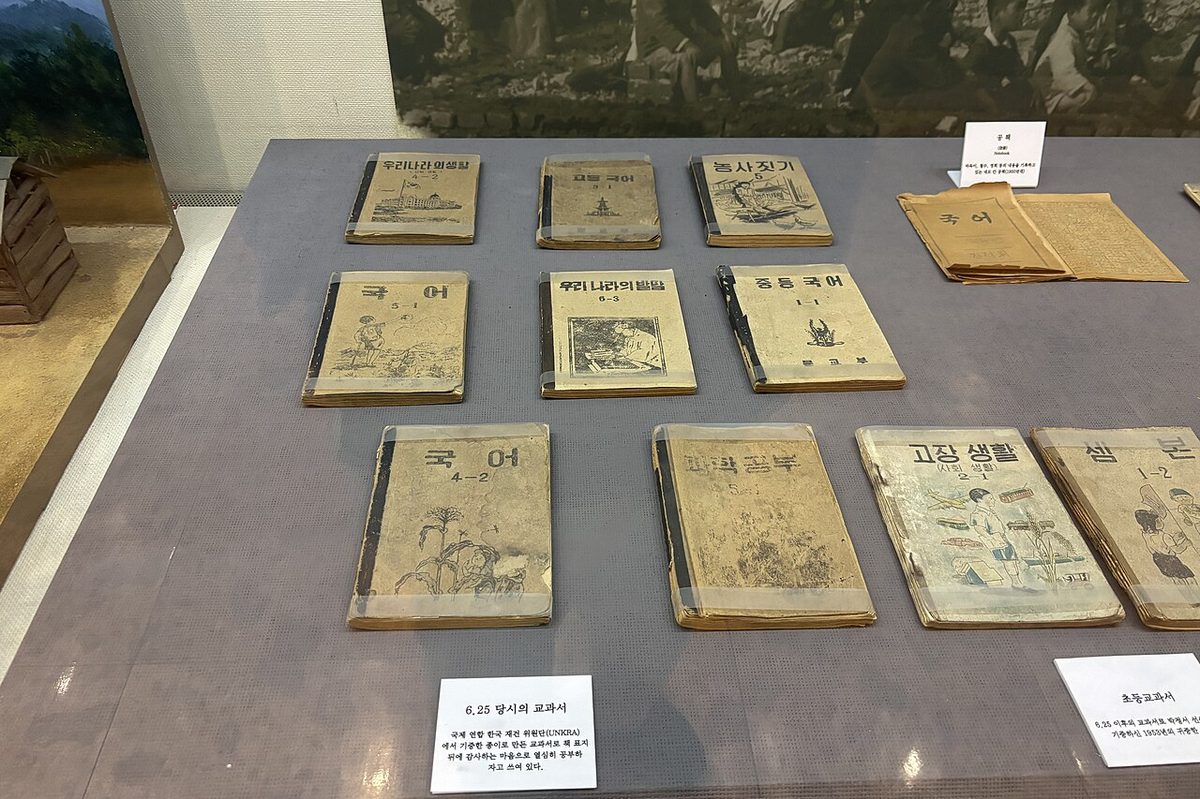
TOPIK (Test of Proficiency in Korean, 한국어능력시험) is the Korean government’s standardized test for non-native speakers, run by the National Institute for International Education (NIIED). Universities in Korea and some employers and visa categories ask for it. If you’re learning for fun, it’s still a useful yardstick.
How TOPIK is structured
- TOPIK I covers levels 1 and 2 (beginner) and tests listening and reading.
- TOPIK II covers levels 3 to 6 (intermediate to advanced) and adds writing.
- Your score decides your level; you don’t register for a specific level within each test.
Should you take it?
Take TOPIK I once you’ve finished a full beginner textbook, mainly as motivation and a deadline. TOPIK II matters if you plan to study or work in Korea, where level 3 or higher is commonly requested. Test dates, fees, locations and whether paper or internet-based tests are offered vary by country and change each year, so check the official TOPIK site or your local Korean embassy or cultural center before you plan around a date. Score validity rules are listed there too.
Past papers are released through the official site, and practicing with them is the best preparation. TOPIK reading questions use formal written Korean, so add news articles and essays to your reading once you aim for TOPIK II.
Common mistakes when learning Korean
Living in romanization
Learners who study “annyeonghaseyo” instead of 안녕하세요 for months mispronounce vowels for years. Hangul is quick to learn. Switch as early as possible.
Learning only banmal from dramas
Drama characters often speak casually because they’re friends, siblings or rivals. Copy that with a shop clerk or a new colleague and it lands as rude. Default to 요 form until someone invites you to drop it.
Memorizing single words, not sentences
Korean meaning sits in particles and endings. A flashcard that says 먹다 = eat teaches you less than one that says 점심 먹었어요? = Did you eat lunch? Put whole sentences on your cards.
Skipping speaking until you feel ready
Nobody feels ready. Start speaking with a tutor or exchange partner in your first month, even if it’s only self-introduction and numbers. Speaking reveals gaps that reading hides.
Translating word for word from English
Koreans don’t say “I love you” with 저는 당신을 사랑해요 in daily life. 당신 (you) sounds odd in most conversations, and people use names, titles or nothing at all instead. Learn how Koreans phrase things, not how English would.
Changing tools every two weeks
App hopping feels productive and resets your progress. Pick one textbook series and finish it. Add tools around it, not instead of it.
Korean learning glossary: terms you’ll see in every textbook
Textbooks, tutors and Korean-language explanations use these words constantly. Learn them and grammar videos make much more sense.
| Hangul | Romanization | Meaning |
|---|---|---|
| 한글 | hangeul | The Korean alphabet |
| 한국어 | hangugeo | The Korean language |
| 자음 / 모음 | jaeum / moeum | Consonant / vowel |
| 받침 | batchim | Final consonant at the bottom of a syllable block |
| 쌍자음 | ssangjaeum | Double (tense) consonant such as ㄲ or ㅆ |
| 조사 | josa | Particle that marks a noun’s role (은/는, 을/를) |
| 어미 | eomi | Verb ending that adds tense, mood or politeness |
| 어간 | eogan | Verb stem (the verb without 다) |
| 존댓말 | jondaenmal | Polite or honorific speech |
| 반말 | banmal | Casual speech for close friends and younger people |
| 해요체 | haeyo-che | Everyday polite style ending in 요 |
| 합니다체 | hamnida-che | Formal polite style ending in 습니다/ㅂ니다 |
| 고유어 | goyueo | Native Korean words |
| 한자어 | hanjaeo | Sino-Korean words built from Chinese characters |
| 연음 | yeoneum | Linking: a final consonant sliding into the next syllable |
| 한국어능력시험 | hangugeo neungnyeok siheom | TOPIK, the official proficiency test |
FAQ
How long does it take to learn Korean?
Reading Hangul takes days. Reaching comfortable conversation takes far longer and depends on your weekly hours, your native language and how much you speak. The US Foreign Service Institute puts Korean in its hardest group for English speakers, so plan in years, not weeks, and measure progress by stages (reading, basic sentences, simple conversation) rather than by the calendar.
Can I learn Korean by myself?
You can get surprisingly far alone with a textbook, free online lessons and Korean subtitles. The gap is speaking and correction. Add a tutor or a language exchange partner, even once a week, so someone can catch the mistakes you can’t hear yourself.
Is Duolingo enough to learn Korean?
No app alone will take you to conversation. Duolingo and similar apps are good for a daily habit and vocabulary review, but their grammar explanations are thin. Use them alongside a structured textbook, not as your only resource.
Should I learn Hangul or romanization first?
Hangul. It has 24 basic letters and is designed to be learned quickly, while romanization misrepresents several Korean sounds. Use romanization only for your first few days, then drop it.
Which Korean should I learn, formal or casual?
Start with the polite 요 form (haeyo-che). It’s what Koreans use with strangers, staff and new acquaintances, so it’s safe everywhere. Learn casual banmal second, mainly to understand dramas and songs, and use it only when invited.
Can I learn Korean through K-dramas?
Dramas help with listening and natural expressions, but only when you study them actively: Korean subtitles, pausing, writing down sentences and shadowing. Passive watching with English subtitles builds familiarity with sounds, not real ability.
Your first 30 days: a step-by-step checklist to start learning Korean
Print this or paste it into your notes app. Each step builds on the one before it, and you can finish the list in a month at a few hours a week.
- Days 1-3: Learn the 14 basic consonants and 10 basic vowels by hand. Install the Korean keyboard on your phone.
- Days 4-6: Learn double consonants, combined vowels and batchim. Read 20 real words: café names, song titles, station names.
- Day 7: Learn the 12 phrases in the table above with audio. Record yourself saying them.
- Week 2: Choose one textbook series and start chapter 1. Learn 은/는, 이/가, 을/를 and the present tense 요 form.
- Week 2: Learn both number systems and practice telling the time out loud.
- Week 3: Add past tense and negation (안, 지 않다). Write 5 sentences a day about what you did.
- Week 3: Book your first tutor session or find a language exchange partner. Prepare a self-introduction (자기소개, jagisogae).
- Week 4: Pick one modern drama scene and run the 5-step study method. Put 5 lines into flashcards.
- Week 4: Check the official TOPIK site for test dates in your country and decide whether TOPIK I is your first goal.
- Day 30: Review. If you can read any Hangul word and write simple polite sentences, move to stage 3 of the roadmap and keep going.
After month one, the plan is simple: keep the textbook spine, add one hour of active listening a week, and speak with a person every week. Korean rewards consistency more than intensity, and every drama, menu and lyric sheet you meet from now on is practice material.
Related reading




Sources k-korea.blog · ksif.or.kr · topik.go.kr
Prices, opening hours and availability change. Check the official page before you buy or travel.