22 min read
Korean culture explained in one line: three ideas run daily life in Korea: hierarchy, nunchi and jeong. Age and status decide how people speak, sit and pour drinks. Nunchi (눈치, reading the room) decides when to speak up and when to keep quiet. Jeong (정, a warm, sticky kind of attachment) is why a restaurant owner might bring you an extra dish without being asked.
Once you understand those three ideas, most Korean etiquette starts to make sense instead of looking like a list of random rules. Below: 12 etiquette rules, the holidays that close shops, how to address people, and a glossary. It covers what Koreans really do at the table, during Seollal and Chuseok, on the subway and at work, and the small mistakes that make foreigners stand out.
Key takeaways
- If you give or receive anything from someone older, a glass, a business card or a gift, use two hands.
- Don’t stand your chopsticks upright in a bowl of rice. That’s how rice is offered to the dead at ancestral rites.
- Seollal and Chuseok follow the lunar calendar, so their dates change every year and each one is a 3-day public holiday, when many small family-run shops and restaurants close and trains sell out.
- Nobody expects a tip in a Korean restaurant or taxi. The price on the menu is what you pay.
The 3 ideas behind Korean culture
If you know one thing about each of the ideas below, you’ll understand most of the behavior that confuses visitors. All three come up again in every section that follows.
Hierarchy and age: why Koreans ask how old you are
Many Koreans will ask your age, or your birth year, soon after meeting you. They aren’t being nosy. Korean grammar has speech levels, and the speaker has to choose one.
Jondaenmal (존댓말, polite speech) is for people who are older or senior to you or whom you don’t know. Banmal (반말, casual speech) is for close friends and people younger than you. If you use banmal with a stranger, it sounds rude. Once people know your age, they know which form to use.
This habit has roots in Confucian values that shaped the Joseon dynasty (1392 to 1897). It survives in practical ways. At school and at work, people call each other seonbae (선배, a senior) and hubae (후배, a junior). Seniors usually pay for meals and juniors pour the drinks. Even a one-year gap between friends can decide who says “hyeong” to whom.
Nunchi (눈치): reading the room
Nunchi means noticing what others feel or need without being told. A person with good nunchi sees that the boss hasn’t started eating, so they wait. They notice an empty glass and fill it. They can tell a meeting is over before anyone says so. Koreans use the word every day, and “nunchi eopda” (눈치 없다, has no nunchi) is a real criticism.
For visitors, this means watching first and copying second. If everyone at the table is quiet while the oldest person speaks, stay quiet too. If people line up on one side of a subway escalator, do the same.
Jeong (정): the bond that makes strangers generous
Jeong is affection that builds up over time between people who share space, food or hardship. It’s the reason a market grandmother adds one more scoop. It’s also why a regular customer gets seobiseu (서비스, a free extra dish “on the house”). Koreans know the word well enough that Orion printed the character 情 on the packaging of its Choco Pie, the snack many Koreans associate with sharing.
Jeong also explains why turning down food or a drink from an older Korean host can feel colder to them than you intended. If you’ve had enough, accept a little and leave it, or explain politely. Don’t just push it away.
A fourth habit: ppalli-ppalli (빨리빨리)
“Hurry, hurry” describes the speed of daily life. Deliveries arrive fast, internet connections are quick and paperwork such as bank accounts and phone plans is often done the same day. You’ll notice it in restaurants too. Food comes quickly, the bill comes when you ask for it, and lingering at a crowded lunch spot can feel out of place.
12 Korean etiquette rules foreigners should know
| # | Situation | What Koreans do | Why it matters |
|---|---|---|---|
| 1 | Greeting | A small bow with “annyeonghaseyo,” deeper for elders | Shows respect before anything is said |
| 2 | Giving or receiving | Two hands, or right hand with the left touching the wrist or forearm | One hand toward an elder looks careless |
| 3 | Entering a home | Shoes off at the entrance (hyeongwan, 현관) | Floors are for sitting and, traditionally, sleeping |
| 4 | Chopsticks | Never upright in rice, rested on the table or holder | Upright chopsticks recall rites for the dead |
| 5 | Starting a meal | Wait until the eldest lifts their spoon | Age order applies at the table |
| 6 | Drinking | Pour for others, never for yourself | Pouring is how people look after each other |
| 7 | Drinking with elders | Turn your head slightly away while you sip | A traditional sign of deference |
| 8 | Writing names | Avoid red ink for a living person’s name | Red was traditionally used for the names of the dead |
| 9 | Number 4 | Many buildings mark the 4th floor “F” or skip it | “Sa” (4) sounds like the word for death |
| 10 | Subway seats | Leave priority seats for older riders and the pink seats for pregnant women | Even standing riders leave them empty |
| 11 | Business cards | Read the card, then put it on the table or in a card holder | Stuffing it in your pocket looks dismissive |
| 12 | Tipping | Not done | Service is included in the price |
These are the 12 everyday rules that most Koreans follow without thinking about them. You can break a few and people will forgive a foreigner. If you get them right, people will notice.
How to bow in Korea
Most everyday bows are a quick nod of the head and shoulders with a polite greeting. Shop staff, a neighbor or a hotel clerk all get the same small bow. For a teacher, a friend’s parents or someone much older, bend further at the waist and hold it a moment longer. A handshake is common in business. If you shake hands with someone senior, you can show respect by supporting your right forearm with your left hand and bowing your head slightly at the same time.
Shoes off: homes, some restaurants and temples
Every Korean home has a lowered entry area where shoes stay. Floor heating, called ondol (온돌), means many Koreans sit, eat and sometimes sleep near the floor, so you don’t bring street dirt inside. Some traditional restaurants with floor seating, temple halls and certain guesthouses work the same way.
If you see a row of shoes at a step, take yours off. Wear socks without holes. People notice.
The 8 polite phrases that do the most work
You don’t need fluent Korean to be polite. These phrases cover most daily situations. If you want to go further, our 6-stage roadmap to learning Korean, starting with Hangul shows what to study first.
| English | Korean | Romanization | When to use it |
|---|---|---|---|
| Hello | 안녕하세요 | annyeonghaseyo | Any greeting, polite form |
| Thank you | 감사합니다 | gamsahamnida | Shops, taxis, anyone (formal polite) |
| I’m sorry | 죄송합니다 | joesonghamnida | Real apologies (formal polite) |
| Excuse me | 실례합니다 | sillyehamnida | Getting past someone, interrupting (formal polite) |
| Excuse me (to staff) | 여기요 / 저기요 | yeogiyo / jeogiyo | Calling a server in a restaurant |
| I will eat well | 잘 먹겠습니다 | jal meokgetseumnida | Before a meal, especially if someone else pays (formal polite) |
| I ate well | 잘 먹었습니다 | jal meogeotseumnida | After the meal, or to the owner on the way out (formal polite) |
| It’s okay / No thanks | 괜찮아요 | gwaenchanayo | Turning down an offer gently (polite) |
Korean food customs and table manners
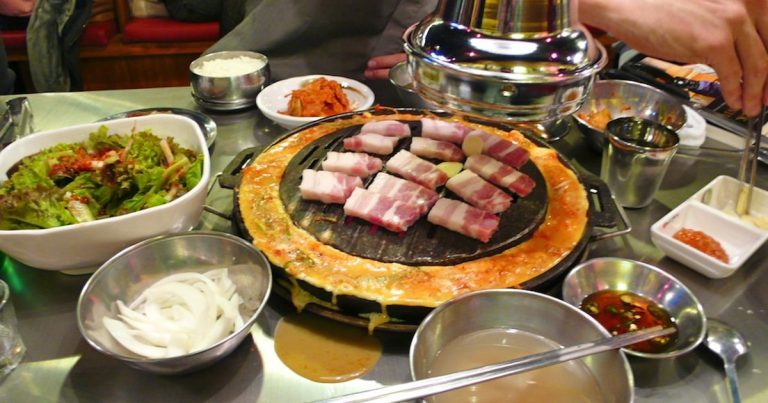
Korean meals are shared. Main dishes, stews and side dishes go in the middle of the table and everyone eats from them. Many of the food rules come from that habit of sharing.
How a Korean meal is set up
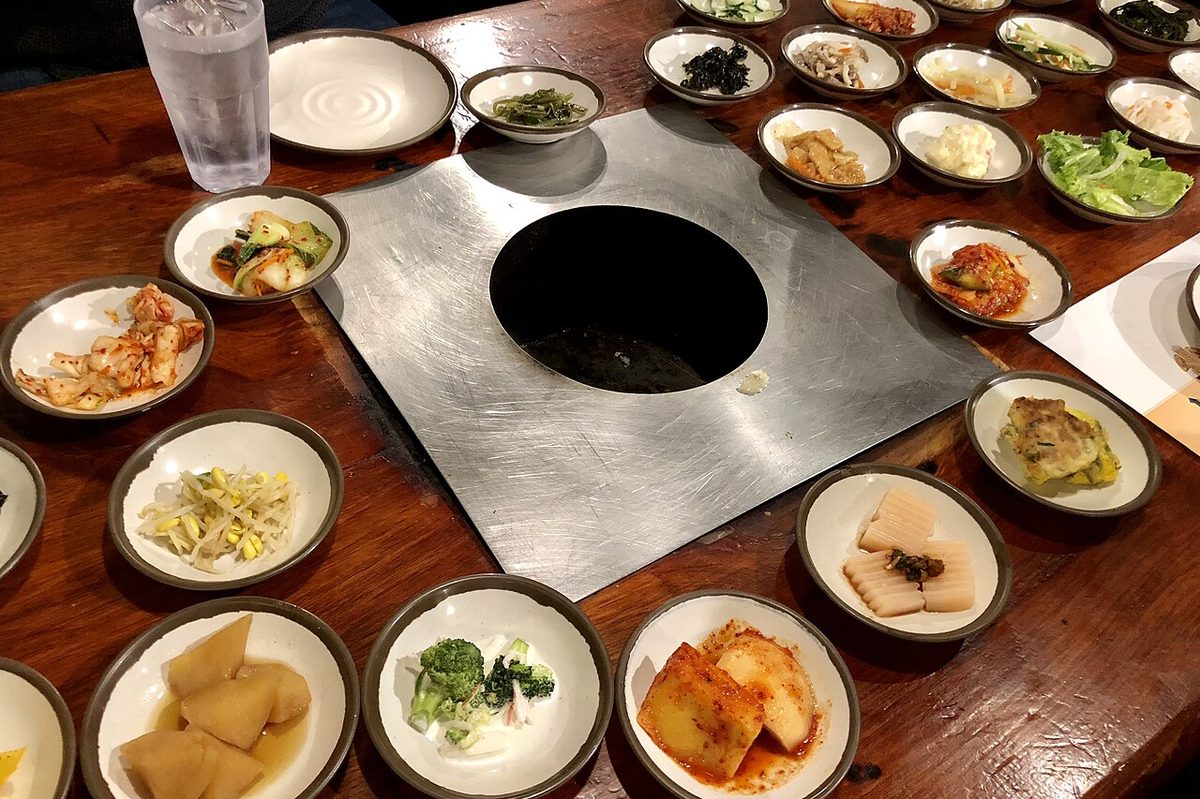
A standard home-style meal has three parts. You get bap (밥, rice) in your own bowl and guk (국, soup) or a shared jjigae (찌개, a thicker stew). Then there’s banchan (반찬, small side dishes such as kimchi, seasoned spinach or stir-fried anchovies). At most ordinary restaurants banchan come free with the meal and refills are normal. Some places have a self-serve banchan station.
Rice is eaten with a spoon, and you use chopsticks for side dishes. Koreans don’t lift the rice bowl to their mouth the way people do in Japan or China. The bowl stays on the table. Soup is also eaten with a spoon, and sipping from a shared stew pot with your own spoon is normal among family and friends.
Who eats first, and how to keep pace
At a family or work meal, nobody starts until the oldest or most senior person picks up their spoon. Try to eat at about the same pace as the table, and don’t get up while elders are still eating. At a casual meal with friends your own age, none of this matters much. People just say “jal meokgetseumnida” and start.
Korean drinking etiquette: soju, pouring and the head turn
Soju (소주, a clear spirit) and beer are the default drinks at dinner, and the pouring rules are strict. You pour for others and they pour for you. Hold the bottle with two hands, or with your right hand and your left touching your wrist, when you pour for someone older. Hold your glass with two hands when someone senior pours for you. When you drink in front of an elder, turn your head slightly away.
If you don’t drink, say so early and politely. Keep your glass partly full so nobody refills it, or have a soft drink. Pressure to drink has dropped a lot in younger workplaces, and “I can’t drink” (술을 못 마셔요, sureul mot masyeoyo) is widely accepted. One food pairing every visitor hears about is chimaek (치맥, fried chicken plus maekju, beer), the classic way to spend a Friday night or watch a game.
Paying the bill in Korea
At most casual restaurants you pay at the counter on the way out, not at the table. Traditionally the senior person or the host pays for everyone, and the younger people might buy the second round or the coffee afterward. Among friends, splitting the bill is common now. Koreans call it deochipei (더치페이, “Dutch pay”), and people often settle up by bank transfer on the spot.
Foods tied to customs
Some dishes have a meaning beyond the meal. On birthdays, Koreans eat miyeokguk (미역국, seaweed soup). It’s the soup mothers traditionally eat after giving birth.
At Seollal, people eat tteokguk (떡국, sliced rice-cake soup), and people say a bowl adds a year to your age. At Chuseok there’s songpyeon (송편, half-moon rice cakes steamed on pine needles). On Dongji (동지), the winter solstice, many families eat patjuk (팥죽, red bean porridge).
Korean holidays explained: Seollal, Chuseok and the days off
Korea’s public holidays are a mix of solar-calendar national days and two big lunar festivals. The lunar ones change your travel plans most, because millions of people travel home together and many small shops close.
| Holiday | Korean | When | What people do |
|---|---|---|---|
| New Year’s Day | 신정 (Sinjeong) | January 1 | Sunrise trips to the east coast, a quieter day than Seollal |
| Seollal (Lunar New Year) | 설날 | 1st day of the 1st lunar month, about 3 days off | Family visits, ancestral rites, sebae bows, tteokguk |
| Independence Movement Day | 삼일절 (Samiljeol) | March 1 | Remembers the 1919 independence movement under Japanese rule |
| Children’s Day | 어린이날 (Eorininal) | May 5 | Family outings, parks and amusement parks fill up |
| Buddha’s Birthday | 부처님 오신 날 | 8th day of the 4th lunar month | Lantern displays at temples |
| Memorial Day | 현충일 (Hyeonchungil) | June 6 | Honors those who died serving the country; a siren sounds at 10 a.m. |
| Liberation Day | 광복절 (Gwangbokjeol) | August 15 | Marks liberation from Japanese rule in 1945 |
| Chuseok (harvest festival) | 추석 | 15th day of the 8th lunar month, about 3 days off | Family visits, grave tending, songpyeon |
| National Foundation Day | 개천절 (Gaecheonjeol) | October 3 | Marks the legendary founding of the first Korean kingdom |
| Hangul Day | 한글날 (Hangeullal) | October 9 | Celebrates the Korean alphabet |
| Christmas | 성탄절 (Seongtanjeol) | December 25 | A couples’ day more than a family one |
When a holiday falls on a weekend, the government often adds a substitute holiday (대체공휴일, daechegonghyuil), and election days are also days off. The exact list changes year to year, so check the current year’s official public holiday calendar before you book flights or tours.
Seollal: what happens during Korean Lunar New Year
Seollal is when families gather, usually at the home of the eldest son’s parents. Traditional families start the day with charye (차례, an ancestral rite). Food is laid out on a table for the ancestors and the family bows.
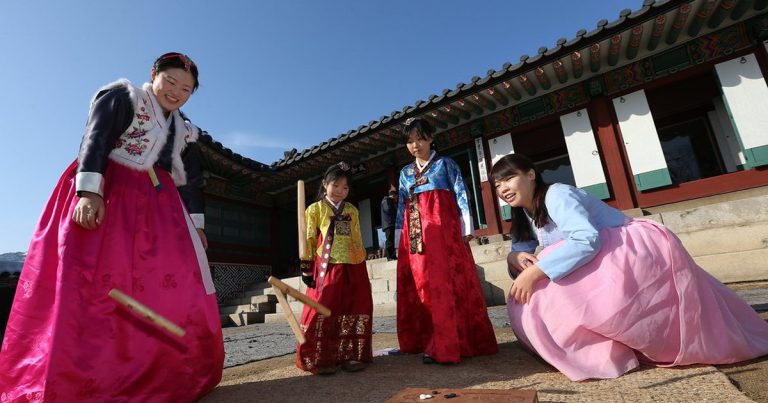
Then younger family members do sebae (세배), a deep, formal bow to their elders, often in hanbok (한복, traditional clothing). In return they get sebaetdon (세뱃돈, New Year money) and some words of advice. Tteokguk is served, and yut-nori (윷놀이, a stick-throwing board game) comes out in the afternoon.
Many younger and religious families now skip the rite or keep it small. Some families go on a trip together instead. That shift is a big part of how Korean families have changed.
Chuseok: the Korean harvest festival
Chuseok is often compared to Thanksgiving. Families gather, and many do seongmyo (성묘, visiting and tending ancestral graves) and hold charye. They make or buy songpyeon. In the weeks before, stores fill with gift sets of things like Spam, cooking oil, fruit, beef and health tonics. Koreans give these to relatives, clients and staff, and nobody finds them odd.
What Seollal and Chuseok mean for visitors
Expressways and trains are packed at the start and end of each holiday, and train tickets often sell out early. In Seoul, many family-run restaurants and market stalls close for a day or more. Big chains, department stores, convenience stores and some palaces and museums often stay open and may run holiday programs. The city is unusually quiet, which some visitors like. Check each venue’s official page for holiday hours and book intercity transport as early as you can.
The smaller “days” Koreans actually celebrate
Some unofficial days are very visible in shops. Valentine’s Day (February 14) is when women traditionally give chocolate. White Day (March 14) is when men return the gift.
Black Day (April 14) is a tongue-in-cheek day for singles, who eat jajangmyeon (짜장면, black-bean noodles). Pepero Day (November 11) is named after the stick-shaped snack, because the date, written as four 1s, looks like four sticks. Convenience stores stack gift boxes by the door for weeks.
Everyday life in Korea: what locals actually do
Most of daily life in Korea runs on phones, convenience stores and public transport. If you know these habits, you’ll fit into daily life much faster, whether you’re visiting or following Korean life from abroad.
The apps every Korean uses
KakaoTalk is the messaging app. Koreans use it for family chats, work groups, gifting and even some official notices. For maps, locals use Naver Map or Kakao Map, which give more accurate walking and transit directions than Google Maps does in Korea. Kakao T is the main taxi app. For food delivery, Baemin (배달의민족, Baedal Minjok) and Coupang Eats are the big names, and delivery to parks along the Han River is a well-known Seoul habit.
Convenience stores and cafes
GS25, CU and 7-Eleven are everywhere, and they’re more than snack shops. Koreans buy a triangle kimbap and instant ramen for lunch, cook the ramen with the in-store hot water machine and eat at a counter by the window. Many stores also handle parcels and transit card top-ups.
Cafe culture is huge too. Cafes work as study rooms, meeting rooms and dating spots, and people often leave a phone or laptop on the table to save a seat. That says a lot about how safe Korea feels day to day.
Subway and bus etiquette
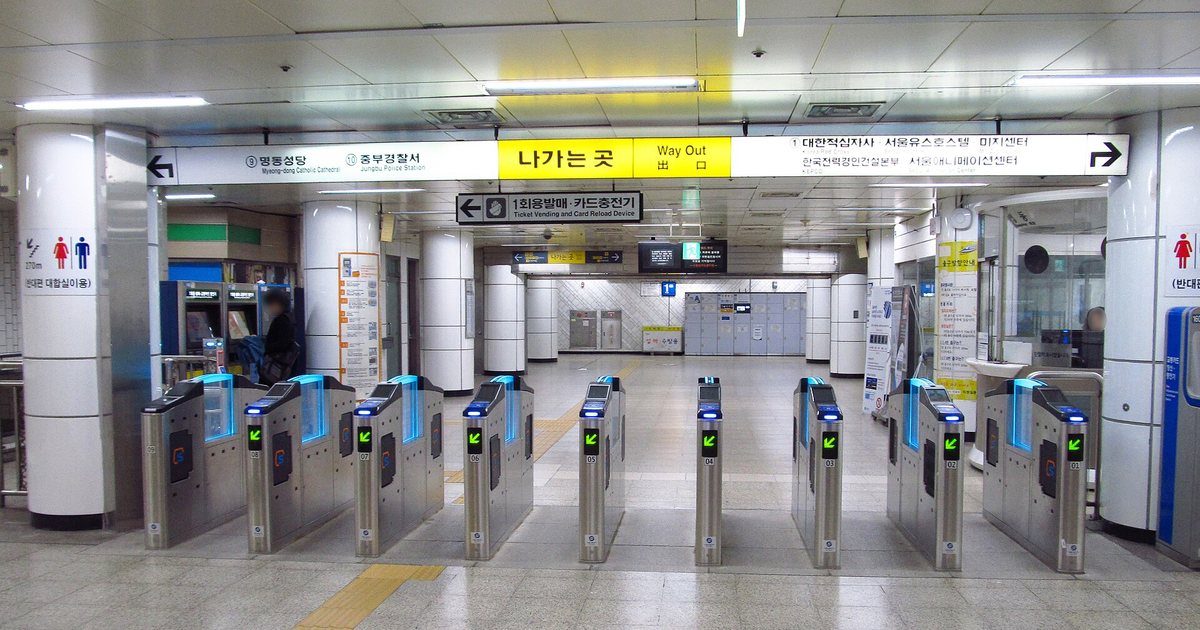
Tap a T-money card (티머니, a rechargeable transit card) on the way in and out. On buses, tap again when you get off so the transfer discount applies. Talk quietly on trains, take calls briefly and wear a backpack on your front at rush hour. Priority seats at the end of each car and the pink seats for pregnant women usually stay empty even when the train is packed. Locals leave them that way.
“Bang” culture: rooms for everything
A bang (방) is a room, and Korea rents rooms for almost every kind of leisure. Noraebang (노래방) is private karaoke, the standard second or third stop on a night out. PC bang (PC방) is a gaming cafe with fast computers, and it’s where much of Korea’s esports culture started.
Jjimjilbang (찜질방) is a bathhouse and sauna complex. Families and friends spend hours there in matching cotton uniforms, eating boiled eggs and drinking sikhye (식혜, sweet rice drink). The bathing areas are single-sex and nude, and you shower before getting into the tubs.
Trash separation
Household trash rules are strict. General waste goes in official pay-as-you-throw bags (종량제 봉투, jongnyangje bongtu) sold in local stores. Food waste is collected separately, and recyclables are sorted by type. Each district sets its own rules, so short-term renters should ask the host or check the district office’s guide.
Korean names, age and titles: how to address people
Addressing someone the wrong way is the most common small mistake foreigners make with Koreans. Here’s how it works.
How Korean names work
The family name comes first, usually one syllable, followed by a given name that’s usually two syllables. In a name like Kim Min-jun, Kim is the family name. Kim, Lee (이, also spelled Yi or Rhee) and Park (박, also Pak) are by far the most common family names. Married women in Korea traditionally keep their own family name, and children take the father’s.
Titles: -ssi, -nim, oppa and unnie
Koreans rarely call people by their given name alone unless they’re close friends or the person is younger. Adding -ssi (씨) to a full name or given name is polite among equals. -nim (님) is more respectful and goes after job titles like seonsaengnim (선생님, teacher, also used for doctors and many professionals) or sajangnim (사장님, company boss, also used for shop owners). At work, people use titles, such as Kim gwajangnim (김 과장님, Manager Kim), and almost never first names.
Family words are used for friends too. A younger woman calls an older male friend oppa (오빠) and an older female friend eonni (언니, often spelled “unnie”). A younger man uses hyeong (형, “hyung”) and nuna (누나, “noona”). If you watch K-dramas, you already know these words. Using them with people you’ve just met can feel too familiar, though, so wait until the other person suggests it.
Korean age: the 2023 change
Koreans used to count everyone as 1 at birth and a year older every New Year’s Day, so someone could be two years “older” in Korean age than in international age. In June 2023 a law standardized international age (만 나이, man nai) for legal and administrative use. In daily life many people still think in birth years, and some rules, such as school grades and the legal drinking age, are still based on birth year. That’s why Koreans often ask “what year were you born?” rather than “how old are you?”
Life milestones: birthdays, weddings, funerals and exams
Big life events in Korea come with set customs, and cash plays a role in most of them.
Dol and hwangap: first and sixtieth birthdays
A baby’s first birthday, dol (돌), includes the doljabi (돌잡이). Objects like thread, money, a pencil or a stethoscope are laid out, and whatever the baby grabs is said to predict its future. Hwangap (환갑), the 60th birthday, marks one full cycle of the traditional 60-year calendar. It used to be a huge party. Now that people live longer, many families celebrate the 70th instead, or go on a trip.
Weddings and funerals: cash in envelopes
At a Korean wedding, guests give chugeuigeum (축의금, congratulatory money) in a white envelope at a reception desk, where it’s recorded in a guest book. Ceremonies in wedding halls are often short and run on a tight schedule, followed by a buffet.
Funerals usually take place over about three days at hospital funeral halls. Mourners bring joeuigeum (조의금, condolence money), bow at the altar and share a meal with the family. Dark clothing is expected. How much to give depends on how close you are, so ask a Korean friend.
Suneung: the day the country goes quiet
The Suneung (수능, the national college entrance exam, also called the CSAT) is held every November. Offices open late so test-takers don’t get stuck in traffic. During the English listening section, planes are held and construction stops.
Police have been known to drive late students to their test centers. Younger students cheer outside the gates, and parents pray at temples and churches. No other single day shows more clearly how much weight Korea puts on education.
How Koreans consume pop culture: dramas, webtoons and esports
K-pop and K-dramas are what most people abroad see. At home, Koreans watch, read and play in particular ways, and knowing them helps you follow the conversation.
Webtoons: stories read on the subway
Webtoons (웹툰) are vertical-scroll comics made for phones, and commuters read them on Naver Webtoon and Kakao Page. Many big K-dramas start as webtoons, and an adaptation can send readers back to the original. Our story on why views of The Remarried Empress webtoon jumped 35x shows how that works.
Esports: a mainstream sport
Thanks to PC bang culture, pro gaming in Korea gets the kind of attention traditional sports do. League of Legends players are household names, and roster moves make the general news. Faker, who plays for T1, is one of the best-known athletes in the country.
Fandom culture
K-pop fandoms organize streaming, birthday ads in subway stations and coffee-truck gifts sent to film sets. You’ll see LED birthday ads for idols in stations such as Samseong and Hongik University. The ads are paid for by fans, not agencies.
What Koreans talk about: work, money, history and the North
Topics that come up over dinner in Seoul say a lot about the country. Some are easy to join, and others need care.
Work culture and hoesik
Hoesik (회식) is the team dinner after work, usually Korean barbecue and soju, sometimes followed by a second round. It used to be close to mandatory and ran late. Younger workers have pushed back, and many companies now keep it shorter or hold it at lunch. Big conglomerates, called chaebol (재벌, family-controlled business groups such as Samsung, Hyundai, SK and LG), are still the jobs many families hope their children land. Retail investing is a mainstream hobby, and individual investors call themselves gaemi (개미, “ants”).
History and Japan
The period of Japanese colonial rule (1910 to 1945) is still an open wound. March 1 and August 15 are national holidays because of it. Koreans happily travel to Japan, eat Japanese food and watch anime, but historical issues remain serious topics. Listen more than you speak, and don’t make jokes about it.
North Korea
The Korean War (1950 to 1953) ended in an armistice, not a peace treaty, and the peninsula is divided by the DMZ (Demilitarized Zone). Many South Koreans are calmer about the North than foreign headlines suggest, and many older families still have relatives they lost track of in the war. Ask questions with curiosity rather than drama. Reports from North Korean state media (KCNA) are claims, not confirmed facts. For a recent example of how news from the North reaches the South, see our piece on why North Korea’s Masikryong ski resort is back in the news.
Common mistakes foreigners make in Korea, and a checklist
None of these will get you thrown out of a restaurant. They’re just the small slips Koreans notice most.
The mistakes Koreans notice most
- Pouring your own drink at a group dinner. Fill someone else’s glass and wait for yours to be filled.
- Using banmal you picked up from dramas with strangers. “Gomawo” sounds rude to a shopkeeper. Say “gamsahamnida.”
- Calling an older colleague by their first name. Use their job title with -nim.
- Blowing your nose at the table. Step away instead.
- Tipping. It isn’t needed and can confuse staff.
- Sitting in priority seats on the subway when you don’t need them, even if the train is empty.
- Talking loudly on public transport. Koreans keep their voices down on trains.
- Booking Seollal or Chuseok travel late. Trains and buses sell out, and many small restaurants close.
- Treating every Korean as a K-pop expert. Plenty of Koreans don’t follow idols at all.
Worked example: a first dinner with a Korean friend’s family
Say a Korean friend invites you to dinner with their parents. Take off your shoes at the entrance and bow to the parents with “annyeonghaseyo.” Hand over a gift with both hands. Fruit or a boxed set of something edible is the safe choice.
At the table, wait for the father or mother to start eating, then say “jal meokgetseumnida.” If the father offers you soju, hold your glass with both hands, then turn slightly away to sip. When his glass is empty, pour for him with two hands.
Don’t fight over the bill, because the parents will pay. Say “jal meogeotseumnida” as you leave, and send your friend a thank-you message on KakaoTalk that night.
Your 10-step Korean culture checklist
- Learn to read Hangul. It takes most people a few days and makes menus and signs readable.
- Memorize the 8 polite phrases above and practice the small bow.
- Install Naver Map or Kakao Map, KakaoTalk and a translation app before you arrive.
- Get a T-money card and tap in and out on buses.
- Check if your dates overlap Seollal, Chuseok or a substitute holiday.
- Pack socks without holes. You’ll take your shoes off more than you expect.
- Use two hands for anything you give to or take from an elder.
- At group meals, wait for the eldest to start, and pour for others.
- Address people with -ssi or a title, never just a given name.
- Before a wedding, funeral or home visit, ask a Korean friend what to bring.
Korean culture glossary: key terms in Hangul
| Term | Hangul | Romanization | Meaning |
|---|---|---|---|
| Nunchi | 눈치 | nunchi | Reading the room, sensing what others need |
| Jeong | 정 | jeong | Deep attachment built through shared time |
| Ppalli-ppalli | 빨리빨리 | ppalli-ppalli | “Hurry, hurry,” the fast pace of daily life |
| Jondaenmal | 존댓말 | jondaenmal | Polite or honorific speech |
| Banmal | 반말 | banmal | Casual speech for close friends and younger people |
| Seonbae / hubae | 선배 / 후배 | seonbae / hubae | Senior / junior at school or work |
| Banchan | 반찬 | banchan | Small shared side dishes |
| Seobiseu | 서비스 | seobiseu | A free extra item “on the house” |
| Hoesik | 회식 | hoesik | Team dinner after work |
| Charye | 차례 | charye | Ancestral rite held at Seollal and Chuseok |
| Sebae | 세배 | sebae | Formal New Year bow to elders |
| Seongmyo | 성묘 | seongmyo | Visiting and tending ancestral graves |
| Hanbok | 한복 | hanbok | Traditional Korean clothing |
| Ondol | 온돌 | ondol | Traditional floor heating |
| Jjimjilbang | 찜질방 | jjimjilbang | Bathhouse and sauna complex |
| Noraebang | 노래방 | noraebang | Private karaoke room |
| Chaebol | 재벌 | jaebeol | Family-run business conglomerate |
| Gaemi | 개미 | gaemi | “Ant,” a retail stock investor |
| Suneung | 수능 | suneung | National college entrance exam |
| Chimaek | 치맥 | chimaek | Fried chicken with beer |
FAQ
What is the most important part of Korean culture to understand?
Respect for age and seniority. It decides which form of Korean people use, who starts eating, who pours and who pays. If you show that respect with a small bow, two hands and polite phrases, Koreans will overlook most other slips.
Is it rude to tip in Korea?
It isn’t rude, but it isn’t expected, and staff may be confused or try to give the money back. Prices in restaurants, cafes and taxis already include service. Some upscale hotels add a service charge to the bill, so check your receipt.
Do Koreans still bow?
Yes, every day. Most bows are a quick nod of the head and shoulders when greeting or thanking someone. A deep, formal bow is for elders on Seollal, at weddings, at funerals and for very formal apologies.
When are Seollal and Chuseok?
Both follow the lunar calendar, so the solar dates change every year. Seollal usually falls in late January or February, and Chuseok in September or early October. Check the current official public holiday calendar before you plan a trip, because each one is a 3-day public holiday, when many small family-run shops and restaurants close and trains sell out.
What should I bring when visiting a Korean home?
Bring something practical or edible. Fruit, a box of good snacks, juice or a gift set are all safe choices. Hand it over with both hands, take your shoes off at the entrance and greet the oldest person first.
Why do Koreans ask my age?
Korean grammar changes with the relationship between speakers, so people need to know who is older to choose the right speech level and titles. The question is about being polite, not about you personally. Many people ask for your birth year instead.
What to read, watch and plan next
If you’re planning a trip, start with Hangul and the polite phrases. Our Korean learning roadmap gets you reading signs in days. Then check the year’s holiday calendar against your dates.
If you’re following Korea from home, read webtoons and watch the dramas adapted from them, and pay attention to how characters change speech levels and titles. You’ll pick up the hierarchy rules from that alone.
For your next read, pair the Korean learning roadmap with our story on how The Remarried Empress went from webtoon to drama, and listen for who uses banmal with whom. Then picture that first dinner with a friend’s family: shoes off at the door, a gift in both hands, wait for the eldest to lift a spoon, pour for others and say “jal meogeotseumnida” on the way out.
Related reading
Sources k-korea.blog
Prices, opening hours and availability change. Check the official page before you buy or travel.